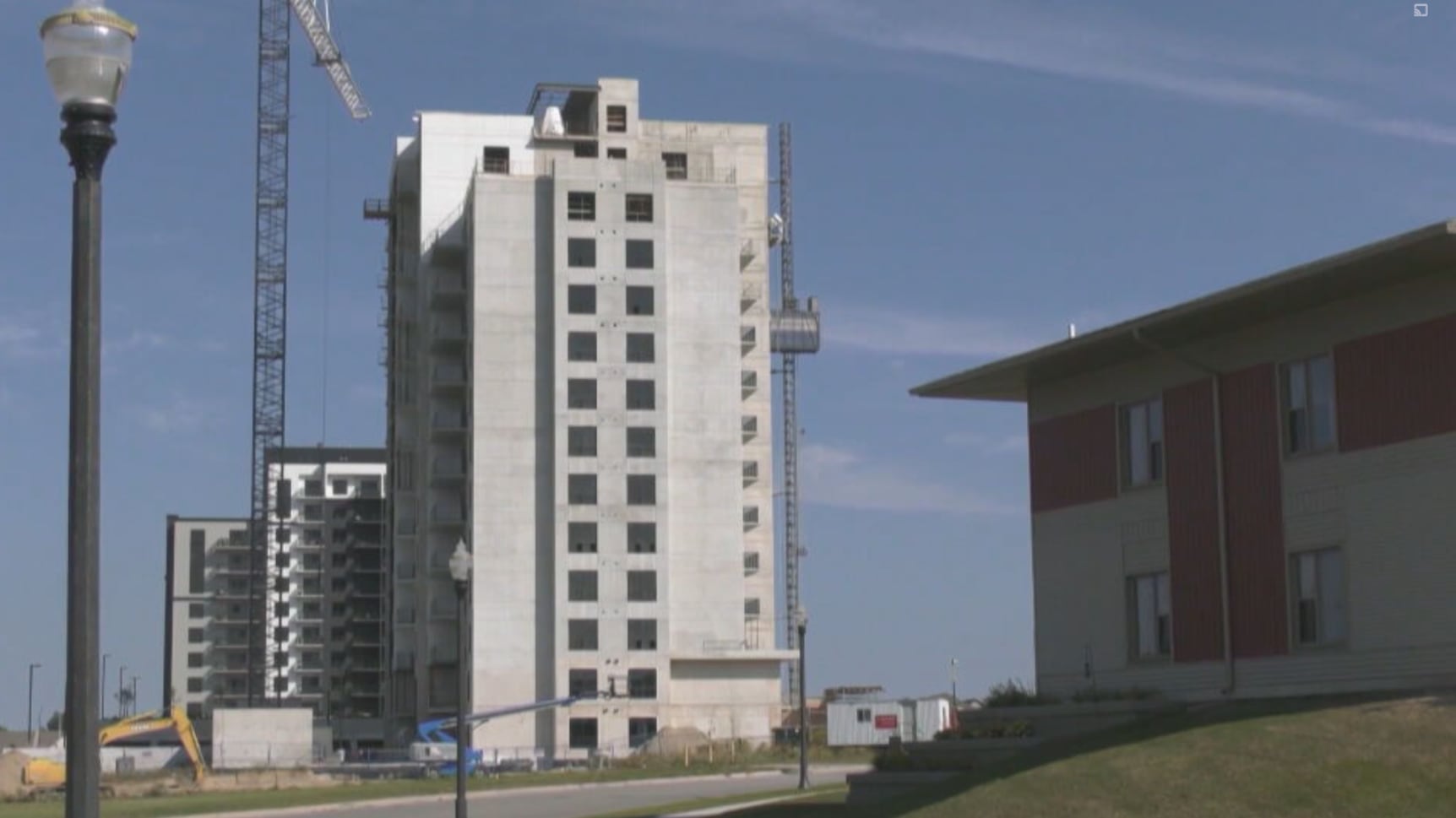
TORONTO – Toronto developer Matt Young originally planned to sell condos in the first phase of a major housing development along St. Clair Avenue East in Scarborough.
Now, those homes will be rentals.
“It made more financial sense as a rental,” Young, president and CEO of Republic Developments, told CTV News. “There’s a disconnect between the price that someone is able or willing to pay today and the cost to build.”
Developer Amir Ismailzadeh is also focusing on rentals, including a five-unit property nearing completion in North York.
He says many families who want to own a home are struggling to save enough for a down payment, even when they have well-paying jobs.
“But in the meantime, they really need somewhere to live,” Ismailzadeh told CTV News from inside one of the units.
“And because we are building these rentals in neighbourhoods where they are family oriented, these are becoming good options for them to rent until they do buy,” he said, adding that three of the five units have already been leased with five more in the pipeline.
Housing starts almost flat in September
The shift comes as new figures from the Canada Mortgage and Housing Corporation [CMHC] show the six-month trend in housing starts was almost flat in September, rising just 0.6 per cent from August.
CMHC also counted 143,929 housing units with approved building permits, where construction had not yet started in Canadian centres with populations of at least 50,000. That was up 1.1 per cent from August.
A separate CMHC report found rental apartment starts in the Toronto area rose 82 per cent in the first half of 2026, compared with the same period a year earlier.
Provincial governments have introduced incentives to get more homes built, including low-interest loans through Ottawa’s $55 billion Apartment Construction Loan Program and a full federal sales-tax rebate for qualifying new rental housing.
In June, Ontario announced an investment of up to $178 million through the Building Ontario Fund to help advance the first phase of Scarborough Junction, which is expected to deliver approximately 1,700 rental homes.
But Toronto real estate agent Simeon Papailias, with Royal LePage Signature Realty, argues more needs to be done to make building homes for sale financially viable.
“Unless they reduce the cost to build where prices can get back in line for profit for the development community, you’re not going to have any projects starting,” he said.
Not enough pre-construction buyers
Papailias says weak demand from investors creates another obstacle: condo developers rely on sales before construction to secure financing. Without enough buyers, projects can be cancelled or switched to rentals.
“That project does not get the pre-sales it requires for financing,” he said.
Davelle Morrison, a broker with Bosley Real Estate in Toronto, says her clients are increasingly wary of buying a home before it is built.
“They’re not willing to buy pre-construction right now. The risks seem too high,” Morrison told CTV News in an interview Sunday.
She says buyers worry about whether projects will be completed and whether the developer will still be in business when it is time to move in.
Affording a purchase is another hurdle.
“I think it’s just getting the money together,” Morrison said, adding that in her experience, interest in homeownership remains strong, but concerns about job security and whether prices will fall further are making some buyers hesitate.
For those ready to buy, she says, existing condos can offer a more attractive option.
“The resale condo is just simply cheaper, and you can see what you’re about to buy.”
Young expects the condo market to recover eventually, although he says existing inventory needs to sell before new projects can gain momentum. In the meantime, he believes more rental construction could help tenants.
“It’s certainly going to help stabilize rents,” he said. “And as less condos get built, eventually that demand will pick up. It’s not going to be a dead market forever.”

