


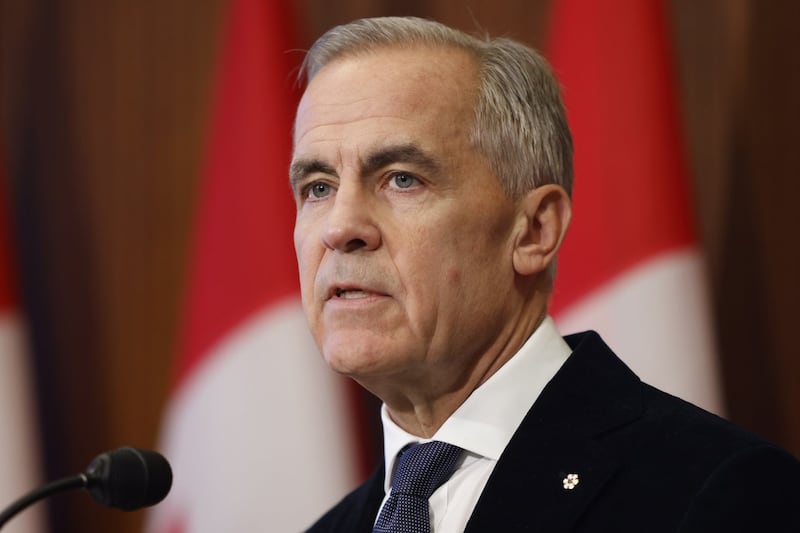
OTTAWA — Prime Minister Mark Carney says the federal and provincial governments should work together to get immigration down to sustainable levels before Alberta takes steps to do so on its own.
Albertans cast their ballots on a slate of referendum questions Monday, and while the question around separation drew the most attention, there were nine others that cover a range of issues, from proposed Constitutional changes to health-care access.
Five of the questions outside of the one on separation were focused on immigration, and could require constitutional changes to implement.
“This government has recognized from the start, the need to take back control on immigration, and we’ve done so,” Carney told reporters on Parliament Hill Tuesday morning, while answering questions about the Alberta referendum results.
“I believe, for example, on the issue of immigration and co-operation between the federal government and the provinces for a sustainable immigration system that works for Canadians, works for our economy, works for our society, and treats those who come to our country, choose to come to our country, with the dignity and standards that they deserve, that we can accomplish that without constitutional change,” Carney also said.
On the question of whether the provincial government should have more control over who comes into the province, according to preliminary results, Albertans have voted “yes.”
Asked whether the province should pass a law mandating that only Canadian citizens, permanent residents and individuals with an Alberta-approved immigration status will be eligible for provincially-funded programs — such as health care, education and other social services — Albertans voted “yes.”
Another question proposed making temporary residents wait a year before accessing certain social supports. Albertans voted “yes” to that referendum question, along with a question that asked whether individuals with non-permanent immigration status living in Alberta should have to pay fees to access public health care and education.
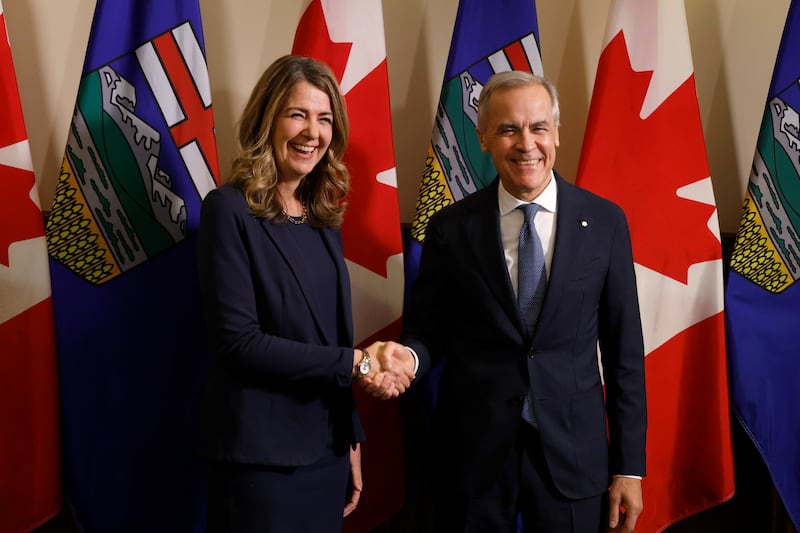
Carney said he spoke with Alberta Premier Danielle Smith Tuesday morning, firstly about additional support for the victims and families of the deadly fire at the Canadian Forces Base in Wainwright, Alta.
“That was our first focus, and then we turned to the referendum and moving forward in the spirit of co-operative federalism, including on issues of immigration, other common priorities of the federal government, the provinces, but underlying it, priorities of Canadians,” Carney said.
Canada-Alberta ‘already engaged’ on immigration: Minister
In an interview on CTV Question Period last week, meanwhile, the Liberals’ only cabinet minister from Alberta signalled an openness on Ottawa’s behalf to engage in discussions with the province on enhanced autonomy over immigration levels.
“I can tell you that we are already engaged in those discussions, and (Prime Minister Mark Carney said Thursday) we didn’t really need a referendum to tell us what issues we need to talk about with Alberta or any other province,” Eleanor Olszewski told host Vassy Kapelos.
When Kapelos pressed her on whether that will mean more provincial autonomy over immigration, Olszewski said, “it’s a shared jurisdiction, and we are engaged in discussions with the province with respect to levels and sustainability.”
Federal immigration Minister Lena Diab also alluded to working with Alberta when it comes to immigration when asked directly if the federal government is prepared to give the province more immigration powers.
“I recognize the significance of co-operations between the provinces and the federal government when it comes to immigration,” Diab said on Friday at a press conference in Kitchener, Ont. “It is a joint provincial-federal responsibility, and we will continue to work jointly with all provinces and territories across this country to make sure that we have the best immigration system in the world.”
Budget committed to lowering immigration
Immigration levels in Canada reached a record high in 2024. According to the federal government, 483,640 immigrants were admitted as permanent residents that year, which was in line with targets set out in the Government of Canada’s Immigration Levels Plan at the time. In 2025, that number dropped to about 393,500 new permanent residents.
In Carney’s first budget in late 2025, the Liberals set new targets, promising to “responsibly manage immigration to alleviate pressures on housing demand.”
“The 2026–2028 Immigration Levels Plan will return immigration to sustainable levels by stabilising new permanent resident admissions at less than one per cent of the Canadian population beyond 2027 and reducing the total number of temporary residents to less than five per cent of the population by the end of 2027, down from a peak of 7.6 per cent in 2024,” the budget stated.
But in an interview with The New York Times in September, Carney said Canada will eventually resume a “controlled increase” in its population once the immigration system remains fully under control. The prime minister did not elaborate further on what that increase would look like or when it could happen.
Asked on Friday about why immigration could soon be adjusted, Diab pointed to the country’s slow population growth and the federal government’s “ambitious agenda.”
“We are going to want to drive growth. We do need people,” Diab said.
Carney told reporters on Tuesday that the number of asylum seekers is down by 70 per cent, temporary foreign workers by 60 per cent, and foreign students by 80 per cent, over the last year and a half.
“I’m not saying that that stabilization is complete, but where we go from here needs to be established in co-operation with the provinces, and that’s very much the spirit of at least one of the (referendum) questions,” he also said.
The federal government’s updated immigration level plan will be released in November.
Poilievre agrees with Alberta votes
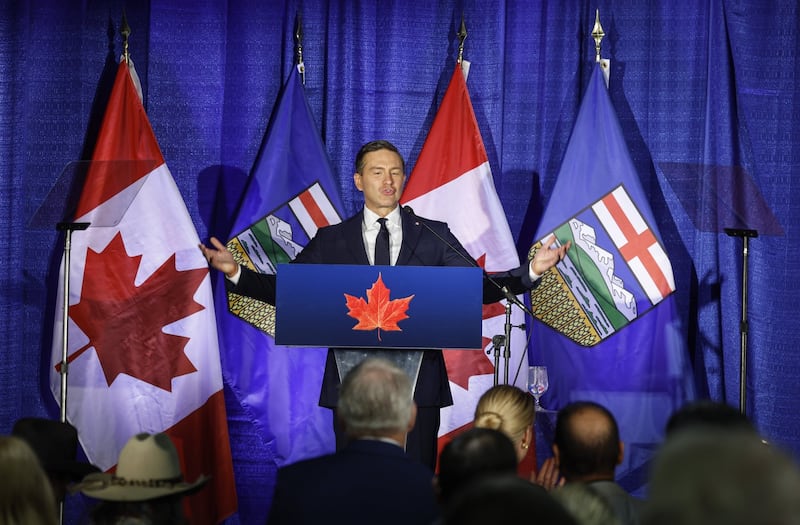
Speaking to reporters on Tuesday, Conservative Leader Pierre Poilievre — who represents a rural Alberta riding — said he supports Albertans’ decisions with regards to immigration and “bringing (it) back under control.”
“The provinces should have control in selection and numbers because they have to provide the services, regulate the job market, and the housing for people who come in,” he said. “And taxpayers should not be forced to pay deluxe benefits to people who are here illegally.”
“The prime minister was wrong on this, and he’s been wrong on immigration all along,” he added.
In an interview with CTV News senior political correspondent Mike Le Couteur on Tuesday, immigration lawyer Chantal Desloges said greater powers for the provinces on immigration could impede the federal government’s ability to make decision that are national in scope.
She also said that because the Canadian Charter of Rights and Freedoms protects the right to mobility — outlined in section six of the Charter — it could infringe on the rights of immigrants who become permanent residents to then restrict where they can and cannot live in Canada.
“Constitutionally, immigration is a federal power, and the feds share that power with the provinces through a variety of different sort of arrangements that they have with each other,” Desloges explained. “The federal government has to look at immigration from a national perspective, and thinking about demographics, thinking about things that are in the national interest.”
“If all of the provinces and territories start having their own little piece of the pie, where they all have a say in who’s going where and who’s doing what, that really limits the federal government in terms of the long-range national planning that they can actually do,” she added.
With files from CTV News’ Stephanie Ha

