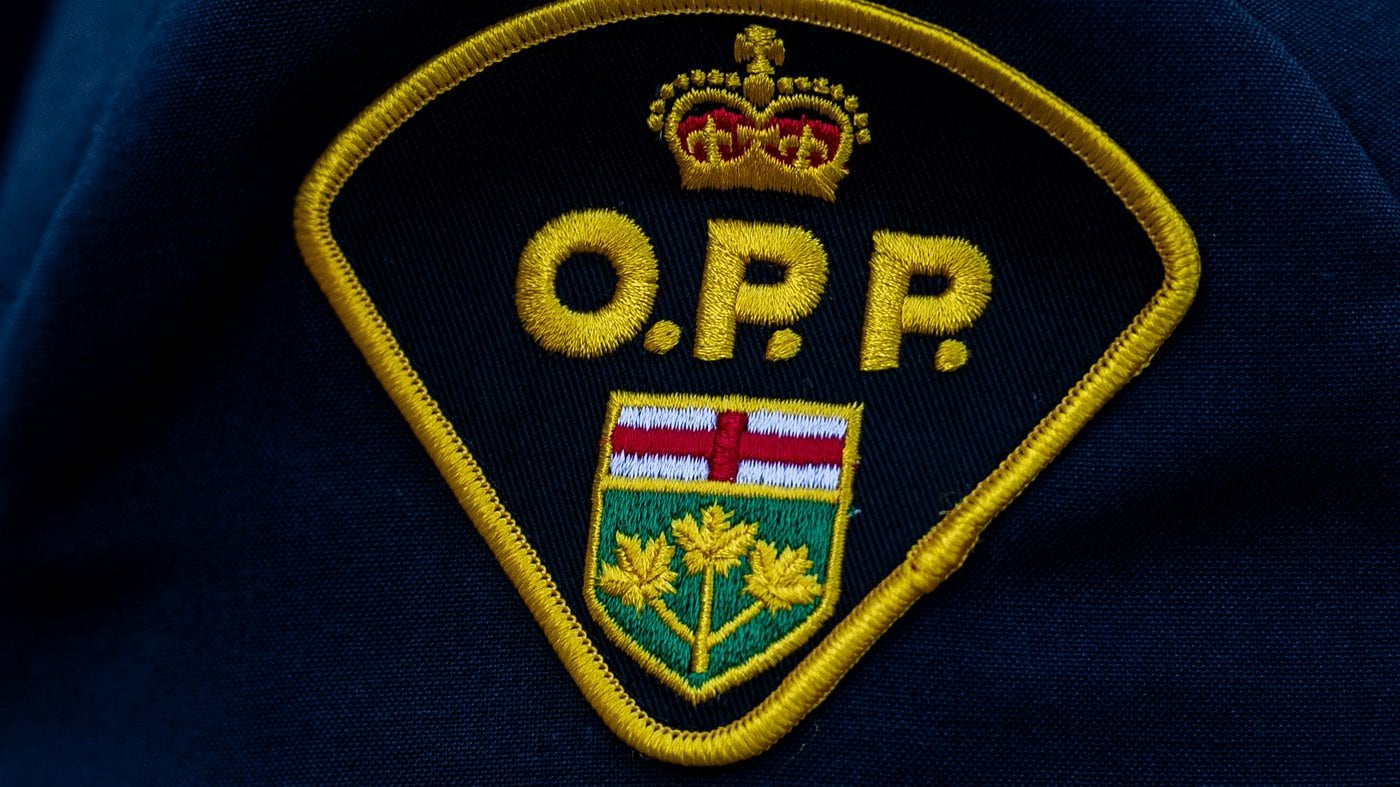
An anti-racism organization is calling for an investigation into how Ontario’s provincial police force assesses new recruits, as three Black recruits allege they faced racial discrimination during their year of probation.
The Black Class Action Secretariat says it wants the province’s inspector general of policing to examine Ontario Provincial Police probationary evaluation and coaching practices as well as probationary outcome data across the force to look for racial disparities.
The group’s director of advocacy says that while the OPP has an internal office that aims to ensure its policies and practices are inclusive, “the question is whether that commitment reaches the coach officer’s notebook, the probation file, and the release decisions.”
In a news conference today at the provincial legislature, Alain Babineau said there are people within police ranks quietly deciding “who belongs in uniform and who does not.”
The call for an investigation comes as the non-profit says three Black recruits stationed in different regions faced a “strikingly similar pattern of discrimination.” The OPP says it’s looking into those concerns.
The secretariat says the recruits, who are sharing the allegations under pseudonyms under fear of reprisals, were mocked and penalized for their accents and communication styles and disciplined for behaviours common among white officers.
Two of the recruits were dismissed before the end of their probation period, while the other remains on medical leave, the group said.
A spokesperson for the OPP said the force acknowledges the concerns raised by the Black Class Action Secretariat on behalf of the three recruits.
“We take these matters seriously and are reviewing the various concerns brought forth,” Staff Sgt. Joe Brisebois said in an email.
The force can’t comment on specifics when it comes to employment-related matters, he said.
“What we can say is that the OPP is dedicated to ensuring open, accessible, equitable and respectful workplaces, and is committed to reflecting the diverse communities it serves,” as well as ensuring a workplace that fosters a safe and inclusive environment, he said.
“We do not condone or tolerate discrimination or harassment of any kind.”
The Inspectorate of Policing, an independent oversight office that opened in 2024, acknowledged The Canadian Press’s request for comment Wednesday but did not immediately provide one.
One of the recruits, who used the pseudonym Paul, said Wednesday he has two master’s degrees and excelled at the police college, but found himself ridiculed and judged for the way he spoke after joining a detachment in the province’s southeast.
“I caught my coach officer and my colleagues ridiculing me. A dispatcher joked on the record about my accent affecting a radio call,” he said, phoning into the news conference.
“When I tried to discuss it, it was used against me,” he said.
Paul said he was one of three Black officers in his detachment and was released from his position after 10 months. The experience changed his career, he said, adding he is “still trying to heal from the mistreatment and discrimination.”
Another of the recruits going by the pseudonym Peter said he “immediately felt isolated” after reporting for duty at a detachment in central Ontario.
“My sergeant would make fun of how I pronounced some words, asking me to repeat things in front of my colleagues so everyone could laugh,” he said in a call played at the news conference.
“I wasn’t coached at all, it just felt like I was being watched to be documented.”
Peter said he was reprimanded for using his phone’s GPS to navigate the city when it was a “common practice” among his white colleagues.
The stress eventually caught up with him, and he went on medical leave in the spring, questioning whether to continue on this career path, he said.
Organizers also shared a statement on behalf of the third recruit, who went by the name John. John said he spent a decade in the human service field before becoming an officer, and was stationed at a detachment in southwestern Ontario — the only Black recruit in his platoon.
“I felt there was no trust or confidence in me from Day One,” the statement said. “It felt like not only did they expect me to fail, they wanted me to fail.”
He also faced reprimand for using his phone GPS when others were doing the same without issue, and at one point had his driving privileges taken away without explanation, he said.
John said he was let go two weeks before the end of his probation, on grounds that he was not a good fit.
“What it really meant was that I didn’t belong, that they didn’t see me as one of them, that they didn’t want me there,” he said.
This report by The Canadian Press was first published Oct. 21, 2026.
Paola Loriggio, The Canadian Press

