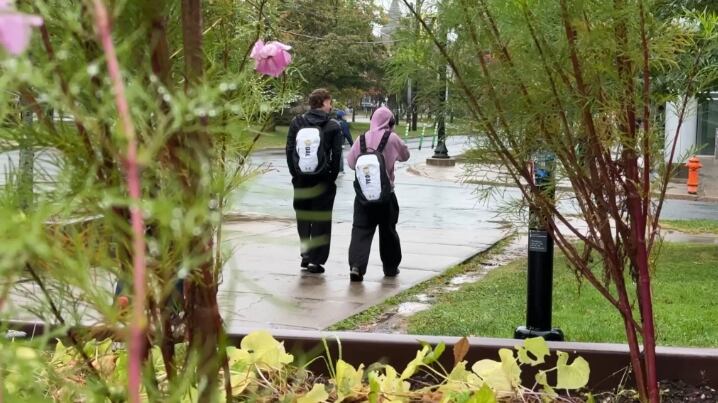
CHARLOTTETOWN - The halls are busy at the University of Prince Edward Island but for some students staying in school is getting harder to afford.
Students from P.E.I. experienced the largest increase in tuition fees this school year, up 4.9 per cent, according to Statistics Canada’s latest Consumer Price Index. That’s more than double the national average of 2.4 per cent. The Island also had the highest annual inflation rate of any province in September, at 5.7 per cent.
“The students don’t know if they’re going to be able to pay for education next year. They don’t know if they’re going to continue studying,” said Alissa Sonomura Cyrino, vice-president external of the University of Prince Edward Island Student Union.
“There’s a lot of pressure.”
Cyrino says students have faced three straight years of steep tuition hikes, including back-to-back increases of up to 6.5 per cent for domestic students.
The student union is raising concerns that repeated spikes risk discouraging students from low-income and middle-income households from pursuing higher education.
For those already enrolled, the economic strain is also disrupting the balance between work, life, and school. Cyrino says she’s hearing from students working extra hours to cover courses, rent and groceries.
“You have less time to study,” she said.
In a statement sent to CTV News Tuesday, Tim Walker, UPEI’s vice-president of administration and finance, said the university is operating in a “significantly challenged financial environment” driven by declining international enrolment, ongoing uncertainty, constrained revenues, and rising costs.
He acknowledged the challenge tuition and fee increases present for students, but said the measures would help keep the university academically and financially sustainable.
International student enrolment has fallen sharply across Canada following federal restrictions introduced in 2024.
Schools on the east coast have been disproportionately affected, says Ava Czapalay, chief executive officer of the Association of Atlantic Universities.
The association reports international enrolment at its schools is down nearly 48 per cent since the restrictions began.
“This part of the country needs people. … We don’t have a growing population naturally,” Czapalay said.
“For this region to flourish and to prosper... we need newcomers to come here and to work here. And international students are, of course, a great, great way of bringing newcomers to a country and having them put down roots in the communities where they study.”
Universities depend heavily on two main sources of revenue: provincial grants and tuition, Czapalay said. International students often pay more than twice as much as domestic students.
The association wants Ottawa to introduce a solution tailored to Atlantic Canada, particularly as provincial grants fail to keep pace with inflation and operating costs.
At UPEI, a $1.7-million increase (3.5 per cent) in its provincial operating grant for the academic year provides “generous support,” Walker wrote, but offsets only about half the school’s 2026–27 budgeted cost inflation.
Despite the hikes, he said UPEI’s tuition remains among the lowest in the region, citing comparisons from the Maritime Provinces Higher Education Commission.
For its part, P.E.I.’s Department of Workforce and Advanced Learning said the province remains in discussions with post-secondary institutions and federal partners about international enrolment and continues to advocate for approaches that recognize Atlantic Canada’s demographic and labour market needs.
The department said Island students received more than $53 million in combined federal and provincial student financial assistance in 2025–26.
Some provinces, including Nova Scotia, limit tuition increases. But both Cyrino and Czapalay warn that lifting caps can lead to sharp hikes as universities try to make up accumulated deficits.
That’s why UPEI’s student union is pushing for predictability instead, Cyrino said. It wants the university to ensure students know when they enrol what they’ll pay in tuition throughout their studies, so they can plan their budgets.
“You won’t have any surprises,” she said.

