This is the second in a three-part series on chronic traumatic encephalopathy (CTE).
Check back Thursday for a look at CTE in youth sports.
In a radioactive bunker under Toronto’s College Street, researchers think they might have a major clue in efforts to diagnose chronic traumatic encephalopathy (CTE) in a living person for the first time.
The concrete walls are plastered with warnings about high-radioactivity areas, a far cry from the shiny sterility of the white labs next door.
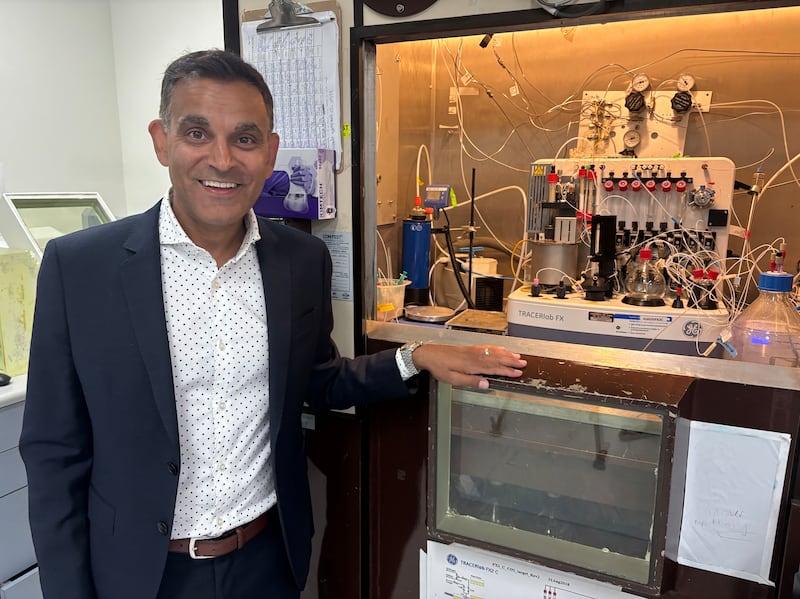
The bunker is where the Centre for Addiction and Mental Health (CAMH) houses a cyclotron, capable of producing radioactive material that is injected into a research participant to search for a specific protein in the brain called tau.
“There are six different types of tau,” said the director of the brain health imaging centre, Neil Vasdev. “We’ve done, as a field, a good job of understanding Alzheimer’s disease tau, but CTE tau is different.”
Tau is healthy in a normal brain, but in someone with CTE it turns toxic.
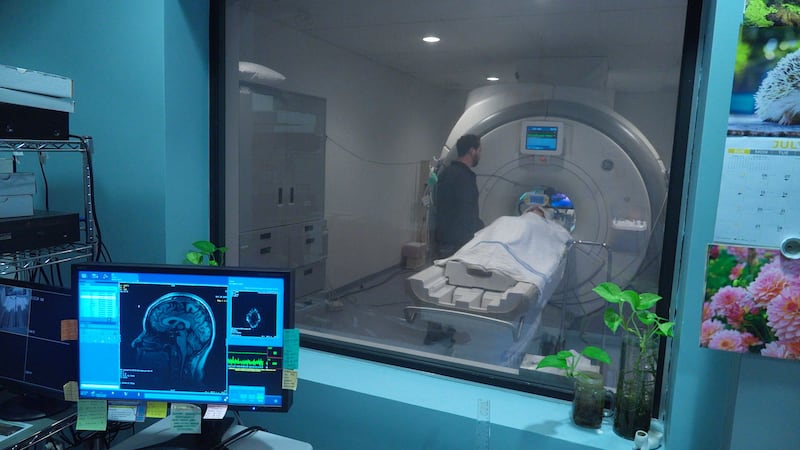
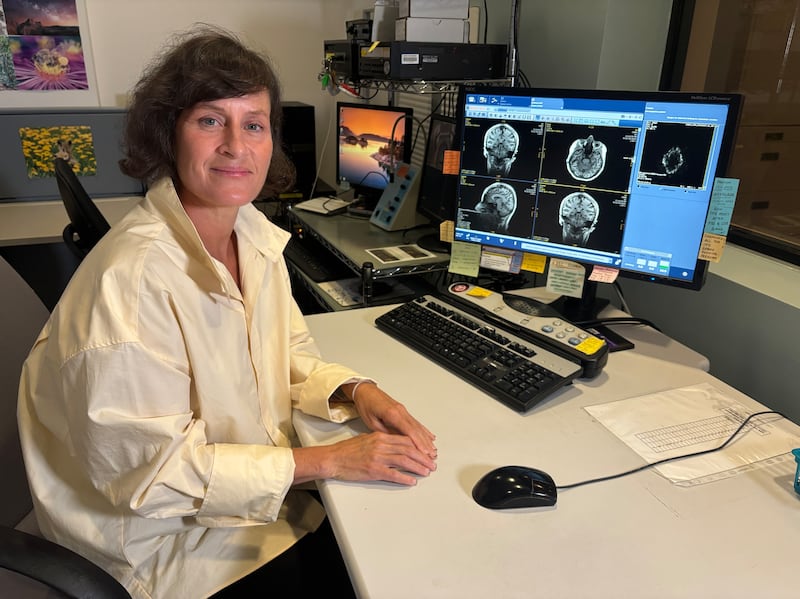
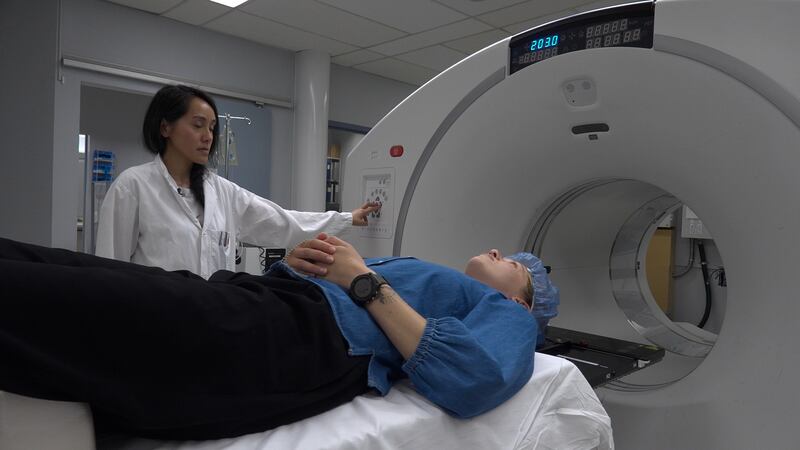
Sitting behind a glass wall looking out onto a PET scanner, senior scientist Isabelle Boileau points to a set of scans showing a healthy brain and one where CTE was positively diagnosed.
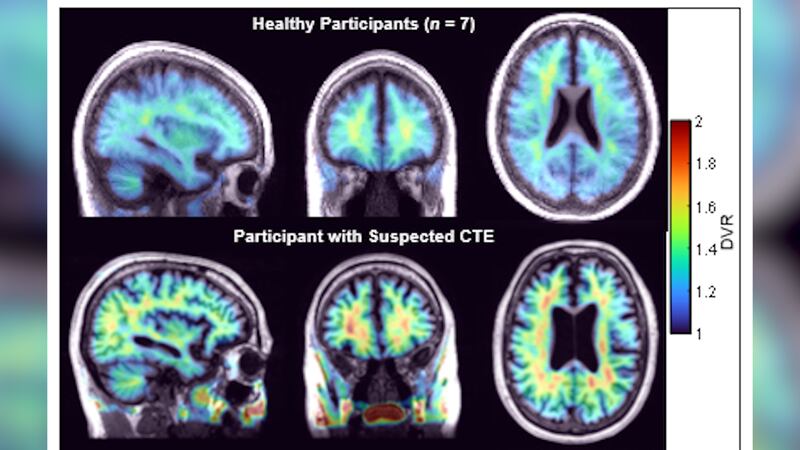
“You can see here,” she said, pointing to the screen, “those bright spots are where the radio tracer is accumulating in the brain.”
Currently, CTE can only be diagnosed after death through a brain autopsy. This Toronto lab is trying to be the first to diagnose it in a living person.
Through a combination of scans, researchers can see brain images and find where the radioactive tracer has lit up that protein.
“What we’d like to see is that accumulation of this toxic form of tau lines up with what we’d expect to see if we’re looking at postmortem human brain tissue,” said Boileau.
Contrary to popular belief, CTE isn’t solely caused by a severe concussion.
“That’s surprising to most people thinking about the disease. It’s actually most commonly linked to repetitive head impacts that don’t even necessarily have to lead to a concussion,” she said.
Researchers say more important than the severity of a brain injury is the frequency.
“CTE is preventable because it’s directly related to head impacts,” said Vasdev. “It might be the only preventable neurodegenerative disease that we know of.”
In addition to combat and contact sport athletes, researchers say there can be a higher prevalence of the disease among those who have suffered intimate partner violence and military veterans.
“I’m personally and professionally interested in military veterans’ health, because my mother served in the Canadian Armed Forces for over 30 years,” said Vasdev.
Researchers point out repeated hits to the head, even those that don’t look serious, can cause the brain to move around like Jell-O. Boileau said there is a range of symptoms, and many can overlap or present as other diseases as well.
“Problems with memory, problems in organizing themselves, changes in mood or personality, irritability, hostility, aggressive behaviour, sometimes suicidal ideation. So yes, there’s a whole bunch of symptoms no one person is going to be presenting in the same way,” she explained.
“You get slammed into the boards when you’re playing hockey, or you get hit when you’re playing football and the person doesn’t have symptoms, doesn’t feel anything,” adds Boileau.
“It’s the fact that it’s repeated over time, over years.”
“I remembered playing soccer growing up in Canada and we’d be playing in October and even into November when the ground was frozen and the ball was frozen,” recalled Vasdev.
“They take the best kicker and they’d have them about the ball at the net, and we would practice hitting it. And I remember you’d be seeing stars, getting headaches, feeling nauseated.”
Studies have found the prevalence of CTE in professional athletes, and it has been positively diagnosed in NHL Hall of Famers Bobby Hull, Stan Mikita and Henri Richard. The family of Claude Lemieux donated his brain to be tested, but no link has been established as of yet.
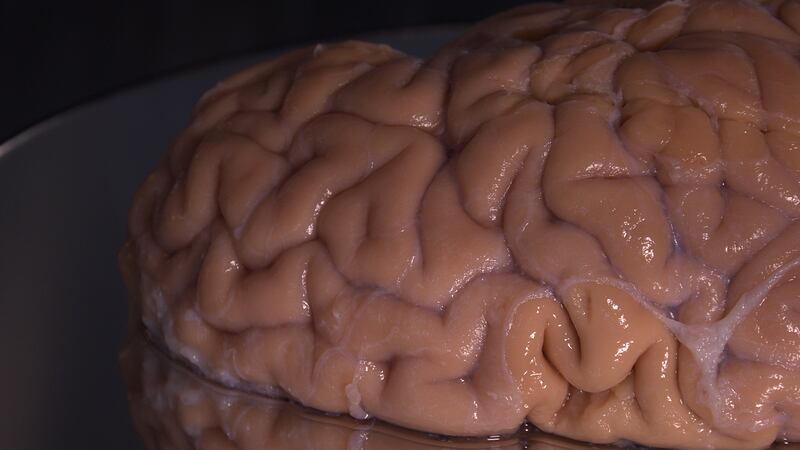
Being able to diagnose the disease in a living person could lead to ways of managing it.
“There are no cures for CTE, but this is quickly changing,” said Boileau. “There are trials that are ongoing and having a diagnosis of CTE in life would still be very beneficial because it would help doctors to be able to establish a proper care pathway. It would avoid having people circled around the health care system, dead end after a dead end, trying to get a formal diagnosis and proper help.”
“For families who are left behind, I think the diagnosis of CTE helps them explain a lot of the other mental health consequences and erratic behaviours they could have seen,” said Vasdev. “What they’re really hoping for is some answer for symptoms to them that are very that are very real,” added Boileau.
“Having this diagnosis of CTE could probably soften whatever bad experiences they’ve had towards the end of life of this person.”
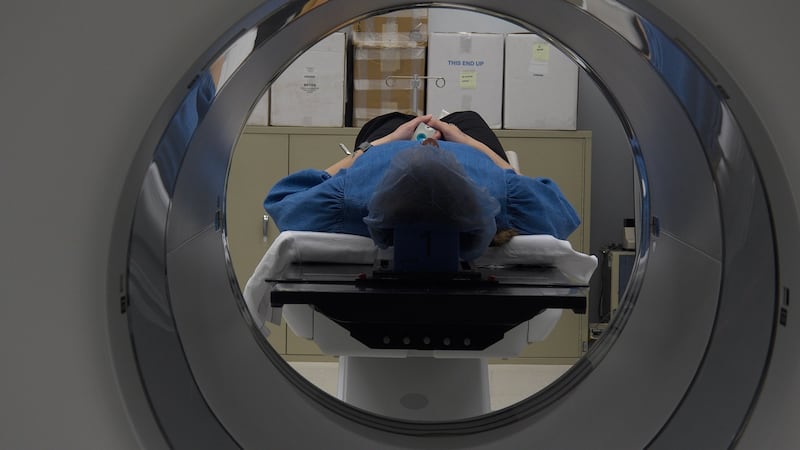
The researchers say their radio tracer is showing promise and the next step is to widen the pool of research participants who go through testing.
“We’ve already shared this tracer worldwide, so we’ll have multi-centre clinical trials where many labs are scanning people with this radioactive imaging agent. And then we can start looking at data from different demographics,” said Vasdev.
“It will also hopefully lead to next-generation imaging agents for CTE that can be even more specific. If we can diagnose CTE in life this will be the most important first step we want. Our ultimate, but maybe impossible, goal is to be the first lab in the world to diagnose CTE in life.”

