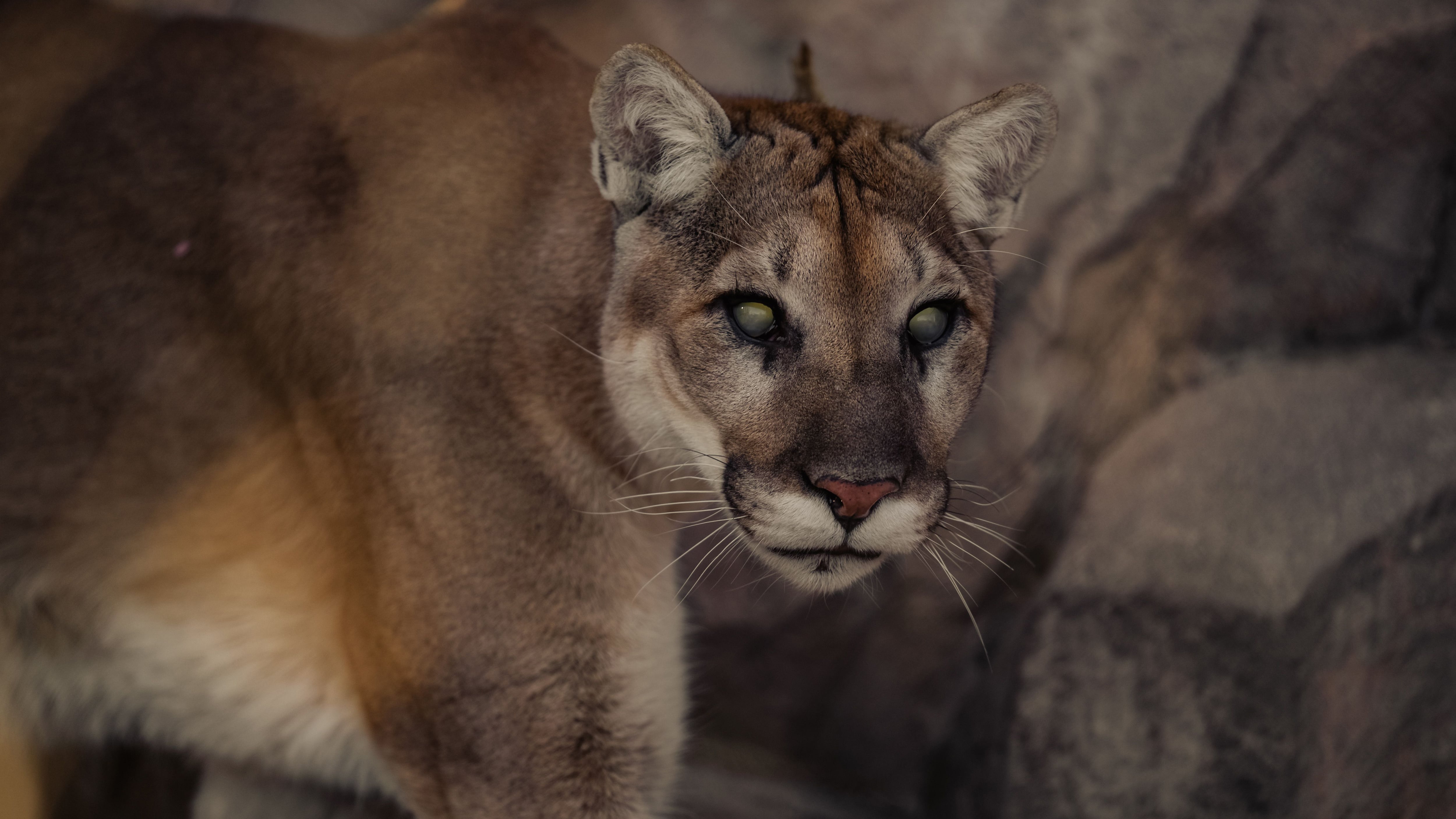
New research on cougars in the wild in Alberta has suggested that the biggest concern for the species is us.
The study, conducted by the University of Alberta and partially funded by Alberta Environment, the Natural Sciences and Engineering Research Council of Canada, the Royal Alberta Museum and the Safari Club International Drayton Valley Chapter, among others, involved tracking 80 cougars with radio collars in west central Alberta, south of Whitecourt, west of Rocky Mountain House and north of Sundre.
- Sign up for breaking news alerts from CTV News, right at your fingertips
- The information you need to know, sent directly to you: Download the CTV News App
The animals were captured and tagged in 2016, then data on survival and hazards were collected until 2021.
By the end of the study’s data collection, 37 of the 80 cougars in the dataset were dead and in most of those, humans were involved.
“Humans were responsible for 29 of the 37 documented mortalities, including harvest, removal of problem individuals, landowner removals, incidental trapping and vehicle collisions,” the study, published by the Public Library of Science (PLOS One), said.
Harvest was the largest single source of mortality (16 of 37 deaths) among the cougars studied, researchers found.
Eight were killed by traps, two were removed due to human-wildlife conflict and two more were killed by vehicles. Just one cougar was killed by a private landowner “under authorized or permitted control actions.”
‘Important roles’ in the wild
PLOS One says this data exposed a vulnerability in cougars, which play an important role in the biodiversity of the areas in which they live.
“Large apex carnivores play important roles in the function of ecosystems and affect herbivore populations, which may result in cascading effects that alter vegetation, avifauna, and mesocarnivore ecology through intraguild competition,” the report reads, adding that cougar populations have been negatively impacted through a number of factors in North America from the early 20th century.
“Since then, effort has been made to restore many of these populations. Effectively managing large carnivores, and ensuring population viability, is improved with an understanding of carnivore population dynamics, and thus vital rates such as survival.”
PLOS One’s research determined the natural sources of cougar mortality consist of disease, infanticide and aggression or predation between other cougars and animals.
Environmental factors, such as weather, landcover types, topography and human influence on landscapes — anthropogenic features — also play a role in cougar survival.
“Anthropogenic features can affect cougar survival both directly and indirectly. Roads, residences, and other human developments can increase mortality risk by improving hunter access, increasing the likelihood of conflict, or facilitating landowner removals,” PLOS One said.
“At the same time, cougars often modify their behaviour in response to human activity, including shifting activity patterns and avoiding heavily used areas, which can reduce revisitation rates of cached prey, which can lead to higher kill rates and greater energy expenditure.”
Gender difference in deaths ‘not statistically significant’
Understanding these risks is key to forming the right cougar management strategies, especially in areas where cougars can be hunted, PLOS One said.
For the study, PLOS One found harvest was the main cause for mortality, but there was no significant difference in the survival rate between genders, even given a propensity toward sex-selective harvest among hunters.
“In our study, harvest accounted for a greater proportion of male mortalities (64 per cent) than female mortalities (35 per cent), but this difference was not statistically significant and we did not detect a sex effect in harvest mortality risk,” the report said.
“This pattern may reflect more balanced harvest pressure between males and females in this system, although limited sample size, particularly for males, may have reduced power to detect sex-specific differences.”
PLOS One expected that many environmental factors would come into play during the study, but the only one that proved to be a “significant predictor” was season.
“Survival (was) lower during the cold season,” the research said.
“In contrast, terrain ruggedness and proximity to forest edges, variables that were expected to increase visibility or hunter access, were not significant, likely reflecting the use of hounds for hunting. Under these conditions, visual detection from edges may be less important than locating tracks.”
Human activity was also a factor in cougar mortality, but only in determining that deaths increased among cougars that ventured too close to homes and roads.
“These findings suggest that risk is driven less by general development intensity and more by localized access networks that facilitate hunter access. Linear- feature crossing rate was also a strong predictor of mortality, consistent with hunters using these features to locate tracks before pursuit,” PLOS One said.
‘Where and when’ cougars are vulnerable
The study says a proper cougar management strategy would be best built through an understanding of biological, environmental and anthropogenic features, with the main aspects being season and landscape access.
“Our results have direct implications for cougar management in systems where harvest is the primary source of mortality, particularly in relation to how landscape access influences exposure risk and how sex-specific harvest patterns are interpreted,” PLOS One said.
The study also investigated future steps for cougar management, including further studies that prioritize samplings of higher numbers of male cougars.
“A clearer understanding of the relative contribution of different mortality sources would also help identify where and when each sex is most vulnerable. Studies have suggested that females may experience higher natural mortality due to intra-specific aggression while defending kittens,” PLOS One said.
“We documented three adult females killed by wolves, two of which had dependent offspring, supporting the idea that female mortality can be elevated by natural causes associated with maternal defense. Additional research is needed to further assess the risks of maternal care and its influence on female survival.”
PLOS One’s research is published online.

