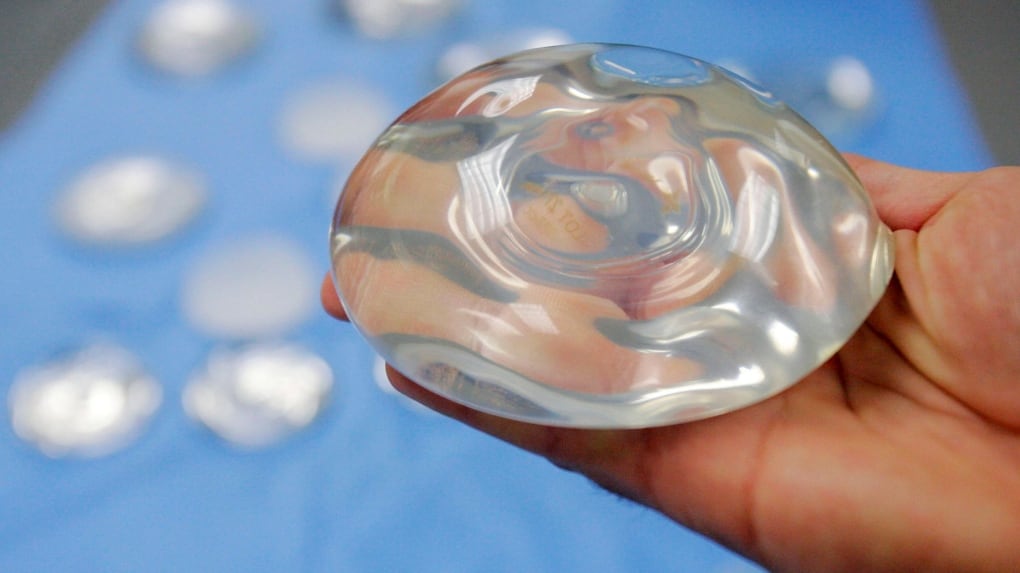
Quebec’s administrative labour tribunal has ruled that a ruptured breast implant constitutes a work-related injury after a West Island gardener was injured on the job while feeding a wood chipper.
The woman, who was employed by the City of Kirkland, was collecting dead branches and feeding them into the chipper when a large branch got jammed and then struck her in the chest on April 17, 2023, according to a recent decision from the Tribunal administratif du travail (TAL).
The branch struck her in the right breast “with a sudden, forceful blow. She let out a cry of pain,” the decision stated.
She told her employer at the end of her shift and then called her plastic surgeon, who referred her to undergo an MRI, which was done in August 2023. She underwent surgery a few months later at a private clinic after the surgeon completed a medical report in September confirming a small tear in the right breast implant and recommended surgery.
Since the operation was not possible in the public health-care system, the woman went to a private clinic for the operation. Her surgeon recommended that even though the left breast implant was not affected by the injury, both implants should be replaced at the same time, according to the Sept. 3 decision.
She filed a claim with Quebec’s workplace health and safety board, the Commission des normes, de l’équité, de la santé et de la sécurité du travail (CNESST), for $12,417, which included the cost of replacing two implants and general anesthesia.
Her employer first challenged the woman’s claim that the rupture was a work-related injury within the meaning of the Act respecting industrial accidents and occupational diseases, since the definition of an injury was related only to a “lesion to living tissue.”
The City of Kirkland argued that a breast implant could not be considered living tissue, so the rupture does not qualify for a work-related injury, and that any rupture discovered “was an incidental discovery associated with the worker’s personal activities.”
The tribunal disagreed.
“The fact that the implant is not living tissue is not decisive, given that a broad interpretation of the concept of injury allows it to be classified as the equivalent of a ‘structure of a part of the worker’s body,’” the tribunal said.
Woman sought reimbursement
The CNESST determined she was entitled to be reimbursed $2,435.62 for the surgery, corresponding only to what she would have paid had the surgery been performed through the public health plan.
Meanwhile, her employer argued that the woman was not entitled to any reimbursement for the surgery on Dec. 12, 2023.
According to the tribunal, a worker is entitled to medical assistance required by their condition as a result of an injury that happened in the function of their duties at a provider of their choice. Since the surgery is not offered in the public system, “she had no choice but to undergo surgery at a private clinic,” the decision stated.
The TAL therefore ruled that she must be entitled to partial reimbursement since only the right breast implant was injured.
The woman was then entitled to half the cost of the $9,750 implant replacements and the full cost of the general anesthesia, which came to $1,050.
“Under the circumstances, the Tribunal holds, as indicated by case law, that it would be unfair to require her to cover a significant portion of the medical expenses resulting from the direct consequences of the work-related injury,” the TAL said.

