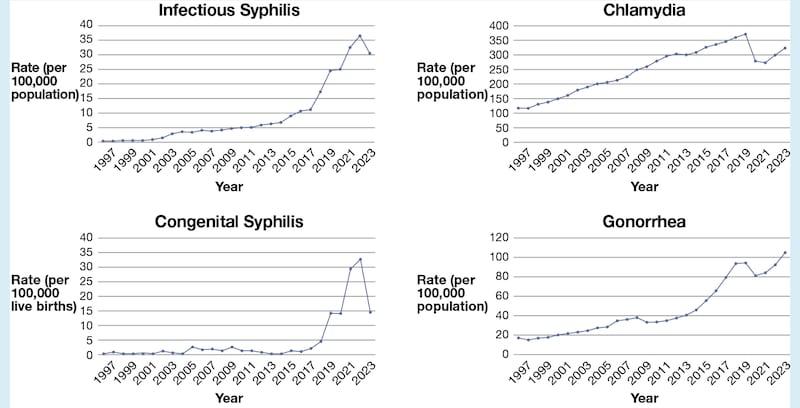
Canada is seeing a troubling rise in sexually transmitted infections, with syphilis rates more than quadrupling over a decade and more babies being born with the potentially life-threatening infection.
The latest report from Canada’s chief public health officer warns that rates of syphilis, chlamydia and gonorrhea have been climbing, raising concerns about missed diagnoses, barriers to testing and growing antibiotic resistance.
Syphilis surge raises alarm over newborns
Infectious syphilis rates increased more than fourfold between 2014 and 2023, according to the report.
The increase has also contributed to a more than threefold rise in the rate of congenital syphilis between 2018 and 2023. The infection can pass from a pregnant person to their baby during pregnancy or at birth and can cause serious complications, including stillbirth and infant death.

Dr. Fareen Karachiwalla, York Region’s medical officer of health, says the national findings reflect a broader trend that public health officials have been watching for years.
“Seeing babies born with it, which is, definitely alarming (means) we’re missing something in pregnancy,” Karachiwalla told CTVNews.ca in an interview on Friday. .
The document notes that reported cases declined in 2023, but says more data are needed to determine whether that improvement will continue.
Stigma, access to care contribute to missed cases
Karachiwalla said several factors are driving the increase, including stigma surrounding sexual health and difficulties accessing testing and treatment.
“Talking about how these things are transmitted like, sexual, encounters, is not always something that people want to talk about or (are) forthcoming about,” she said.
She said health-care providers also need to make patients feel comfortable discussing their sexual health without fear of judgment.

Changing sexual behaviours, including the use of online dating and hookup platforms, may also be contributing. Karachiwalla said advances in HIV prevention medication could have led some people to feel less concerned about infection risks, potentially reducing condom use and increasing exposure to other STIs.
The report also identifies discrimination, unstable housing, income inequality and limited access to health and social services as barriers to prevention and treatment.
Antibiotic resistance adds to concerns
Gonorrhea is becoming increasingly difficult to treat in some cases as the bacteria develop resistance to antibiotics.
The report warns that more cases are being detected in which the bacteria have developed resistance to one or more drugs used to treat the infection.

Karachiwalla said the risk is increasing, although gonorrhea has not reached the point of being completely untreatable.
“But we don’t want to get there,” she warned.
She also urged people not to seek antibiotics or attempt treatment without proper medical advice.
Pandemic disruptions may have hidden infections
Reported STI rates dipped during the COVID-19 pandemic, but Karachiwalla said that may partly reflect fewer people getting tested, rather than a genuine decline in infections.
Some sexual health clinics may have closed or reduced services, while people put off health care that was not considered urgent.
“It’s kind of catching up with the backlog and increased spread,” she said.
Many STIs also cause no symptoms, meaning people can unknowingly transmit infections without realizing they are infected.

Karachiwalla said bringing testing directly into communities, including through rapid testing that provides results on the spot, can help reach people who face barriers to traditional health-care services.
“Testing closer to community is very critical for helping reduce the spread,” she said.
The report calls for better data, co-ordinated public health responses and improved access to prevention, testing and treatment across Canada.

