OTTAWA — Prime Minister Mark Carney’s updated immigration levels plan is set to be unveiled in Thursday’s federal budget, multiple government sources tell CTV News.
The updated targets come as Canada’s population growth has seen a slowdown in the past two years. Carney, meanwhile, has sent recent mixed signals over the direction of immigration in Canada.
In September, the prime minister told the New York Times that Canada will eventually resume a “controlled increase” in its population once the immigration system remains fully under control, but he did not provide specifics.
Weeks later, Carney insisted his government will “not budge” from its goal of keeping national immigration levels sustainable.
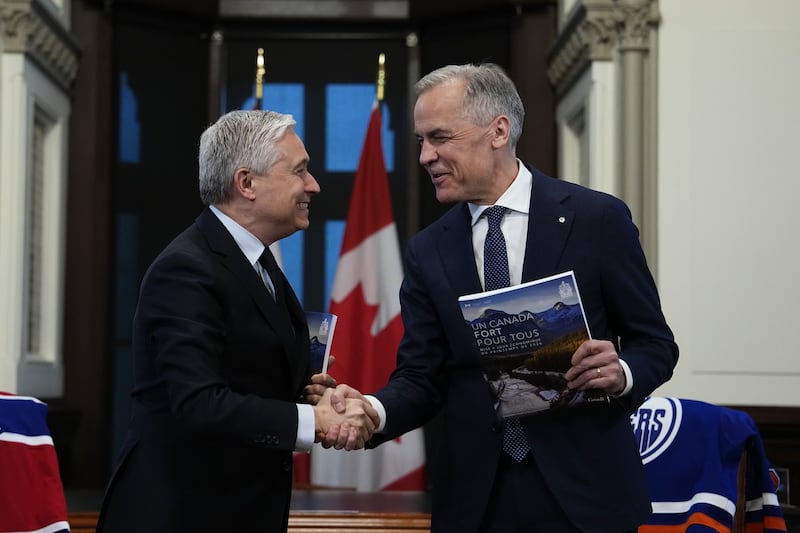
Last year, the Carney government lowered and stabilized permanent resident admissions to 380,000 per year from 2026 to 2028. Targets for new temporary resident arrivals were also reduced to 385,000 in 2026 and 370,000 in 2027 and 2028.
The moves were in response to significant increases in immigration in the early 2020s under former prime minister Justin Trudeau that led to pressures on housing and social services.
Data from Statistics Canada shows temporary residents experienced significant growth between 2021 and 2024, peaking at 7.6 per cent of Canada’s population in October 2024.
That prompted shifts under the late months of the Trudeau government, including caps on international students, and Carney’s 2025 federal election pledge to “return immigration to sustainable levels.”
‘Controlled increase’ in immigration
The recent lowered targets along with other measures, however, have contributed to Canada’s slow population growth. According to Statistics Canada, the country’s population reached an estimated 41,798,407 people on July 1, 2026, an increase of 189,425 people or 0.5 per cent from July 1, 2025 – marking the lowest July-to-July growth in total population size since 1944-45.
In October, the Bank of Canada concluded that Canada’s aging population and declining immigration is “reshaping” the economy by shrinking the workforce and shifting what people are consuming.
Another report from RBC in September, meanwhile, urged Canada to rethink its immigration strategy that “could get admissions back on track and avoid slipping into the kind of politically charged, counter-productive discourse taking hold in places like the U.S. and Europe.”
Some recommendations from RBC include stabilizing population growth to one per cent and balancing admissions.
“Without immigration, the country’s population would shrink to half its size by the turn of the century,” RBC’s skills policy lead Jackie Pichette writes.
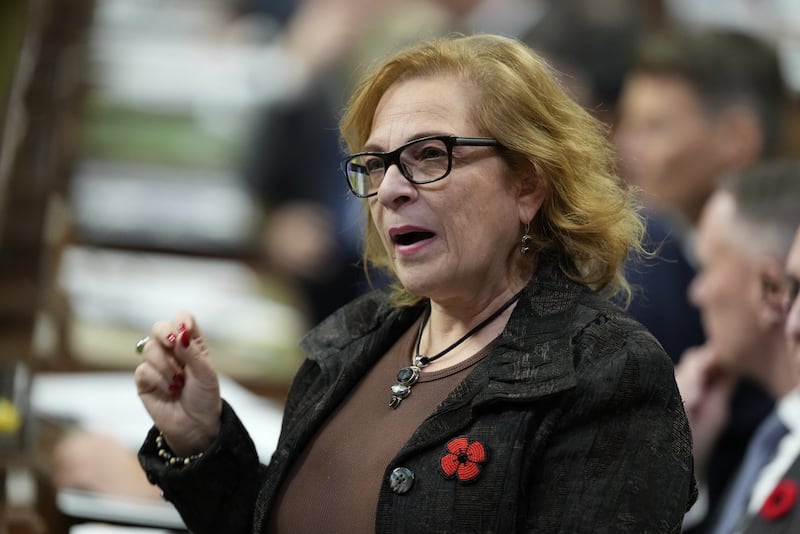
Asked in October about Carney’s recent comment alluding to a “controlled increase” in immigration, Immigration Minister Lena Diab pointed to the country’s slow population growth and the federal government’s “ambitious agenda.”
“We’ve taken a step backwards on immigration. Our population increase, it was the slowest population growth since World War II. Again, that’s not me saying it. That’s the numbers,” Diab said at the time. “We have an ambitious agenda. We are going to want to drive growth. We do need people.”
Conservatives expect ‘much lower’ levels
During that October announcement, Diab unveiled changes effective Nov. 3 to the express entry program that will award extra points for high-wage earners in a bid to drive economic growth and retain skilled newcomers.
The Conservatives, meanwhile, have been calling on the federal government to further reduce permanent residency admissions in the coming immigration levels plan.
“Let me be perfectly clear – the Conservative Party of Canada will vigorously oppose any efforts by Prime Minister Carney and his Liberal government to increase immigration,” Conservative MP and immigration critic Michelle Rempel Garner said in a statement in September in response to Carney’s New York Times interview.
“We will also continue to press for major decreases of immigration levels. We expect immigration levels to be set much, much lower in the upcoming immigration levels report.”
With files from CTV News’ Vassy Kapelos and Marieke Walsh

