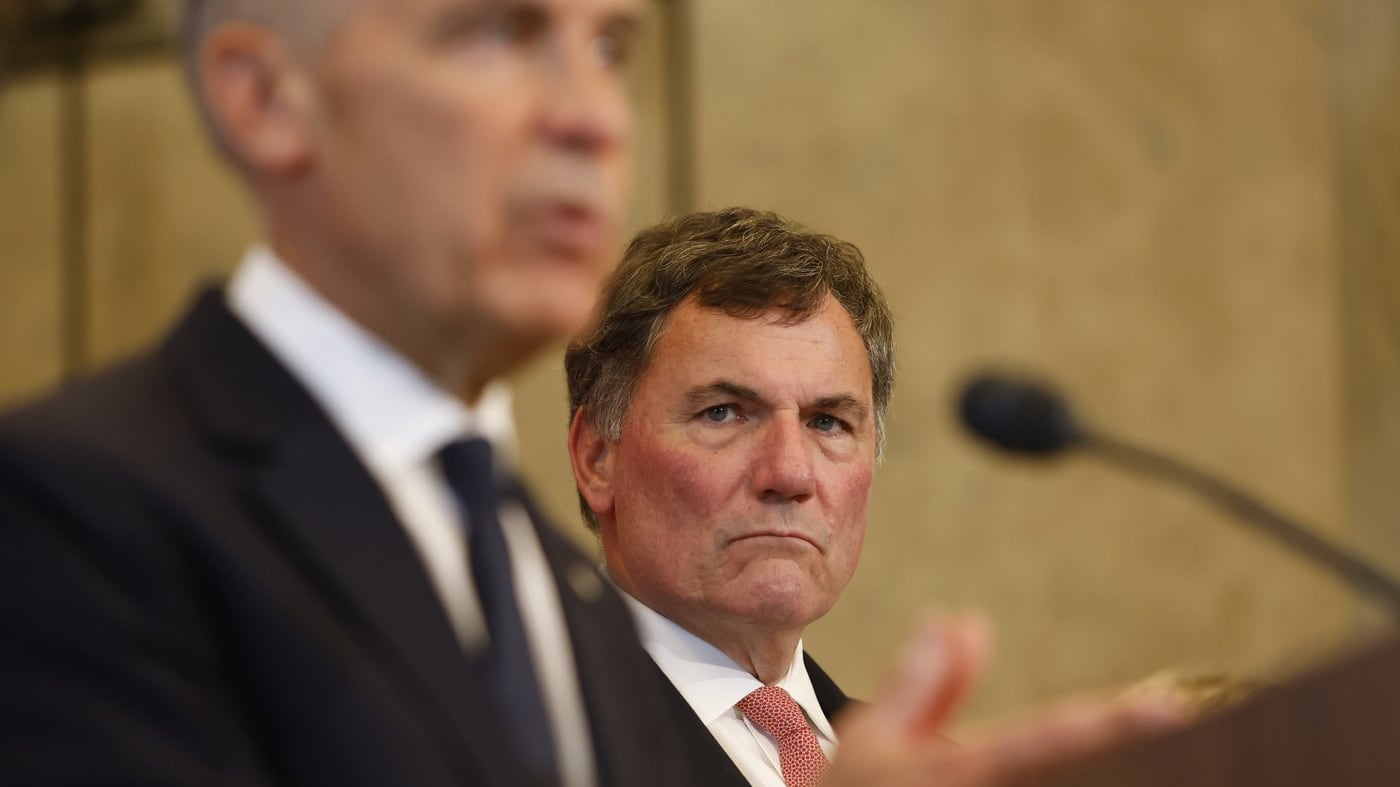
OTTAWA - The names of private sector companies with employees working at the Major Projects Office (MPO) should not be publicly released, argued Internal Trade Minister Dominic LeBlanc at a joint parliamentary committee Tuesday.
“I think we have to be careful. These are people who work for these institutions who decide to step up and serve their country and help build their country,” LeBlanc said.
He made the comment after office CEO Dawn Farrell indicated she would not provide names or company names of MPO employees from the private sector.
LeBlanc joked that the practice of the secondment program is so old it was founded in 1971, when former prime minister Pierre Elliott Trudeau had sideburns.
“This is a well-worn path, and I think we’ve got to be careful not to cast aspersions on either the companies or the individuals that are participating in something that’s existed for well over 50 years,” LeBlanc said.
LeBlanc said he would provide the joint committee with the total number of private sector employees seconded to the office, known as the MPO, and the number of times conflict-of-interest screens have been used for these seconded employees.
Both LeBlanc and Farrell said about one-third of MPO employees are not federal public servants. They cautioned that not every one of those employees are part of the private sector, noting the group also includes staff from provincial governments. Other staff come from the transportation, electricity and financial services sectors.
Conservative MP Connie Cody asked several questions around conflict-of-interest screens.
“I believe Canadians deserve the assurance that these employees aren’t helping to advance projects that their companies are invested in, and that they aren’t working against projects that their competitors are working on,” Cody said.
“If you can’t tell us what companies these borrowed employees come from or how their screens are applied, then how can Canadians possibly have that assurance?”
Farrell and LeBlanc told Cody they are confident MPO staff have no personal investments in the projects they’re working on. LeBlanc pointed out all MPO employees are covered by Treasury Board guidelines, “including post-employment restrictions.”
“It’s extremely valuable to have both private sector and public sector experience in all of the work that we do,” Farrell said in defence of the program.
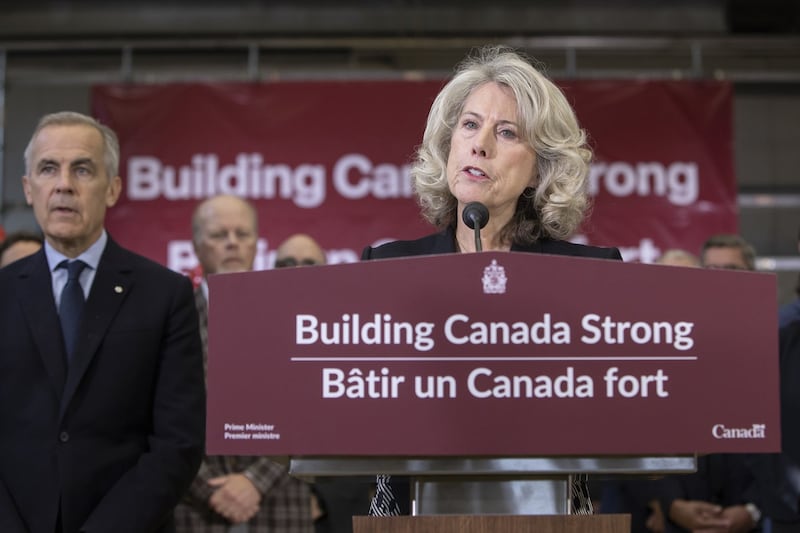
The pair was testifying at a special joint committee of both senators and members of Parliament, looking at how the government exercises powers under the Building Canada Act, enacted last year.
In his opening statements, LeBlanc said the MPO is “supporting” 18 projects and 10 strategies across the country. LeBlanc said that work represents 200,000 jobs and more than $190 billion in new investment.
Later, in response to a question about the status of the Crawford nickel mine project in northern Ontario, Farrell cautioned that not all projects end up listed as in the national interest – saying that happens only in “exceptional” cases.
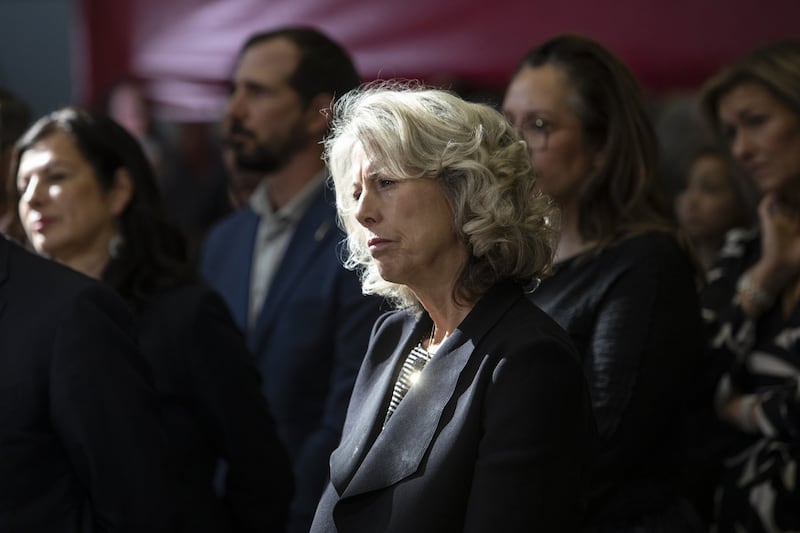
She said of the 18 projects, six have gone into the final investment decisions (FID) and construction stage, and another six are “likely” to be under construction and in FID in the next two years.
“So that’ll be about 12 of the 18 … some will not make it across the line. They won’t go anywhere.”
Neither Farrell nor LeBlanc would answer questions on the specific cost of the Pacific Link pipeline project.
Scotiabank has estimated the cost could be as high as $65.6 billion. LeBlanc said Farrell has assured him higher private-sector estimates “are not reliable in the sense that that ongoing work is being done now,” but he could not nail down a specific cost to taxpayers. The government’s official estimate pegs the pipeline at between $35.2 billion and $43.7 billion.
Farrell was also asked about the obstacles to faster progress she’s seeing in her role.
“I think the barriers are the disbelief that we in Canada can do it well, can do it right, and can do it once,” Farrell said.
She said the current barrier she sees is people being comfortable “taking a long time, you know, taking years to make decisions.” She said the reality is “technology” and the “goodwill of the participants to put the processes in parallel and get the same performance.”

