
The lawyer for Jeffrey Ewert, a convicted murderer whose admission was revoked by McGill University, says he was not given a fair process and is urging the university to reconsider its decision.
McGill University announced Monday that Ewert was no longer enrolled after temporarily removing him while it reviewed its protocols. The review came after it was revealed in October that he was attending classes on campus, sparking safety concerns among students.
“While McGill University Law champions due process in its classrooms and its duty of care to its students, the process and outcomes associated with both the decisions to temporarily remove and subsequently revoke Mr. Ewert’s admission from McGill University represent a sharp departure from these principles,” Nora Demnati, Ewert’s lawyer, wrote in a statement Friday.
“Rather, his removal from law school teaches students, and the rest of us, that due process and an institution of higher learning’s duty of care are not for everyone.”
“We urge McGill University to reconsider its decision to revoke Mr. Ewert’s admission to law school and to delay its decision until he is in a position to make a full submission in support of his desire to continue his education at the institution.”
Ewert was convicted of second-degree murder and attempted murder for separate attacks on women in British Columbia in 1984 when he was in his 20s. He is now out on day parole after spending 40 years in prison on a life sentence.
In the first case, he strangled a young woman, rendering her unconscious, before sexually assaulting her. She died from the attack. In the second case, weeks later, he attacked a 15-year-old girl after she refused his advances. He threw her into a ditch, believing she was dead. She was found the next day and suffered significant brain damage; she is now blind and quadriplegic.
Safety concerns, second chances
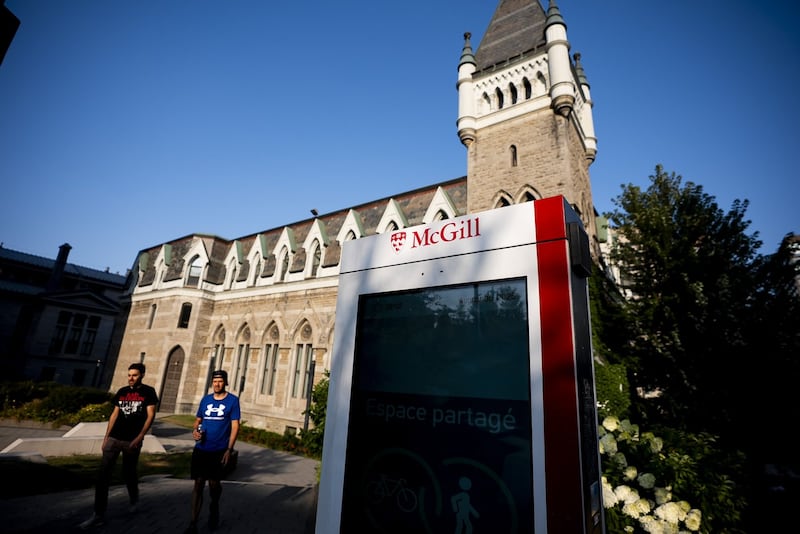
Ewert began studying law at McGill University in August. His presence at the university sparked a debate about safety and second chances.
Some students defended his presence on campus, citing that the Parole Board of Canada deemed it safe to release him on day parole. However, other students felt the university put women on campus at risk, and McGill should have been more transparent about his enrollment.
“There is no disputing that the murder and attempted murder that Mr. Ewert committed in 1984 were horrific acts of violence against women. He does not dispute this, nor the continued impact on his victims and their loved ones. What is in dispute, and what has generated significant controversy, is his admission to McGill University’s Faculty of Law, along with his presence on campus,” Demnati wrote.
“Mr. Ewert’s behaviour as a McGill student, which did not raise concern when it occurred, was scrutinized after the fact through the lens of his past convictions. As a result, he faced unconfirmed accusations and – due to their anonymous, ambiguous, and delayed nature – is not in a position to either defend himself against or engage in community accountability processes to address them.”
‘Succumbing to public pressure’
Ewert’s lawyer said the process surrounding Ewert’s removal raises questions about McGill’s procedural fairness. She argued that McGill rushed a decision with significant consequences, “succumbing to public pressure and, in doing so, sacrificing procedural fairness.”
She said McGill University’s decision to revoke his admission was not based on any student concerns, but rather on Ewert’s alleged failure to disclose select aspects of a decision rendered by the Parole Board of Canada following his release in 2025 in his admissions application.
“This imposed an unreasonable, retroactive obligation that Mr. Ewert could not have reasonably known. Nowhere does McGill admissions guidance indicate that this kind of information is necessary or even welcome,” his lawyer wrote.
Demnati also criticized the university for imposing what she described as “extremely short deadlines” to respond to a letter Ewert received on Oct. 20, after he had been removed from campus two weeks earlier. The letter informed him that McGill was considering revoking his admission over the alleged omission.
On Oct. 25, Ewert was taken back into custody after a suspension warrant was issued while Correctional Service Canada conducted a “thorough assessment of the situation,” CSC spokesperson Kevin Antonucci said at the time.
His lawyer said his parole was suspended on Oct. 30, and he was arrested.
“Subsequently, he was unable to contact his lawyer for an entire week while in custody, and at the time McGill’s final deadline expired on Nov. 2, 2026, counsel had not received meaningful instructions from Mr. Ewert to provide comments. Despite being informed of these realities and the absence of any need for an immediate decision, McGill University refused to extend their self-imposed deadline and instead made a decision concerning Mr. Ewert’s enrollment without receiving substantive representations from him.”
Demnati said McGill initially sent a final decision revoking Ewert’s admission on Oct. 31, but recalled the email the following day and advised that submissions could still be made by 9 a.m. on Monday, Nov. 2.
“The incident, alongside the invocation of non-existent disclosure requirements, confirms what Mr. Ewert had been concerned about from the beginning: McGill University was rushing the process to make official a decision that had already been pre-determined,” his lawyer wrote.
‘Safety and security of our students is paramount’
Demnati also criticized the university for not reaching out to Ewert for an in-person meeting to find a solution.
“Which would have demonstrated a genuine intention to find a fair solution that addresses both students’ concerns and Mr. Ewert’s desire, and right, to pursue higher education. Mr. Ewert has always been willing to have these discussions and address any real concern,” she wrote.
In a statement to CTV News, McGill University said provincial privacy laws prohibit it from commenting on specific cases.
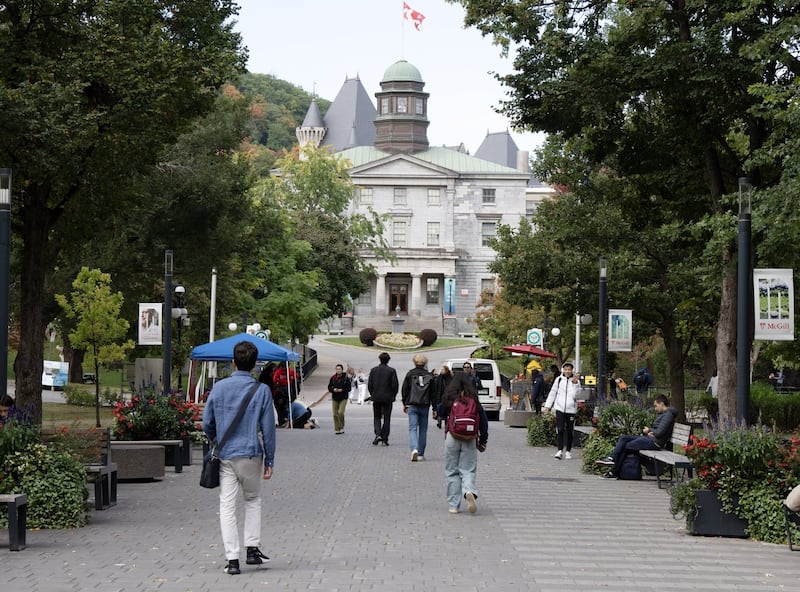
“The safety and security of our students is paramount. Full stop. While criminal background checks are not typically part of Canadian universities’ admissions processes, McGill would act quickly and decisively should concerning information be brought forward about a student’s background or behaviour on campus,” the statement reads.
“The university would liaise closely with all relevant government bodies, including Correctional Service Canada, and apply all policy tools at its disposal, including through its Student Code of Conduct, to remove the individual from campus to ensure a safe environment for teaching, learning and research.”
“The university would also actively review its admissions processes to ensure a similar situation never happens again.”

