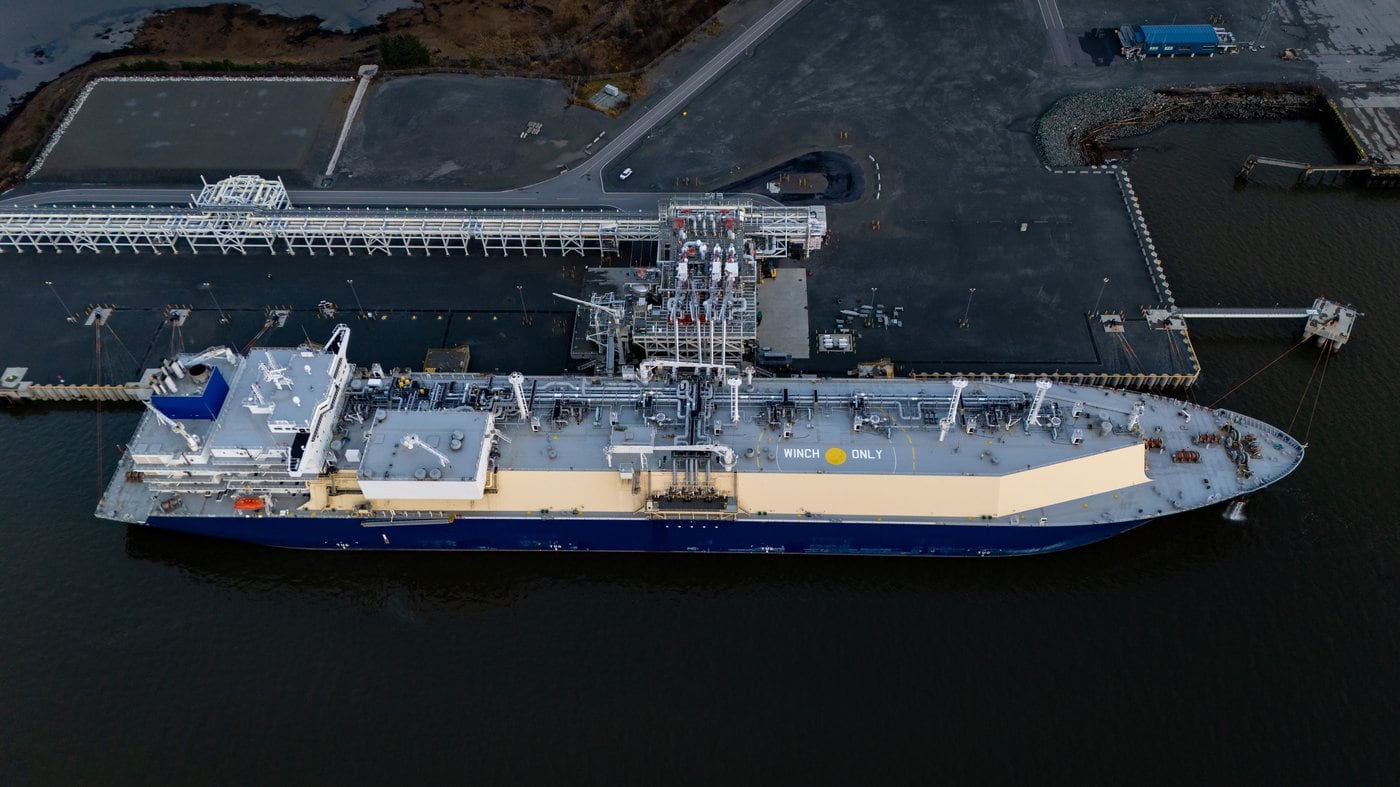
CALGARY — Scaling up Canada’s ability to export liquefied natural gas would not only boost the bottom lines of companies that produce that commodity, but it would have spillover effects into the oilsands and petrochemical sectors, says a new study from S&P Global Energy.
Canada has set a target of producing up to 100 megatonnes per year of liquefied natural gas by 2040, which S&P says would make Canada the third-largest supplier globally.
Currently, the country is on track to reach 36 megatonnes a year by 2050, the research firm said in a report published Thursday.
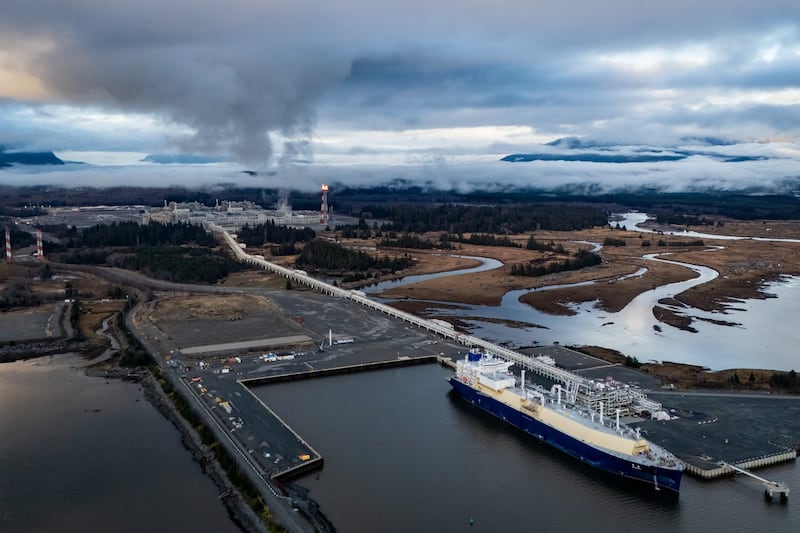
To close the gap, the industry would need to drastically increase investment in infrastructure like pipelines and triple drilling activity in Alberta and B.C. gas fields.
“(Canada’s) position in the energy world still falls far short of its competitive strengths in terms of natural resource, its resource endowment, its geographic location, which has taken on new significance because there are no choke points involved,” said Daniel Yergin, vice chairman at S&P, in an interview.
“It can be a great power.”
One benefit of bumping up drilling activity would be an associated increase in natural gas liquids, or NGLs — high-value materials like propane, butane and ethane that come out of wells along with the ordinary natural gas. NGLs are used as feedstocks for petrochemicals and fertilizers and also cooking and transportation fuels in many parts of the globe.
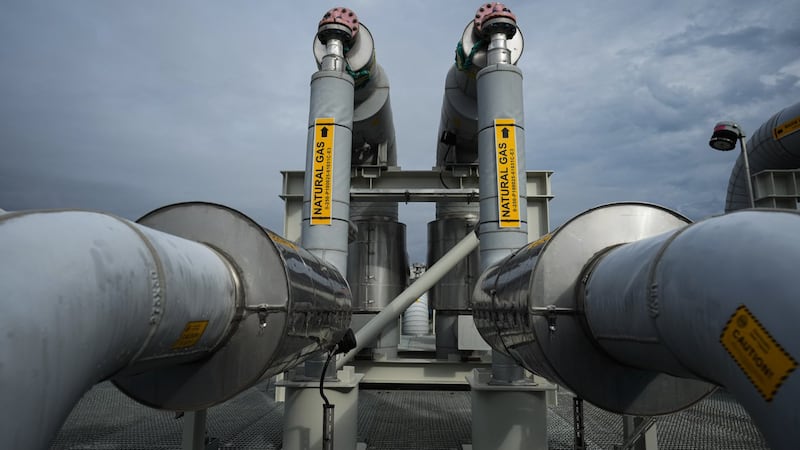
They can also be used to blend with near-solid oilsands bitumen to make it thin enough to flow through pipelines, products often referred to as condensate or diluent.
“The export story for LNG is not just an LNG export story,” said Kevin Birn, S&P’s chief Canadian energy analyst, in an interview.
“It is a very powerful NGL story. It is also a diluent blending story for the oilsands. If Canada wants to grow the oilsands and maximize economic value, then it needs to grow LNG at the same time, and the reverse is true.
“The size of the prize for Canada is bigger than any one commodity group.”
NGLs represent about a quarter of the physical product a typical gas well yields in Canada, but provide almost half of its value in terms of revenue, the study said.
The study found that in an “accelerated development” scenario, an increase in condensate supply could support 1.2 million barrels per day of oilsands supply at its 2040 peak. It sees overall NGL production nearly tripling through 2050, providing $300 million in value, S&P said.
This report by The Canadian Press was first published Nov. 12, 2026
Lauren Krugel, The Canadian Press

