What happens when a simple trip turns into a nightmare? Part three of W5’s five-part investigation on CTVNews.ca follows travellers who say they went from passenger to prisoner, caught in a scheme that crossed borders and changed lives forever.
Prime Minister Mark Carney’s government is making sweeping changes after a W5 investigation revealed how corrupt airport workers are trafficking drugs using innocent passengers’ luggage tags.
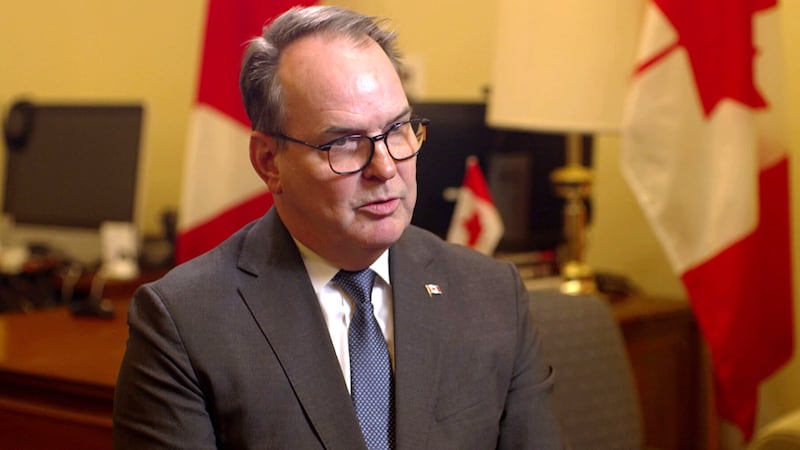
“When we saw your report, we once again went back to the drawing board,” Transportation Minister Steven MacKinnon said in a recent interview from his office on Parliament Hill.
New laws will tighten access to security clearances and restricted areas, he said.
A bag tag switching scheme describes a scenario where a corrupt airport employee takes the tag off an unsuspecting passenger’s luggage and attaches it to a suitcase filled with drugs headed to that traveller’s destination.
A courier on the other end waits to pick it up. But if the bag is intercepted by security, the innocent passenger is left to face the consequences.
And many have.
W5 has identified more than two dozen cases where Canadians have been caught up in this scheme, almost all of them flying out of Toronto’s Pearson International Airport. Several have been detained overseas, in countries where police aren’t interested in hearing, “That’s not my bag.”
- If you have any information regarding tag switching or corruption at Canadian airports, please reach out to avery.haines@bellmedia.ca and jack.hauen@bellmedia.ca.

System can’t prevent criminals getting into ‘trusted positions’: government
Sixteen Pearson workers have been arrested over the past five years, most in relation to drugs, and at least five in connection with tag switching schemes, the RCMP said in an email to W5.
In the previous W5 documentary, Trafficked: The Airport Conspiracy, a former RCMP investigator revealed that corrupt airport insiders routinely keep their security clearances despite being flagged for potential links to organized crime.
Months later, the government now admits in an online discussion paper that it’s not fully equipped to prevent organized criminals from getting into “trusted positions within the transportation system.”
That’s because the system that decides who gets security clearances isn’t working properly, according to the government’s discussion paper.
Right now, the system focuses on filtering out people who could put planes in danger — but “limits our ability to consider … links to organized crime or patterns of suspicious activity,” Transport Canada wrote, adding that organized crime is a growing threat inside Canadian airports.
‘Higher thresholds for security clearances’ coming: minister
Now, the man in charge says he’s taking action.
Transport Minister Steven MacKinnon said he plans to use expanded powers in Bill C-39, the government’s omnibus “Building Canada Strong Act,” to institute “higher thresholds for security clearances” and more restrictions on who has access to secure areas in airports.
“Whether you’re working in a restaurant at the airport or working as part of ground crews or baggage handlers, we are watching ever more closely,” he said.
The bill, which is currently before Parliament, would give the minister expanded powers to change the security clearance application process, grant or revoke individual clearances and expand the list of workers who require clearance.
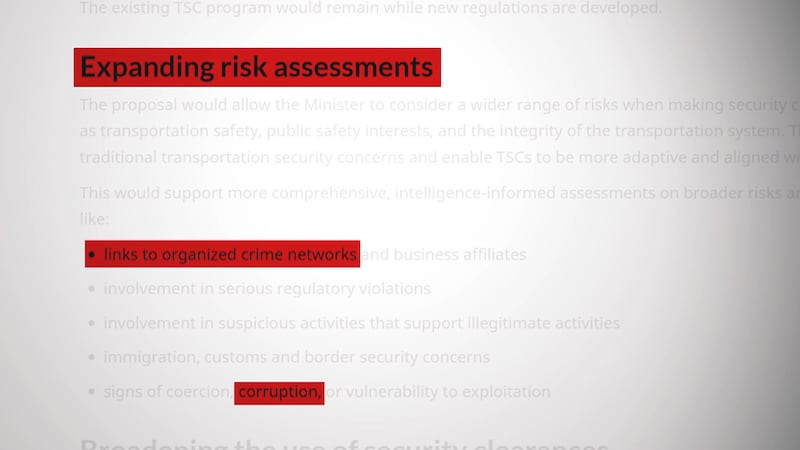
Transport Canada said the new system could more comprehensively screen for factors like “links to organized crime networks,” “involvement in suspicious activities” and “signs of coercion, corruption, or vulnerability to exploitation.”
Bill C-39 would also allow for more information sharing about security clearances with foreign governments and law enforcement.
The bill is currently in committee and could pass before the end of the year.
Not just baggage staff
Aviation management expert John Gradek said airport employees need to be physically screened as they’re entering secure areas, so drug bags are stopped before they have a chance to take flight.
“We have to make sure we watch cargo, food services, commissary,” he said. “All of that stuff has to be screened to make sure you’re not bringing contraband along with the 50 or 60 packs of toilet paper that you’re bringing into the airport.”
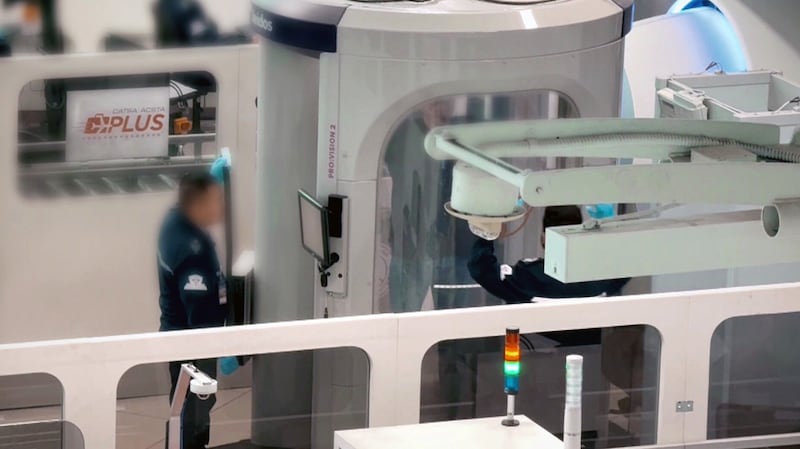
Minister MacKinnon said he’s on it — the government has increased how often employees are screened on their way into work, he said, adding that he plans to boost the practice further.
But the screening that happens now won’t necessarily stop drugs from getting in the back door.
- Part 1: Pearson luggage tag switch leaves Toronto man facing 15 years in Albania
- Part 2: Who’s responsible? Pearson tag-switching victims sue across the system
That’s because the body responsible for that screening only looks for things “that could pose a threat to aviation security,” Transport Canada spokesperson Hicham Ayoun said in a statement.
“Searching for drugs is outside CATSA’s screening mandate. Suspected illegal items identified during screening are reported to the police of jurisdiction,” Ayoun said.
Bill not a silver bullet: transport critic
Conservative transport critic Dan Albas said the changes the government is proposing are welcome, but they won’t solve the problem.
Organized criminals often try to work with people with clean records — people who wouldn’t be screened out by increased scrutiny on background checks, he said.
Airports could be required to take photos of travellers’ baggage, he noted. And a review of the secure areas where employees handle baggage is needed to root out the blind spots where tag switching takes place, he said.
These changes wouldn’t require the minister to introduce another bill, Albas said.
“He can do these things unilaterally. And I’m quite disappointed to see we have not seen more action on this,” he said.
Watch the one-hour special presentation of W5’s Avery Haines Investigates Sunday at 10 p.m. ET live on W5’s official YouTube channel and on CTV and Crave following the Grey Cup.

