Some major companies have filed plans for satellite-based AI data centres in the future. One Saskatchewan researcher and astronomer is asking them to consider the consequences for everyone.
Samantha Lawler, an associate professor of astronomy at the University of Regina, recently published a research paper examining the potential impact of regulatory filings involving major tech players like SpaceX and Blue Origin, owned by billionaires Elon Musk and Jeffrey Bezos, respectively.
Another filing is from Cowboy Space, owned by Baiju Bhatt, the former co-founder and CEO of stock trading platform Robinhood.
Currently in the peer review stage, Lawler’s paper titled “Rings in the Sky” paints a picture that even one of five possible projects going ahead could have severe consequences for the night sky and stargazers not just in Canada, but worldwide.
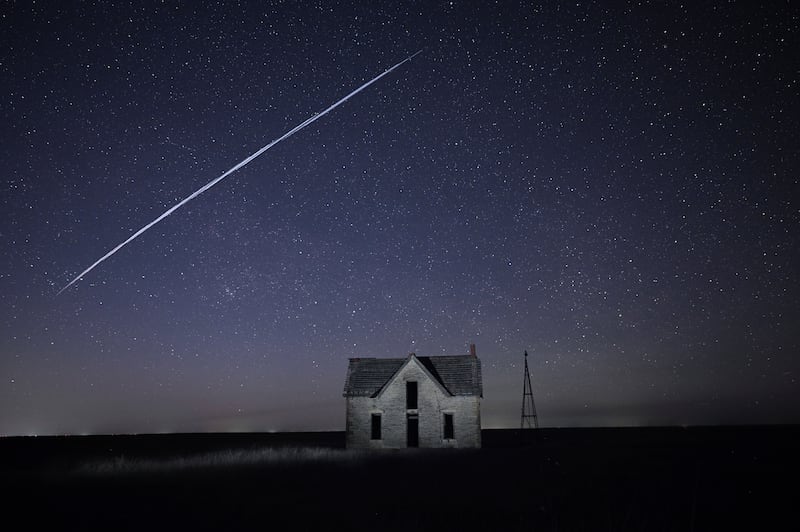
“It’s actually pretty horrifying to think about, but it would be a ring of satellites all moving across the sky together,” Lawler said. “Much brighter than the satellites that we see in the sky right now.”
What is an orbital data centre?
Orbital data centres are proposed as a series of satellites known as constellations that would deliver “unprecedented computing capacity to power advanced artificial intelligence (“AI”) models and the applications that rely on them, according to the U.S. Federal Communications Commission (FCC) filing from SpaceX.
“By directly harnessing near-constant solar power with little operating or maintenance costs, these satellites will achieve transformative cost and energy efficiency while significantly reducing the environmental impact associated with terrestrial data centers,” SpaceX said.
The company contends that the system would go so far as putting humanity on a first step towards “becoming a Kardashev II-level civilization,” one that is able to harness the whole of the Sun “supporting AI-driven applications for billions of people today and ensuring humanity’s multi-planetary future amongst the stars.”
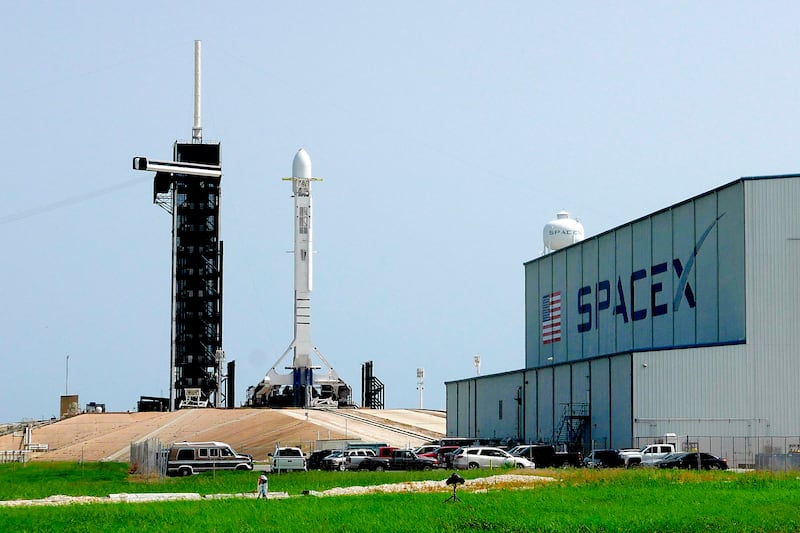
SpaceX is proposing to launch “up to one million satellites” as part of its constellation known simply as the SpaceX Orbital Data Center System. It’s the largest of the three projects covered in Lawler’s research.
Blue Origin’s application for what it calls “Project Sunrise” would consist of up to 51,600 satellites.
“The Project Sunrise system will ease mounting pressure on U.S. communities and natural resources by shifting energy – and water intensive compute away from terrestrial data centers, reducing demand on land, water supplies, and electrical grids,” Blue Origin’s application said.
Cowboy Space’s Stampede project would include up to 20,000 satellites. The proposal’s timeline puts a target of 2028 for the system’s first launch. Blue Origin set a timeline to launch 50 per cent of its satellites “within six years following grant of the authorization” and the other half coming online three years after that.
SpaceX did not offer a target timeline for its project in the filings.
‘Cannot get away from reflected light’
Lawler has had her eye on the night sky for a long time. She’s among a group of experts who have spent years flagging the potential consequences of light pollution caused by satellites for both astronomers and stargazers.
“As a scientist, I write papers and make predictions, and I usually hope those predictions will come true,” Lawler said. “But in this case, I actually hoped I was wrong and that it wouldn’t be as bad as predicted.”
Orbital data centres on the scale proposed would add to a night sky that becomes more and more crowded with every launch.
“When I started worrying about satellites, when I started seeing more satellites in my sky, there were a couple thousand satellites total,” Lawler said.
“Today, there are 17,000 satellites and there’s plans for 2 million satellites.”
One major factor was the development of Starlink, SpaceX’s satellite-based internet service.
“Starlink satellites, they have done some work to make them fainter, but at the same time, they have made them larger and put them on lower orbits, which makes them brighter than they were before,” Lawler said.
“So, they’re still very easily visible in the night sky. There’s also several other companies that are launching hundreds and thousands of satellites. So, it’s not just Starlink in the game anymore.”
Lawler said larger satellites at these orbits would still present problems, even with efforts to reduce the amount of reflected light – especially at the orbits the data centre proposals suggest.
“The more surface area, the brighter they’re going to be,” Lawler said.
The influx has created a range of problems for astronomers. Lawler said the problem has made research from taxpayer-funded telescopes less effective and makes data less useful. It’s also making it more difficult for everyday people to enjoy a starlit sky – even in Saskatchewan, which has some of the darkest skies in North America.
“We’re so lucky here in Saskatchewan. But you cannot get away from reflected light from satellites. That’s visible anywhere in the world,” Lawler said.
“With numbers increasing, with the sizes of satellites increasing, that’s only going to get worse.”
‘Go see the night sky now’
Lawler’s point is echoed by John Barentine, a frequent colleague and the president of a group known as the Center for Space Environmentalism in the U.S.
“What’s proposed compared to the status quo right now is remarkable, it is a sea change that is coming,” Barentine said. “Go see the night sky now, because a change is coming that will radically transform its visual appearance.”
Barentine said the orbits the satellites would be using would make them visible throughout the night – not just during the morning and evening like most of today’s existing satellites. He added that’s especially true in northern latitudes like Canada.
“Particularly in the months around the summer solstice in June, a lot of these satellites will be visible all night,” Barentine said. “So, there won’t be a dark time where you can go out and look at the night sky and not be impacted by them.”
Barentine said the status quo drastically increasing from data centres or any other satellite-based projects to 50,000 or 100,000 or as many as 1.7 million, the drastic impact would be easily visible.
“I can’t fully get my head around what the night sky would look like, given what the simulations are telling us,” Barentine said.
“There are certainly times of nights where there would be more moving, artificial objects in the night sky than stars that people would typically see.”
In terms of timeline, Lawler used Starlink as a comparison for the kind of scale companies are aiming for with any orbital data centres. Since Starlink launched its first group of satellites in May 2019, SpaceX has been able to put around 11,000 satellites in orbit in a period of just over seven years.
“I expect it would be something along that timeline, if they’re actually going to do it,” Lawler said.
Barentine said while there are still unanswered questions on exact design, orientation, and how many satellites go into orbit, the paper does present a “believable result.”
“What we’re waiting to find out is, in the end, do the companies intending to launch these satellites, do they actually launch them in the numbers expected?” Barentine said.
Data centres in space ‘not a solved problem’
Stressing she is not an engineer, Lawler said several challenges need to be solved for any orbital data centres, namely surrounding heat and radiation.
“[Electronics] are subject to solar storms that are outside the Earth’s atmosphere. This is hard,” Lawler said.
“Companies have gotten better at it, but not to the point of putting an entire data center into orbit. That is not a solved problem.”
Another issue Lawler foresees is access for repairs and upgrades.
“Everything that goes into space is taken from the Earth and put into space, and you have the cost of launching it and it’s in orbit so you can’t fix it if it breaks,” Lawler said.
“And you can’t replace chips when they go obsolete and it’s in space.”
Despite the problems that would need to be overcome on these kinds of projects, Lawler’s view is staying ahead of what companies are planning – especially when it comes to the impact on the night sky.
“There’s a lot of engineering work to do before this could even happen, and maybe it won’t. Maybe it’s impossible, but I wanted to show some of the ways that this is not a good idea,” Lawler said.
“Because they’re trying to get investors to put money into this right now.”
Re-entry risks ‘a lot of dice rolling’
Another possible challenge Lawler is very familiar with: what happens when satellites – or parts of them – start coming back down to Earth?
Lawler was one of the people on site on a Saskatchewan farm in 2024, after at least eight pieces of space junk were scattered into Saskatchewan fields – some of them as big as six feet tall and weighing more than 100 pounds.
“They didn’t cause any damage, but they could have,” Lawler said.
The pieces are believed to have been part of a SpaceX Dragon Capsule and were picked up by two people in a UHaul truck who identified themselves as employees of the company – but did not make any comments to media in attendance.
“If we keep adding things into orbit, and then of course all those satellites are coming down,” Lawler said, adding she worries about the potential impact of debris crashing into a more populated area.
“Every time one of these re-enters, it’s a roll of the dice whether stuff will make it to the ground and whether it’s going to hit someone … This is not something I want people to be personally worried about, getting hit by space junk, but someone, somewhere, is eventually going to be impacted by debris.”
Lawler said more satellites would compound that issue and only add to the risk.
“There’s one or two Starlink satellites re-entering every day. With a million data centres with five-year lifetimes, that would be one re-entry of a four-ton satellite every three minutes,” she explained.
“So that that’s a lot of dice rolling.”

In a section on its website, SpaceX said it is confident its anti-collision mitigation technology can support arrays of this size.
“We use the thruster of the satellite to make a maneuver and keep away from that object, and reduce the probability of collision to effectively zero,” Michael Nicolls, Starlink’s Senior Vice President said in a video produced by SpaceX, adding it is a priority for the company to keep orbital access for manned and exploration missions to launch in the future.
Nicolls added “very predictable trajectories” make it possible, as long as there is a coordinated effort to track and monitor tens of thousands of pieces of space debris to prevent unexpected changes to those orbits.
“You can reasonably fit millions of satellites into an orbital shell, with that math,” Nicolls said.
“By prioritizing safety and long-term orbital sustainability, SpaceX ensures that our growing AI satellite constellation benefits humanity while protecting the space environment for future generations,” SpaceX said.
The issue of space junk re-entering the atmosphere is what inspired Independent Alberta Senator Paula Simons to open a Senate Inquiry on the “Emerging Problem of Satellite Debris Falls” in March.
But it’s just one piece of the public policy puzzle for an issue that could affect everyone.
There’s no confirmation of when the data centre filings could be considered by the FCC.

