Critics of Canada’s climate policies say the country has a “credibility problem” as global leaders assemble for the UN Climate Change Conference in Antalya, Türkiye this week.
“Recent policy like rollbacks, deregulation, doubling down on fossil fuel infrastructure, we feel Canada cannot claim climate leadership on the international stage while doing all of this,” said Pratishtha Singh, the international diplomacy manager at the Climate Action Network Canada, a non-governmental group.
Singh said while the 2026 federal budget includes a $50-billion boost to electrification efforts, there needs to be more.
“We need to also look beyond simply the investments, make sure when we are talking about electrification, it is renewable-powered, it is affordable, it is accessible, right, and that they directly displace fossil fuels, and the workers and communities have a say in shaping this transition,” Singh said.
A ‘net-zero electrified economy’
Before leaving for COP31, Environment Minister Julie Dabrusin wouldn’t say definitively if the investment offsets fossil fuel expansion.
“We’re putting in all the building blocks so that Canadians and our domestic economy does move towards that net-zero electrified economy,” she told Vassy Kapelos on CTV Power Play.
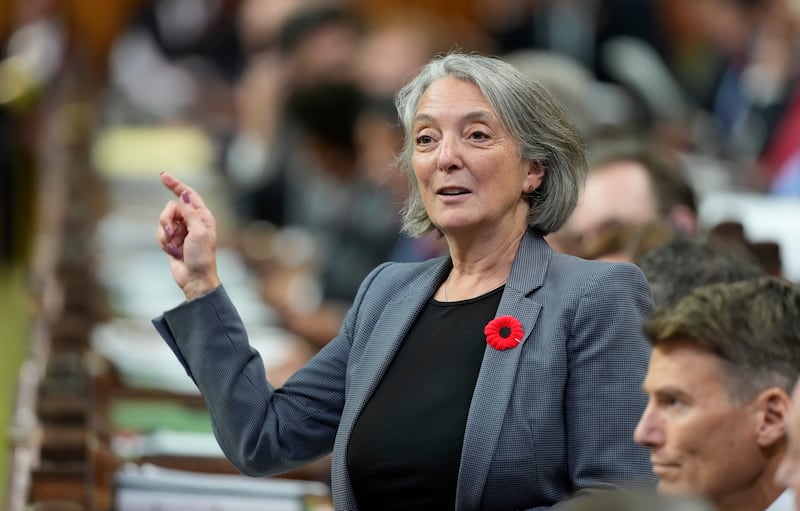
Catherine McKenna, the founder and CEO of Climate and Nature Solutions and a former environment minister, said Canada’s policies need to catch up to the rest of the world.
“I would love to see more Canadian leadership,” McKenna said.
“Canada and like many other countries are providing subsidies, so Canadian tax dollars to the richest companies, to oil and gas companies, and that money could be used obviously for climate solutions to help people save money. But it also could be used to, you know, put more money into housing or into health care or to anything else.”
COP31 wraps up on Nov. 20.

