Alberta’s government tabled legislation Monday that would put controversial new electoral riding maps into law ahead of next year’s general election.
The bill, should it pass, is expected to land in court as the Opposition NDP has promised a legal challenge.
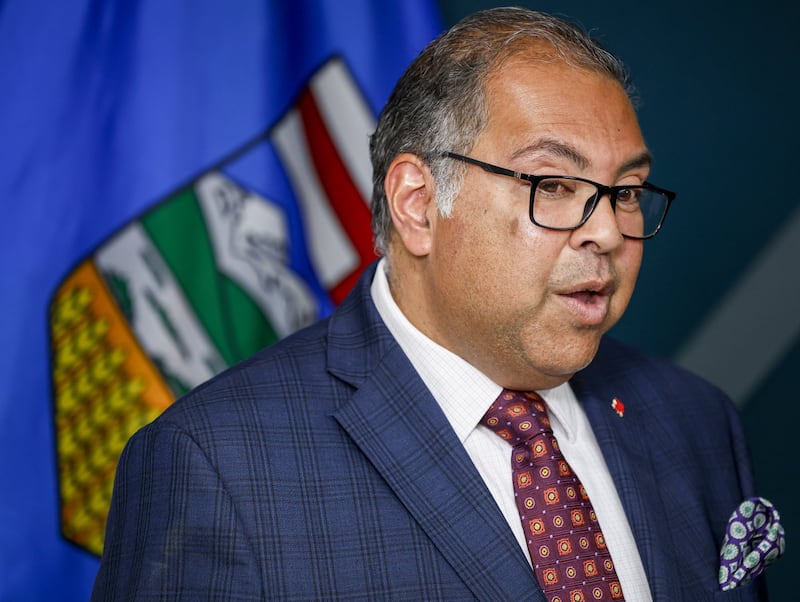
NDP Leader Naheed Nenshi has alleged the proposed riding changes only serve to favour the governing United Conservatives at the polls by diluting the power of urban votes.
The new maps would see some urban voters in Lethbridge and Calgary be merged with surrounding rural areas to form what are called hybrid ridings.
In the case of Lethbridge, the southern Alberta city’s two existing urban ridings are set to turn into four, with one strictly urban district and three sprawling hybrids that in some cases stretch to the U.S. border.
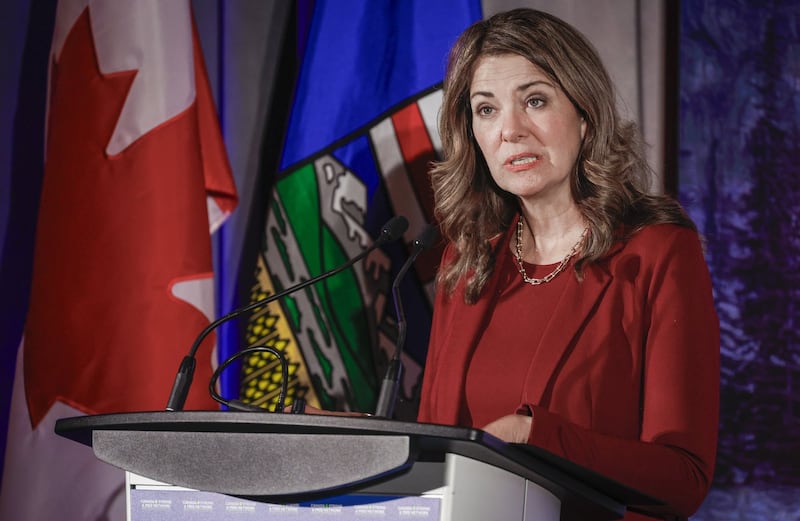
Premier Danielle Smith’s government has denied accusations that it’s trying to rig the 2027 election. It has said the new maps will boost effective representation and that hybrid ridings already exist elsewhere in the province.
Nenshi told reporters Monday that his party needs to wait until the legislation receives royal assent before it can launch a court challenge.
“It is very clearly an attempt at Donald Trump-style gerrymandering,” Nenshi said.
“It is unprecedented in Canadian history, and it is very likely unconstitutional.”
Nenshi said he hopes some in Smith’s UCP caucus will break rank and vote against the bill. But he also said he has little faith it will happen, considering UCP lawmakers were unanimous in a symbolic vote earlier this month to endorse the riding changes.
“Albertans don’t matter to Danielle Smith and the UCP,” he said. “All that matters to them is keeping their grasp on power.”
Justice Minister Mickey Amery told reporters after the bill was tabled that hybrid ridings “are the way of the future,” and he wrote off the NDP’s potential legal challenge as “sour grapes.”
“We’ve seen more connectivity between urban communities and rural communities like we’ve never seen before,” he said.
“We will defend our position in the courts and everywhere else.”
It’s unclear how a court challenge could affect the next election, which is scheduled for Oct. 18, 2027.
The electoral boundary redrawing process has been a complicated and controversial affair, since Smith bucked political norms by voting down the proposals of a public boundaries commission earlier this year.
Smith’s government then appointed a committee to oversee a new bipartisan advisory panel with a UCP-appointed chair, and it was tasked with taking a second run at the redrawing process.
The panel’s report, which the government is aiming to put into law, was published earlier this month and would bring the legislature seat count to 91, up from the current 87.
This report by The Canadian Press was first published Nov. 16, 2026.
Jack Farrell, The Canadian Press

