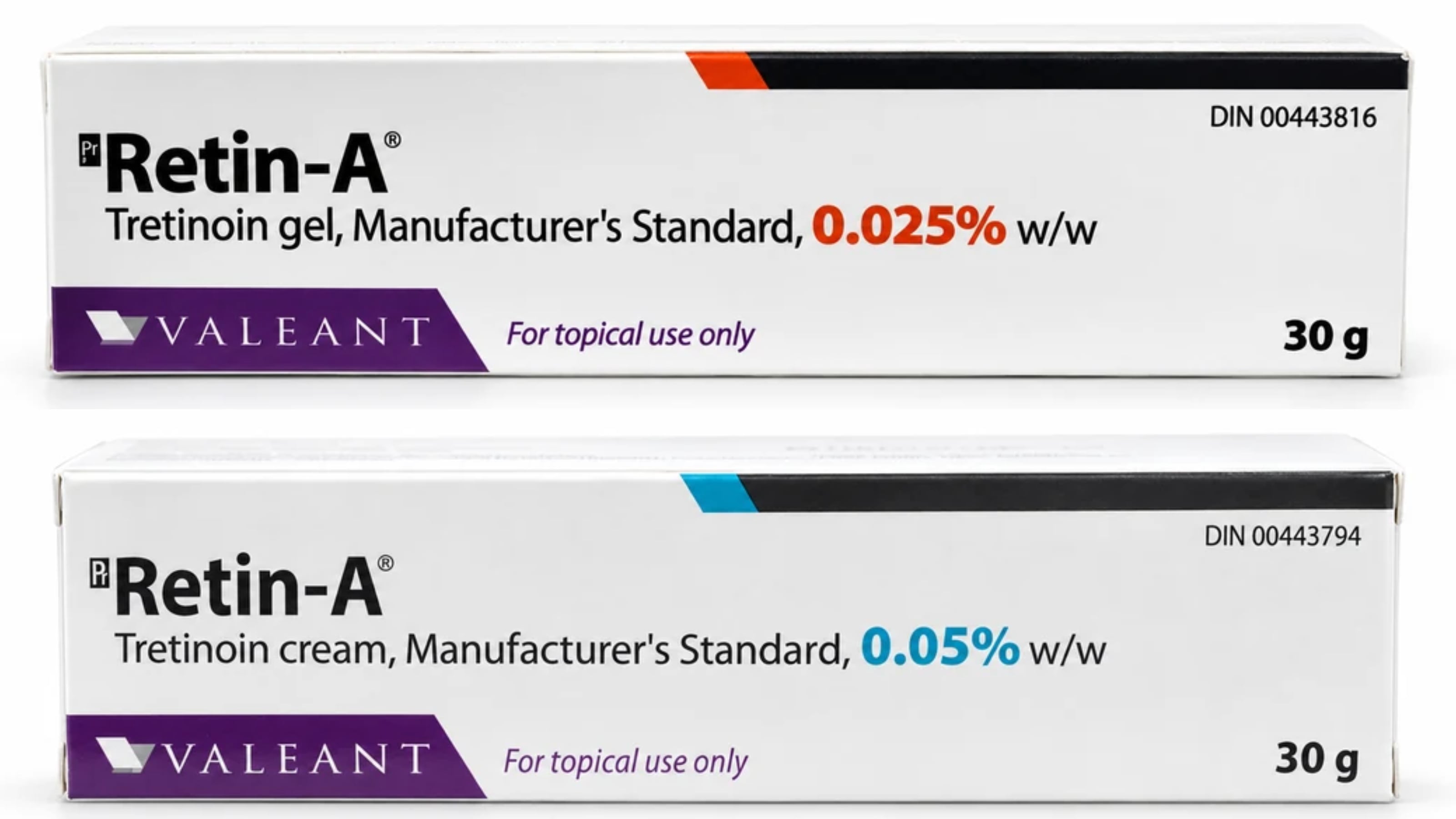
A popular prescription acne treatment has been discontinued in Canada, leaving patients to choose from “considerably more expensive” alternatives.
Retin-A Tretinoin Cream 0.05% and Retin-A Tretinoin Gel 0.025% will no longer be available to Canadians, Bausch Health confirmed to CTV News by email Tuesday.
The company said the decision to “stop commercialization” of the products in Canada “was made for business reasons and is not related to any safety, efficacy or quality concerns.” Bausch said the existing inventory will be available until approximately March, or when it runs out.
Alexandre Mihaila, a Toronto-based pharmacist, told CTV News by email that the products are prescription vitamin A derivatives used as affordable and effective acne treatments, as well as for cosmetic purposes such as to address skin aging and improve texture.
He said it can be challenging to find suitable replacements, and that the process involves risking new side effects with a different treatment or product.
He advised anyone who uses Retin-A cream or gel to talk to their health-care provider or dermatologist about alternative options before their supplies run out, to avoid interruptions in their skin-care routine.
Cost concerns
Mina Tadrous, an associate professor in the University of Toronto’s pharmacy faculty, urged Canadians to avoid stockpiling the discontinued medications.
“These are important treatment options, but their discontinuation does not mean patients will be left without alternatives,” Tadrous told CTVNews.ca. “Other tretinoin formulations and similar medications remain available in Canada and can offer comparable effectiveness for acne.”
Tadrous notes that the main issue with alternative treatments is potentially higher costs.
“Some newer alternatives can be considerably more expensive, depending on insurance coverage,” Tadrous said. “There is also the potential to think that another company could bring a product to Canada.”
Mihaila noted other vitamin A acid brands have also disappeared from Canadian shelves in the last few years and, like Tadrous, cautioned that while the Retin-A products have been “relatively affordable,” newer prescription retinoids “can cost significantly more.”
Still, he said, “I want to reassure patients that this does not mean tretinoin treatments are disappearing altogether. There are still excellent options available.”
‘Already stretched system’
According to B.C.-based online clinic and pharmacy Beyond Health, Retin-A Micro sells for more than $100 for a 50-gram supply, compared to roughly $40 for 30-gram tubes of the discontinued cream and gel.
Sarah Larose, senior instructor at Dalhousie University’s College of Pharmacy, told CTV News by email that tretinoin is one of four medications in the same class, and that other types can be used to treat acne. Some of these may be less irritating than the discontinued products, she said.
She said Canadians can speak to their pharmacist directly if they have questions on what medications are currently available and will be covered by drug plans. Pharmacists may also prescribe alternatives for mild acne.
Tadrous said she worries that patients could be in for a “frustrating journey” as they seek out pharmacists, specialists or family doctors to help them find alternative treatment options.
“My broader concern when these things happen is the challenge for patients to navigate a system,” Tadrous explained. “Each discontinuation or shortage created more work for an already stretched system. We need tools and systems that help plan ahead and makes this easier.”

