SHENZHEN, China — A light, spitting rain and gusty winds swept through Shenzhen on Wednesday afternoon as Prime Minister Mark Carney wrapped up his latest round of international diplomacy with a closing news conference.
It was a fitting backdrop to the end of a nine-day journey marked by tight schedules, long flights and the logistical challenges of moving a large delegation across continents.
Over those nine days, Carney travelled roughly 36,000 kilometres, crossing the Atlantic and Pacific oceans twice on a whirlwind diplomatic tour of Europe and Asia.
There is an element of organized chaos to the prime minister’s international travels.
Not everything goes according to plan. Some problems are resolved behind the scenes, barely noticed outside the travelling party.
This journey took Carney from Ottawa to Dublin, then west to Anchorage, Alaska, for refuelling, before continuing to Manila in the Philippines, Phnom Penh in Cambodia and Shenzhen in China. The delegation then made the long journey home through Anchorage to Ottawa.
For the Dublin portion of this trip, the Canadian delegation spent just 22 hours on the ground before leaving for Manila.
Canadians see the prime minister step off a plane, walk into a meeting or emerge from a motorcade. Less visible is the extensive planning required to make those moments happen.
Peter Donolo, former communications director to prime minister Jean Chrétien, knows that operation well. CTV News spoke with him about the politics and logistics of taking a prime minister around the world, and the differences between Carney and Chrétien.
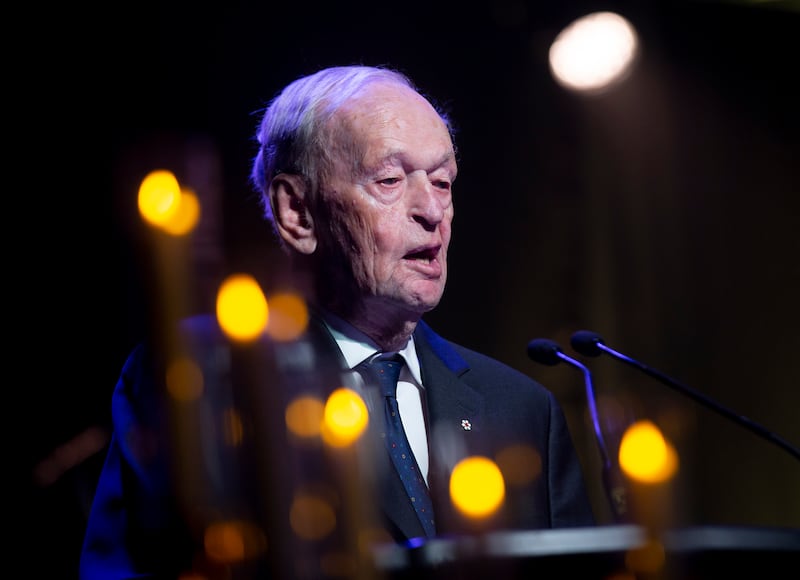
Q: Prime Minister Mark Carney keeps things fairly formal on the plane with reporters. Mr. Chrétien was not like that at all, I gather?
Donolo: It’s true. On long flights, the prime minister – at over 6 feet tall – would like to head to the back of the plane, where he could lie across an entire row of seats for 40 winks with reporters sitting or sleeping all around him.
Q: How do you think Canadians view Prime Minister Mark Carney’s extensive international travel?
Donolo: I think Canadians appreciate Carney’s trips because they understand that they are a key means in making Canada less vulnerable to economic abuse and threats from the United States and more economically resilient.
They don’t see these as junkets or vacations, but as central to the particular mandate of this PM and this government.
Q: How much work goes into organizing these trips, and how important is it that everything runs smoothly?
Donolo: They require a tonne of careful advance work. If things don’t go well on the trip, if there are slipups or gaffes, the media (as you know) will pounce. They — and Canadians generally — are ultra-sensitive of being embarrassed (or snubbed) on the world stage. So, preparation and smooth, professional execution are essential.
Q: What is it like for prime ministers to be on the road this much?
Donolo: Being on the road with journalists is a great thing. It gives the PM time to get to know them. They tend to have a lot more access on the road than at home. The flight itself provides lots of opportunities for longer, informal chats.
It was also great in terms of my own relationships with the Press Gallery. At the end of the day, we would go out for dinners – even karaoke in Japan and South Korea!
One day I’ll tell you about when Bruce Hartley went to the banya in Moscow with Tony Wilson-Smith, Neil Macdonald, and a bunch of others — including Matthew Fisher.
Q: What was the value of the Team Canada trade missions during the Chrétien years?
Donolo: The Team Canada missions were particularly useful. The public saw the PM and all premiers working together to bring home jobs. And a huge, unexpected benefit was the time the PM and the premiers spent hanging together over two weeks on the road. It did more for federal-provincial relations than you could imagine.
When you think of it, after 10 years in office, Jean Chrétien remained on very cordial terms with the premiers. Compare that to the swords drawn by the end of Mulroney’s and Justin Trudeau’s regimes.
Q: How important is face-to-face diplomacy between prime ministers and other world leaders?
Donolo: It makes a big difference. They get to know each other, feel each other out. They set agendas for their ministers and functionaries to follow up on.
Q: I gather Mr. Chrétien could be quite spontaneous when he was on the road?
Donolo: Yes! In Santiago once, he grabbed me to go for a power walk. We walked by this super greasy spoon and he said, “I feel like a hamburger, let’s go in the there.” He ate a huge burger slathered with mayo (which the guy behind the counter recommended). When we got back to the hotel, I told one of the guys from our embassy where we had been, asking (belatedly) if it was safe to eat street food. He answered that it was fine, “as long as you didn’t have mayonnaise.” (The Boss was fine; he had/has a cast-iron stomach.)

