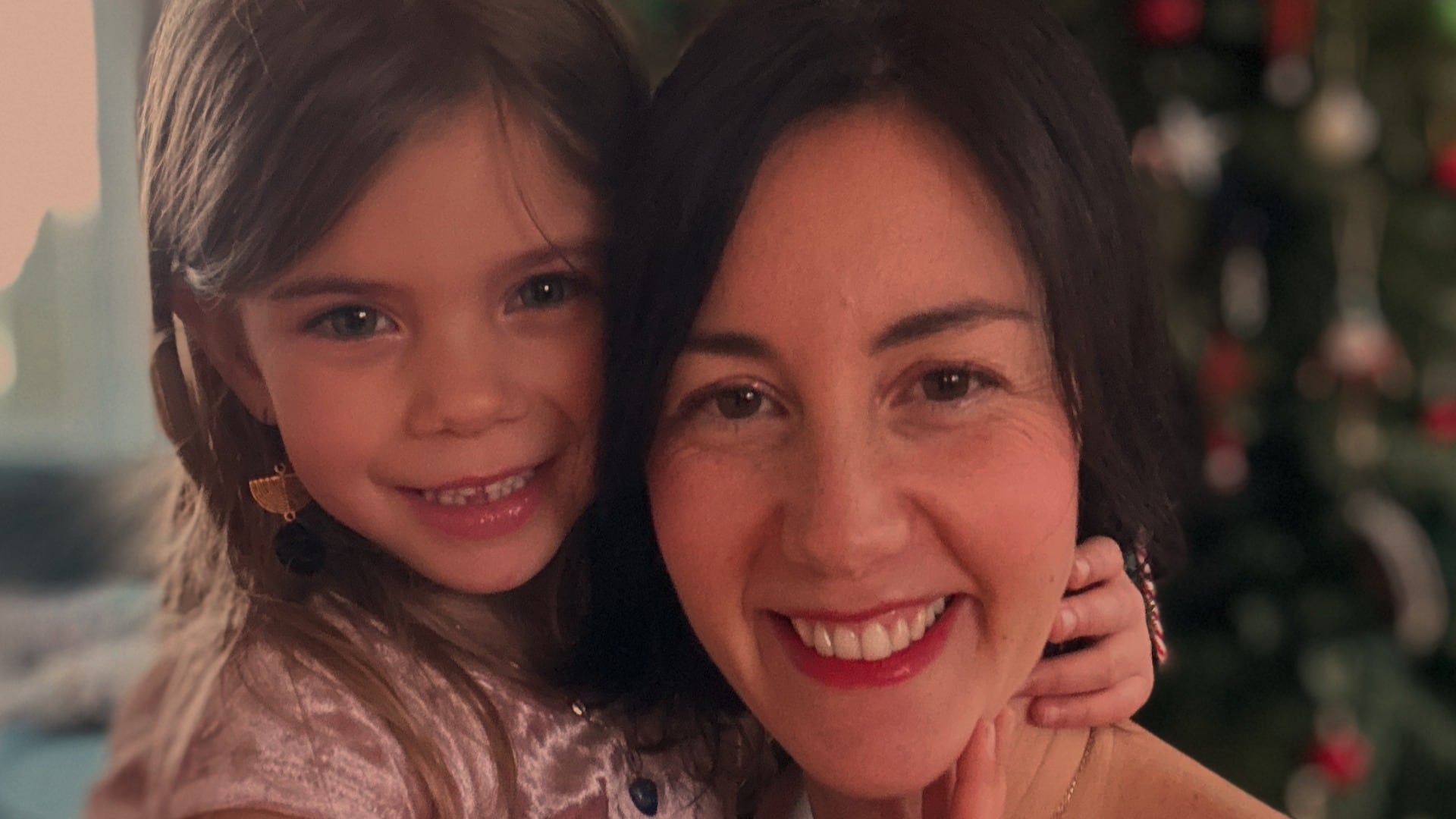
Eva was excited to start Grade 1 at her school on the South Shore of Montreal, but a Stage 4 cancer diagnosis requiring immediate surgery and chemotherapy meant she would not be able to go.
In August 2025, Eva was diagnosed with a rare form of kidney cancer. She was watching TV with her sister in her mom’s bed on a Sunday night when she began to have abdominal pain and a fever.
When Eva’s symptoms did not improve, her mom, Anne Lotodé, took her to the emergency department the following day. Doctors initially thought Eva had appendicitis, but scans revealed a tumour near her kidney. They transferred her to CHU Sainte-Justine immediately.
At the children’s hospital, she was diagnosed with Stage 4 kidney cancer, which doctors said had spread to her lungs.
“I couldn’t even say the word ‘cancer.’ When the doctors said it was cancer, I said, ‘What? She’s six’,” said the 40-year-old mom. “I was devastated. No parent is ever prepared to hear that.”
At six, Eva didn’t completely understand what was happening, but she cried when Lotodé told her she couldn’t start Grade 1 that week. She would have to start treatment instead.
“She felt different because she couldn’t go to school. It was very difficult for her,” Lotodé said.
Lotodé couldn’t eat for several days afterward. She also started having nightmares, including ones of Eva not waking up.
‘I don’t want to lose my hair’
Sainte-Justine Hospital acted fast following the diagnosis. The doctor arranged a treatment plan and scheduled surgery within the next three days to remove the tumour.
During surgery, doctors determined they could not remove the tumour because it was too close to her intestines. Instead, she would undergo chemotherapy for two months before they would try again to remove the mass.
Lotodé remembers feeling as though a tornado was in her mind. She was processing her daughter’s Stage 4 cancer diagnosis while also caring for her three other children, all under 12.
“It was very emotional the first time she received chemotherapy,” Lotodé said.
“It was hard because no one wants their kids to receive chemotherapy. I was very scared, especially when they are telling you all the side effects. I just wanted to run out.”
As Eva began chemotherapy, she asked her mom if she would lose her hair, after noticing other children in the hospital without hair.
“She was crying, saying, ‘I don’t want to lose my hair.’ She couldn’t stop talking about it,” Lotodé said.
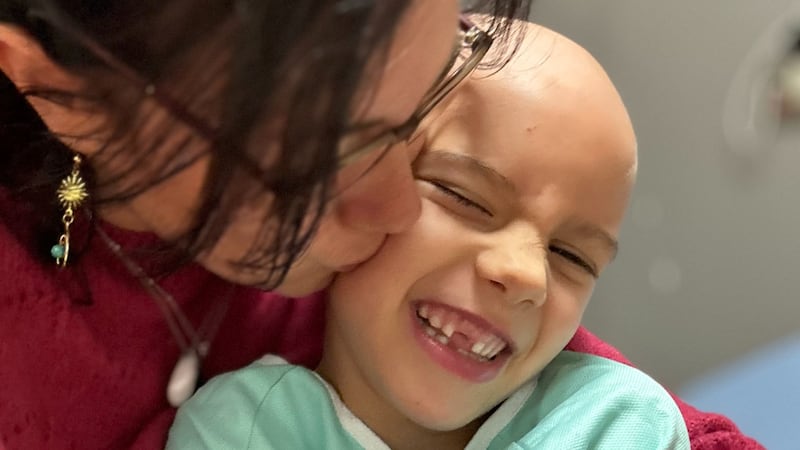
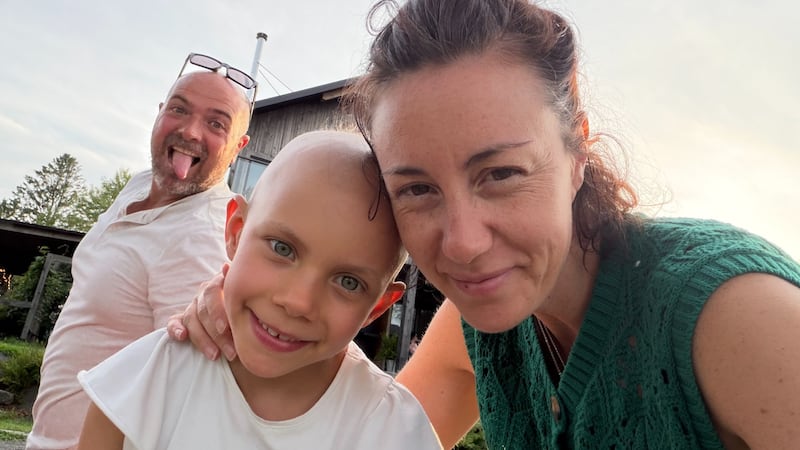
Soon after, Eva started losing her hair. Lotodé suggested she shave her head like her dad. Eva did it, and one of her brothers joined her.
“She never talked about her hair again after that. I think she felt good that her brother did it with her. I think she felt understood,” said Lotodé.
‘Eventually, it becomes your routine’
After two months of chemotherapy, doctors successfully removed the tumour at the end of October. However, Eva had to continue chemotherapy for another nine months, until July 2026.
She would feel tired, nauseous, and sometimes vomit after each round of chemotherapy, but she would feel better in the days that followed — a cycle Lotodé said would repeat.
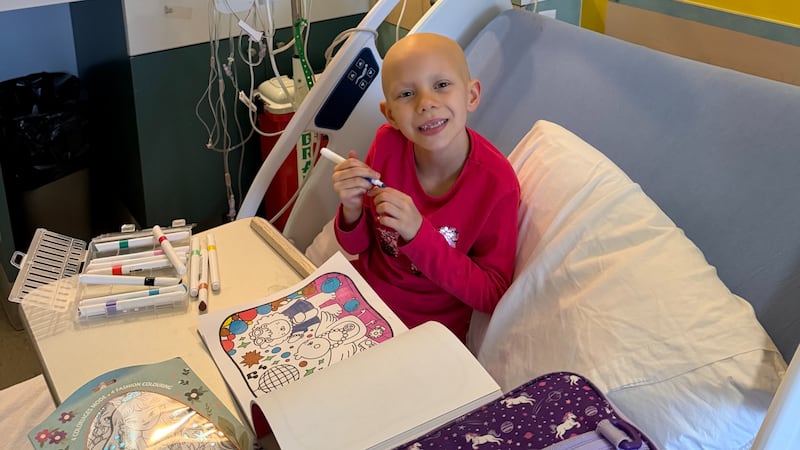
Needles, injections, and fasting before scans were difficult for Eva. Aside from those moments, however, she was happy at the hospital, singing during chemotherapy and laughing and playing with the nurses.
“She was only scared for specific moments, but it never lasted. I think for kids, they don’t remain sad or scared the whole day,” said Lotodé.
Still, it was a difficult time for Lotodé and her husband of more than 10 years, Thibault Le Bris. They took turns taking Eva to the hospital every week for treatment and staying home to care for their other three children. Lotodé took a year off work to be with Eva throughout her treatment.
“I didn’t want her to have cancer and go through this, but eventually, it becomes your routine. I had to fight with her. I couldn’t think about anything else but my daughter,” she said.
Because of their frequent visits over the weeks and months, Lotodé recalls becoming increasingly aware of the other familiar faces she saw at CHU Ste-Justine.
“I just remember looking around at the other kids wondering: ‘Does this child have cancer?’ Before the doctor told us Eva had cancer, we were on another planet. For us, pediatric cancer didn’t exist. I mean, yes, it exists, but it didn’t exist in my world,” she said.
“Pediatric cancer was something you hear about from someone who knows someone else.”
Pediatric cancer in Quebec
There are roughly 300 new pediatric cancer cases in Quebec each year. Nearly half of those patients are treated at CHU Sainte-Justine, which specializes in pediatrics, including oncology.
Dr. Pierre Teira, head of the hematology-oncology department at CHU Sainte-Justine, says pediatric cancer is primarily driven by genetics.
“There is no consistent study that shows that environmental factors are important in pediatric cancers; it is very different than cancer in adults, where the environment and tobacco increase the risk of cancer,” he said.
Although the incidence of pediatric cancer is low, it is often aggressive. Every year in Quebec, roughly 60 children die from pediatric cancer, according to Dr. Teria.
The most common pediatric cancers are leukemia, which accounts for 30 per cent of cases, and brain cancer, which accounts for 20 per cent. The remaining cases involve other organs, such as the liver and kidneys.
Dr. Teira says progress has been made in pediatric cancer treatment over the last four decades, but adds that since it is less common than cancer in adults, more funding is still needed to better understand the disease.
“When a child is diagnosed with cancer, parents ask, ‘What could I have done to avoid this?’ and the answer we always give them is, ‘You could not do anything to avoid it. It was not in your power,” said Dr. Teira.
Eva starts Grade 2
When Eva completed chemotherapy in the summer, she had one request: a milkshake and a burger.
This fall, she returned to school and started Grade 2 after being homeschooled during Grade 1. Lotodé said Eva even asks if she can stay at school when the day is over.
Eva continues to undergo scans every few months to ensure her cancer remains stable. Between scans, she has been doing all the things she loves: playing basketball with her sister, writing, singing, and attending her pony lessons.
“I really don’t think that she’s thinking about it anymore. I don’t know what she would say if we tell her we have to do treatment again. How could I tell her we have to do it again?” Lotodé said.
But it is still always on Lotodé’s mind. She says her nightmares are getting worse, and she now has dreams about her other children and death.
The latest scan in October showed Eva’s cancer was stable, but Lotodé says she is always scared the cancer will return.
“No matter what the rest of this story is, it changed me,” said Lotodé. “I’m more present in my life. I can understand the lesson for me, but I will never, ever, be OK with what happened to my daughter.”

