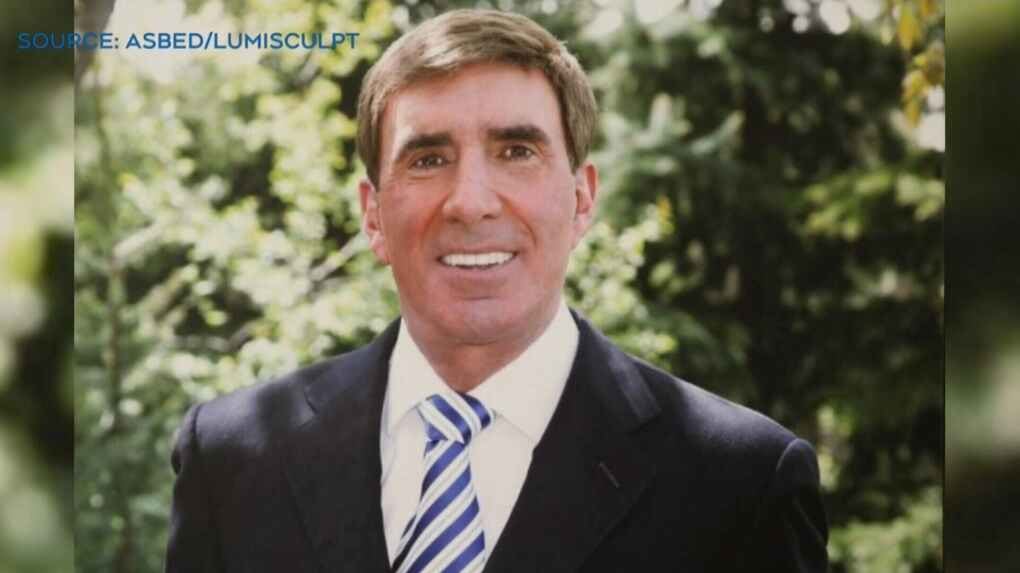
Montreal billionaire Robert Miller has lost his bid to throw out a class-action lawsuit from alleged victims who accused him of sexual exploitation.
A Superior Court judge had authorized the lawsuit against the former CEO of Future Electronics Inc. and his alleged accomplices in January 2025, but Miller appealed that decision.
In a judgment handed down on Thursday, the Quebec Court of Appeal dismissed the appeal, clearing the way for the lawsuit, which includes more than 50 plaintiffs, to proceed in Superior Court.
The plaintiffs alleged they were recruited by Miller’s business associates in the 1990s and 2000s to have sex with Miller in exchange for gifts. The encounters are alleged to have happened in hotels in Montreal and a private home in Westmount, a wealthy suburb of Montreal.
Miller, now 83, has denied the allegations, which were first reported in a Radio-Canada investigative report published on Feb. 3, 2023.
The allegations in the class-action lawsuit have not been proven in court.
Miller, the company he founded and later sold, as well as former employees Helmut Lippmann, Raymond Poulet, and Sam Joseph Abrams are all named as defendants in the lawsuit.
- Sign up now for daily CTV News Montreal newsletters
- The information you need to know, sent directly to you: Download the CTV News App
In his appeal, Miller’s lawyer raised a number of legal arguments to establish that the judge erred when authorizing the lawsuit in 2025. For example, his legal team argued that the judge was wrong to not hear evidence claiming that one of the plaintiff’s statements to a private investigator in 2008 contradicted the allegations in the class-action.
The appellate judges said this argument “is without merit” because allegations of contradictory evidence must be heard at the trial stage and not at the authorization stage.
For his part, Abrams, the former executive vice-president of Future Electronics, argued that the lower court judge had engaged in “speculation or hypotheses” when linking him to the man the plaintiffs alleged was responsible for arranging meetings in hotel rooms and offering cash in envelopes.
However, the Court of Appeal wrote that the judge “did not invent allegations or draw inferences from a lack of text.”
“The message is clear: Abrams arranged meetings between them and Miller with full knowledge of the latter’s intentions. In my view, the question of whether Abrams knew their ages or took reasonable steps to ascertain them is a matter of the merits of the case” the judgment stated.
The Court of Appeal also said in its ruling that Future Electronics could be partially liable for harm caused to the plaintiffs since the company paid the rent for a condo where Miller’s illicit activities allegedly took place.
“Future’s direct fault would therefore be that it supported Miller’s unlawful activities, and did so knowingly, since Miller was its driving force,” the ruling stated.
According to the allegations in the class-action, Miller is accused of sexually exploiting teen girls in violation of section 153 of the Criminal Code and of engaging in sexual contact with children under the age of 12 and under the age of 16, in violation of section 151 of the Criminal Code.
The defendants argued in their appeal that the Superior Court judge was wrong to consider the alleged victims of these two distinct offences as part of the same group. According to the defendants, once the group is divided into two, the second group would consist of only three members, resulting in “an insufficient number to justify a class action.”
The appellate judges also dismissed this argument. They wrote: “The fact that Miller obtained sexual services for compensation from persons under the age of 18 and, in some cases, under the age of 14 or 16, does not preclude including all these persons in the same group.”
If Miller appeals Thursday’s judgment, it would be up to the Supreme Court of Canada to decide whether or not to hear the case.
Miller had faced separate criminal charges in Montreal, however, that case was dropped in June 2025 after a judge ruled he was too ill to stand trial due to his diagnosis of advanced Parkinson’s disease. At the time, he had been facing 24 sex-related offences involving 11 women, many of whom were minors at the time of the alleged offences.

