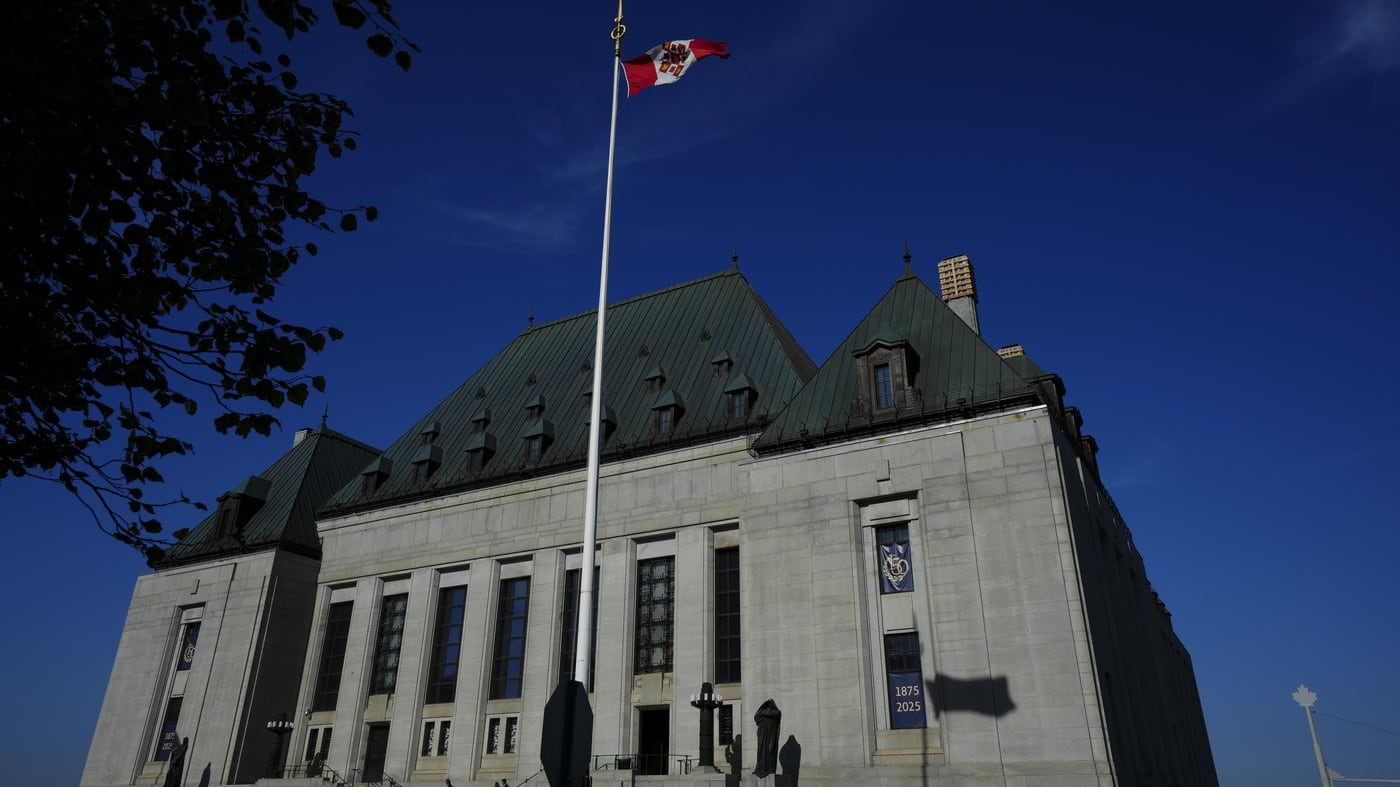
Canada’s top court will deliver its highly anticipated ruling on Quebec’s Bill 21 next week.
The Supreme Court of Canada said Friday that its decision will be announced on Nov. 27 at 9:45 a.m.
The court is also expected to rule on the Quebec government’s use of the notwithstanding clause.
The controversial law was adopted on June 16, 2019, and banned certain public servants, such as teachers, police officers, and judges, from wearing religious symbols on the job.
The former CAQ government passed the law by invoking the notwithstanding clause of the Canadian Constitution to shield Bill 21 from Charter challenges.
The ruling next week will have significant implications for how other provinces use the constitutional power.
Supreme Court justices have been deliberating since it held a marathon four-day hearing in March.
The Government of Canada is not challenging the law, but was an intervener and among the 61 parties that submitted arguments in the case. The federal government asked the high court to set limits on how provincial legislatures can override fundamental rights of the Charter of Rights and Freedoms.
The main group challenging the law is the English Montreal School Board (EMSB), which argued that the law infringes on minority language rights.
Other groups have argued that the law also infringes on religious freedoms and is unconstitutional.
Proponents of the law have invoked parental rights, saying parents can choose to send their children to a school free of religious influence. Lawyers for the Quebec government also told the Supreme Court that a previous Supreme Court ruling from 1988 confirmed that the Constitution doesn’t place substantive limits on how a government invokes the notwithstanding clause.
The law was first challenged in Superior Court, which left the law largely intact following a 2021 judgment that nevertheless acknowledged “serious and negative” impacts on people who wear religious symbols.
The 2021 decision had exempted English school boards in Quebec from certain provisions of the law on the basis that minority language education rights — which aren’t covered by the Charter’s notwithstanding clause — weren’t respected.
Then, in February 2024, the Quebec Court of Appeal ruled that the secularism law is constitutional and the lower court was wrong to exempt English school boards from Bill 21.
The EMSB appealed that decision to the Supreme Court, which will have the final word in the years-long legal battle.
With files from The Canadian Press

