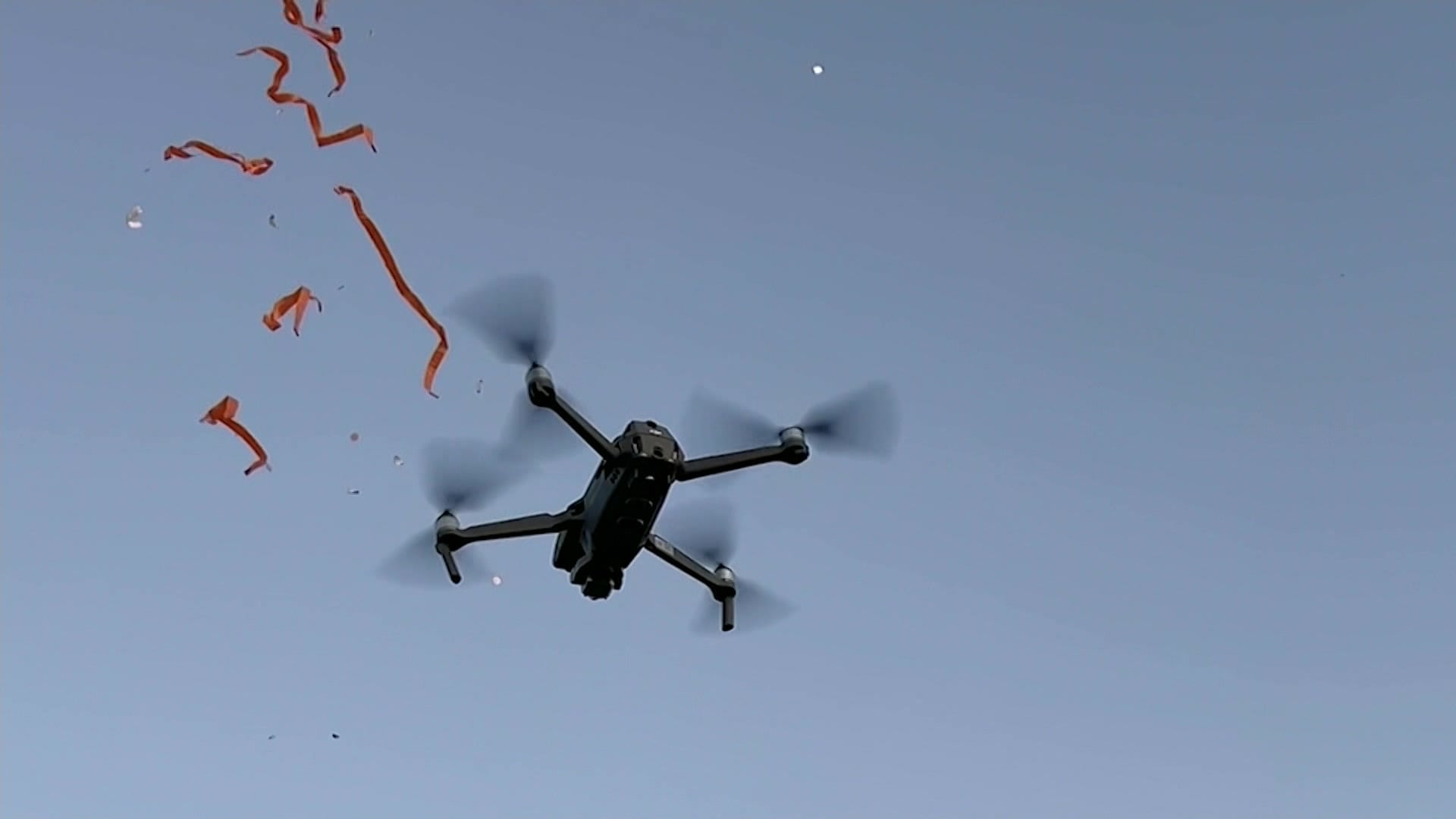
A series of drone incursions over Canadian military bases should serve as a wake-up call for the federal government, defence experts say, as questions remain about the country’s ability to detect and defend against the growing threat.
CTV News has learned there have been at least seven drone incursions over Canadian military bases since 2024, including incidents in which counter-drone technologies struggled or failed to detect the aircraft.
Whether any of the incidents were considered hostile or involved malicious intent remains unclear.
“This is a wake-up call,” said retired Maj.-Gen. David Fraser, a CTV military analyst. “I think Canadians should be concerned and asking questions.”
Fraser said the threat posed by drones is evolving rapidly, raising concerns about Canada’s ability to keep pace.
“The world is more dangerous than it ever has been,” he said. “Drone technology is evolving much more rapidly than, in fact, what it appears. Canada can keep up.”
The Department of National Defence declined to comment on the specific incidents, citing operational security.
However, the department said it has “procurement activities planned to support the continued evolution and enhancement of its approach to countering UAS (drone) threats.”
In July, the federal government launched its Defence Drone Initiative, earmarking $2.3 billion for the effort in Budget 2026.
Some counter-drone systems have been deployed at military bases and ports, but Canada’s overall drone defence capabilities remain limited.
Conservative defence critic James Bezan says the government has failed to equip the military with the technology needed to address the threat.
“By not having that technology in place that actually works to deal with the counter-drone efforts that we need to have across this country is a failure of the government,” Bezan said.
He argues every military installation needs the ability to protect personnel and infrastructure from potential surveillance or attacks.
“Every one of our wings and bases across this country need to have the technology to protect our aviators, our sailors, our soldiers to ensure that they’re not being spied on,” he said.
“We need to ensure that counter-drone technology is at the forefront to ensure that we’re protecting both the soldier in theatre as well as our bases and our infrastructure across this country.”
Al Viger, a former Canadian army member who now leads Vancouver-based technology company Caseway AI, develops software for counter-drone systems.
He says Canada needs to move quickly to ensure the technology it purchases can effectively address the threat.
“We need to find a way to act really fast and to make sure the things that we’re buying are actually useful, that they work,” Viger said.
He also added that counter-drone rules tied to federal laws in Canada have a great impact on the extent to which drone’s can be countered in the country.
“We actually have the laws to enable us to intercept the drones, to shoot down the drones,” said Viger.
“This technology does exist, and it can be bought,” he added. “From a tech perspective, absolutely, this could be deployed very fast. Politically, probably non-Canada.”
Fraser also cautions against becoming complacent as drone technology continues to advance, arguing Canada needs a strategy that prioritizes both procurement and innovation.
“You should never have the complacency to think that it’s good enough,” he said. “We need to anticipate and adapt and have a procurement strategy and innovation strategy that’s going to get the latest equipment and get it into the hands of the people who need it to protect our infrastructure, including the military.”
Defence experts and the political opposition are urging the government to make drone and counter-drone capabilities a higher priority, warning that the threat is evolving faster than Canada’s ability to respond.

