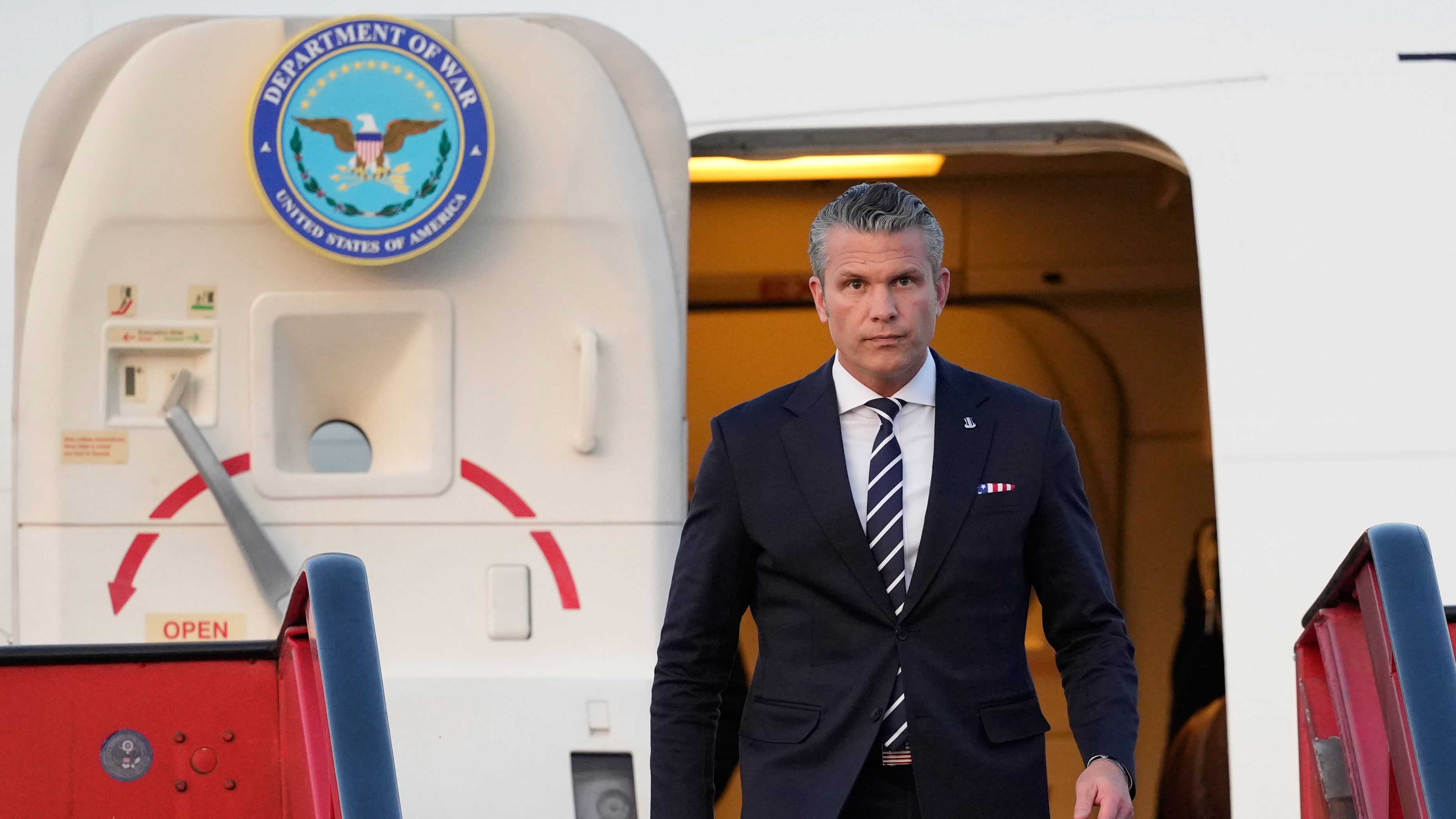
HALIFAX -- A Republican senator says a U.S. defence department’s memo that reportedly placed restrictions on co-operation with Canada applies to things such as participating in think-tank conferences, not military operations.
Sen. Mike Rounds was responding to a Washington Post report on Friday that said Defence Secretary Pete Hegseth penned the classified memo putting restrictions on military co-operation with Canada last week. The paper reportedly said it had not seen the memo and offered no detail on its contents.
The senator said the memo does not affect any U.S. defence personnel in Canada today and does not impact the North American Aerospace Defence Command, North Atlantic Treaty Organization operations or the Five Eyes security alliance.
“It does limit general flag officer meetings to those that advance (defence department) objectives,” Rounds told reporters at the Halifax International Security Forum on Saturday. “(U.S. defence officials) must request permission for Canadian think-tank events or social engagements. And it is OK to attend any 9/11 events.”
Rounds said he and a delegation of U.S. senators attending the Halifax conference had just attended a meeting with Canadian officials and shared the information with them. Defence Minister David McGuinty told reporters hours earlier he was unaware of the memo’s contents.
“After listening to this, (Canadian officials) said it sounds like it’s nothing new, nothing different than what they’ve been really practising under for the last year-and-a-half,” said the South Dakota senator.
McGuinty said earlier in the day that it was “business as usual” between the Canadian and U.S. militaries and assured Canadians that co-operation between the two countries on defence, security and intelligence was continuing.
“I’ve seen no evidence of (a change). I’ve checked with our top military folks, they’ve seen no evidence of change. We continue to co-operate. We continue to work together,” McGuinty told reporters.
Chief Pentagon spokesman Sean Parnell said in a response to the story about the memo that the defence department is “taking steps to ensure its engagements with Canada advance tangible U.S. defense objectives and ultimately support a reinvigorated defense relationship.”
The statement, made late Friday, added that the department is prioritizing bilateral co-operation that strengthens the defence of the U.S. and “shared hemisphere” while also supporting Canada’s ability to meet NATO obligations.
“This guidance does not impact defense intelligence co-operation, our binational NORAD command, or our co-operation through NATO,” Parnell said.
Several U.S. senators at the Halifax event acknowledged their country’s standing around the world has been impacted by the aggressive policies of U.S. President Donald Trump.
Senator Tim Kaine, a Democrat, said the memo doesn’t help relations with Canada. He said he’s hopeful things will change when the new U.S. Congress takes office in January. Democrats took control of both the Senate and the House of Representatives in this month’s midterm election.
“The tone is bad and it’s unnecessary,” said Kaine. “And we understand this actually goes back a ways and it is just the formalization of something that is now months and months old. I do think the new Congress is going to change the tone dramatically.”
McGuinty also announced Saturday that Canada is formally becoming the 25th member of NATO’s Innovation Fund. Canada is contributing more than $100 million to the fund, enabling it to invest in Canadian startups.
Launched in 2022, the venture capital fund is designed to strengthen NATO by investing in cutting edge technologies such as artificial intelligence, quantum technologies, biotech, space and communications.
This report by The Canadian Press was first published Nov. 21, 2026.
Devin Stevens, The Canadian Press

