

Nearly 59 years after the killing of 16-year-old Jacqueline “Jackie” Dunleavy, police in London, Ont., say they have identified the man responsible for her death through new DNA testing and forensic investigative genetic genealogy.
The London Police Service announced Monday that investigators have identified Michael Joseph Moore, a former London firefighter who retired as a captain, as the person responsible for Dunleavy’s murder.
Police say Moore, who was 25 at the time of the murder, died on March 3, 2018, before he was identified through the investigation. As a result, no criminal charges can be laid.
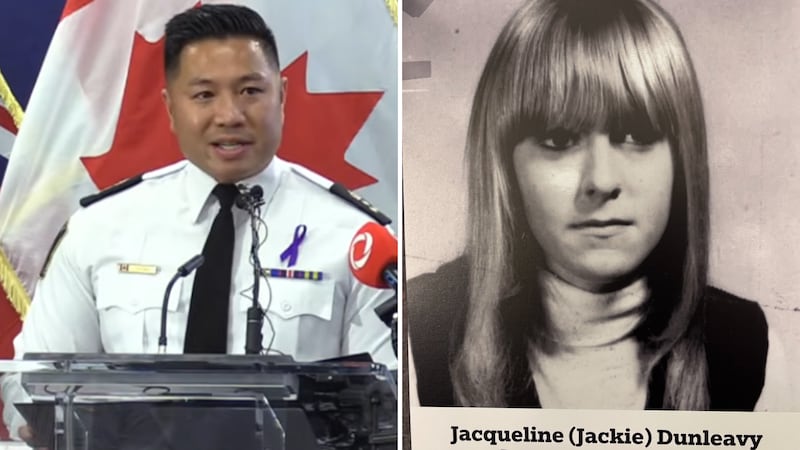
Dunleavy, a Grade 10 student at Westminster Secondary School, was working at Stanley Variety Store on Stanley Street near Wharncliffe Road on Jan. 9, 1968. Police say she finished her shift at approximately 6:30 p.m. and was last seen leaving the store on foot.
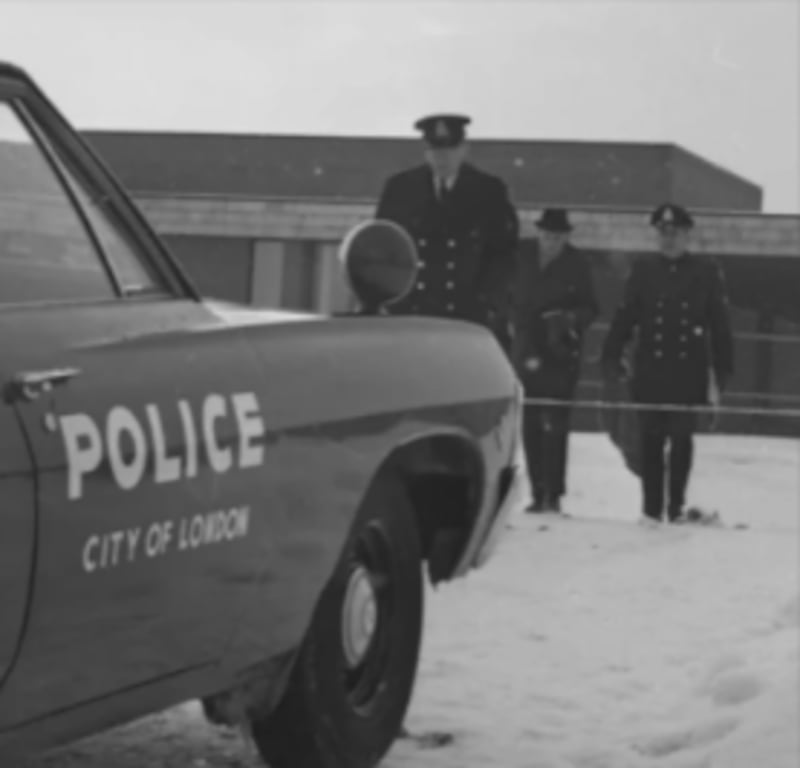
At about 8 p.m., three youths found Dunleavy on the grounds of Katherine Harley School, now the site of Matthews Hall on Oxford Street. Emergency responders attended the scene, and she was pronounced dead.
Investigators determined Dunleavy had been murdered. While she suffered a head injury, police say the cause of death was strangulation.
‘A daughter, a sister, a friend’
The case remained unsolved for decades despite an extensive investigation that included witness interviews, the pursuit of numerous leads and the collection and preservation of forensic evidence.
“For nearly six decades, Jackie’s family has lived with a loss that no passage of time could ever erase, and with unanswered questions about who was responsible for her death,” Thai Truong, London’s police chief, said during a press conference Monday.
“A daughter, a sister, a friend and a young girl who had her entire life ahead of her. Jackie was also the daughter of a London police officer. As chief of police, I recognize the particular significance of that connection to our profession.”
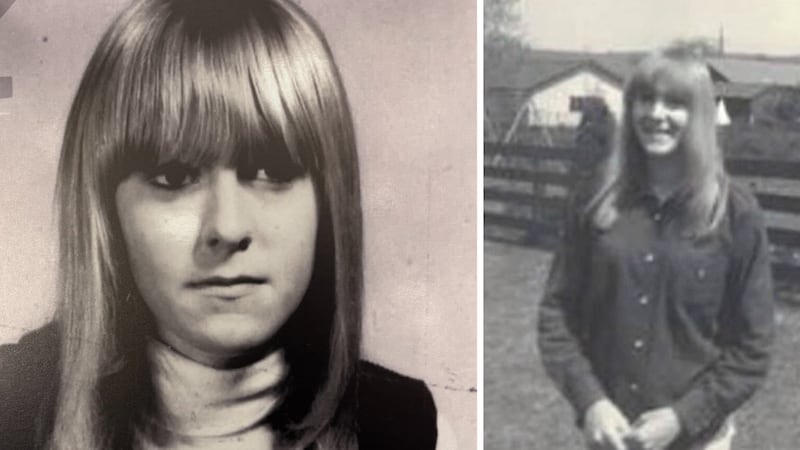
According to police, the case was reviewed repeatedly over the years, including through Project Angel, a joint initiative involving the London Police Service and the Ontario Provincial Police between 1997 and 2001.
More recently, members of the Major Crime Section conducted a comprehensive review of the investigation, re-examining historical evidence and taking advantage of advances in forensic science.
Police say additional DNA testing was conducted on preserved evidence. Investigators worked with forensic laboratory Othram, the Toronto Police Service, the Ontario Provincial Police and the Centre of Forensic Sciences to identify distant genetic relatives linked to an unknown DNA profile and narrow the investigation to a suspect.
According to police, investigators conducted further interviews, gathered additional evidence and obtained DNA samples for comparison. Based on the evidence collected, police say they determined the threshold for criminal charges had been met had Moore still been alive.
What we know about Michael Moore
According to police, Michael Joseph Moore was born in Ireland in 1942 and immigrated to Canada in January 1967.
At the time of Dunleavy’s murder, police said Moore was living in an apartment on Sprinbank Drive. He had been living in the city for less than a year when Dunleavy was killed.
He was described as being about 6′ tall, had dark hair, was typically clean shaven and spoke with an Irish accent and it’s believed the vehicle he drove was a 1964 Ford Galaxy 500, four-door sedan.
Det. Mike Budzyn with London police said, “Based on the evidence obtained through this investigation, we are confident that the evidentiary threshold to support criminal charges was met. Had Moore been alive today, he would have been arrested and charged with Jackie’s murder.”
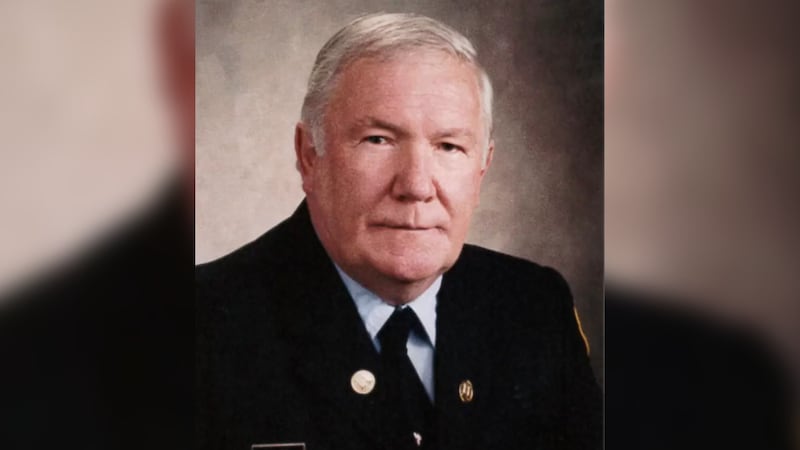
At the time of the murder in January 1968, police said Moore was not a firefighter, but that he joined after and served for approximately 28 years, retiring as a captain.
“We recognize that this information may be significant to individuals who knew Moore personally, worked alongside him, or had contact with him during his years of service,” said Budzyn.
He went on to say, “the investigative findings we are announcing today are based on forensic evidence and the totality of the investigation, not on Moore’s subsequent profession or standing in the community.”
Budzyn acknowledged the impact the findings have had on Moore’s family.
“They were understandably shocked by the results of this investigation and asked that their privacy be respected. They also expressed their hope that these findings will provide long awaited answers for Jackie’s family.”
According to an obituary, Moore passed away in 2018 after a long illness.
Statement from London fire
The London Fire Department offered condolences to the family of Jacqueline Dunleavy following the announcement that police had identified a suspect in her 1968 killing.
“Today’s news has been deeply troubling for many within the London Fire Department,” the department said in a statement. “Our focus at this time is on supporting our staff and acknowledging the impact of this news on our community.”
The department noted that Moore was not a firefighter at the time of Dunleavy’s murder, adding that he retired from the fire service in 2012.
The department said it remains committed to maintaining the trust of the community and will continue to cooperate with London police as needed.
Information still sought
Police say they have chosen to publicly identify Moore to provide clarity in a case that remained unresolved for nearly six decades and to give answers to Dunleavy’s family and the community.
Investigators are still encouraging anyone with historical information about Moore or the case to come forward, saying details that may have seemed insignificant at the time could still be relevant today.
This is a developing story.

