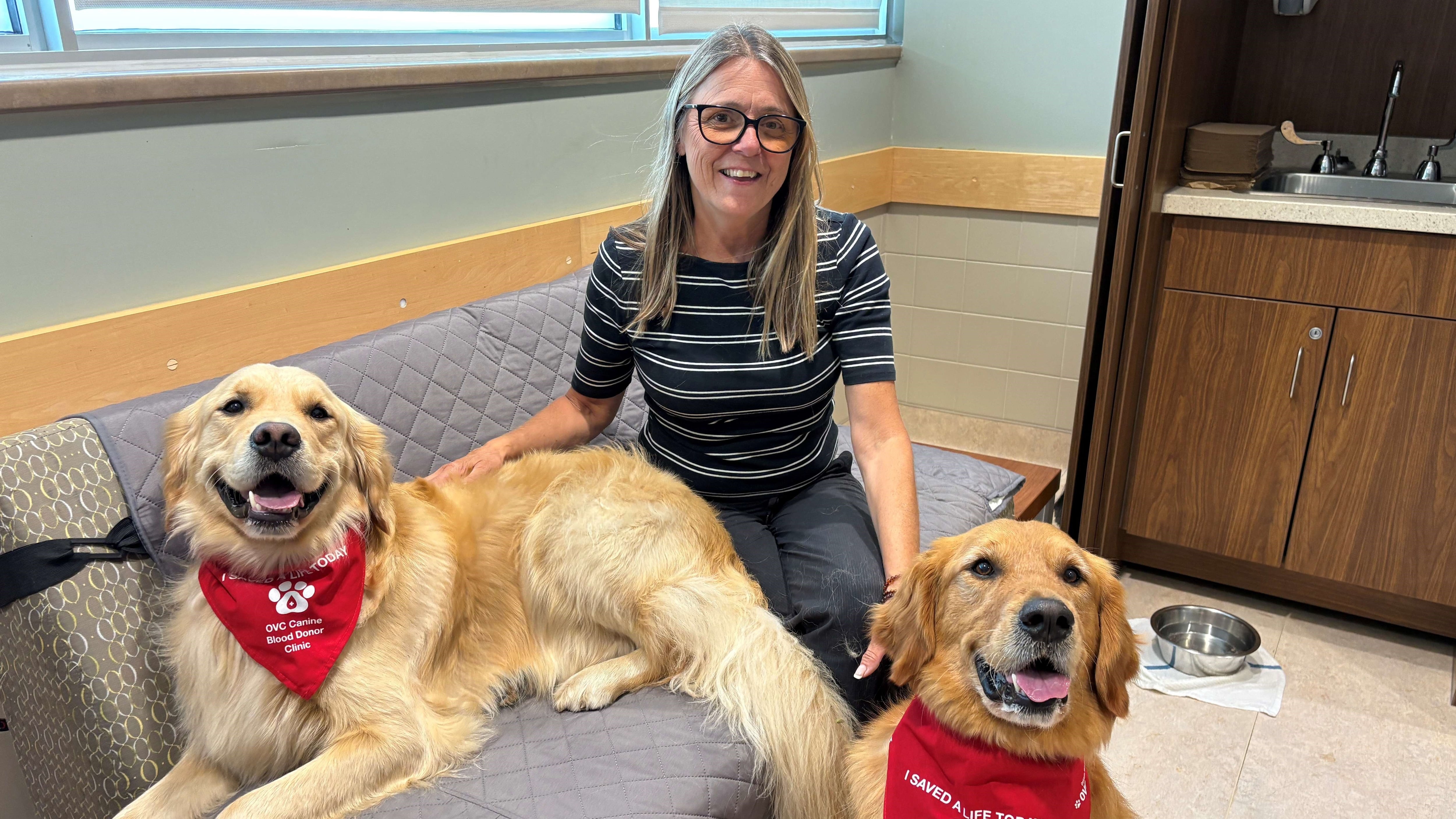
Blood donors come in all shapes and sizes and, sometimes, they have four legs and a tail.
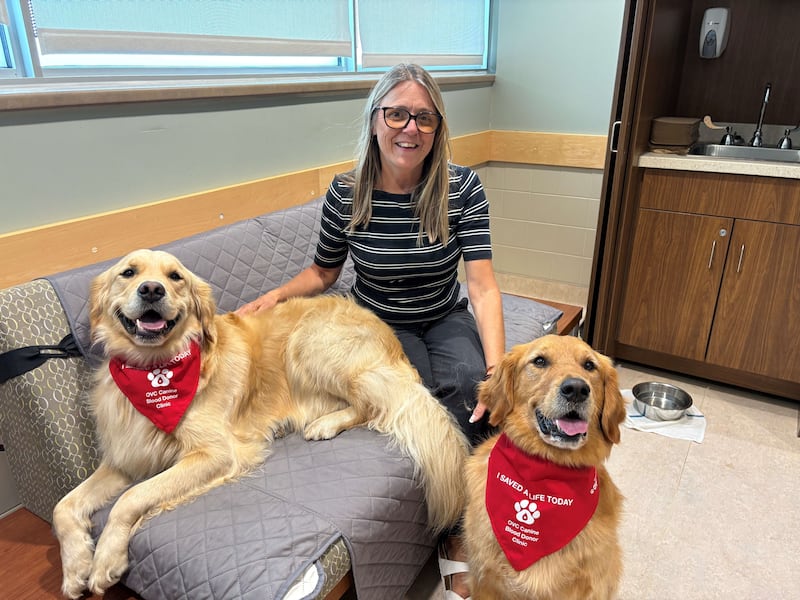
Two golden retrievers named Dash and Oakley are some of the brave pups participating in the blood donor program at the Ontario Veterinary College (OVC).
The doggy duo has already completed five blood donations, helping stock the supply at the University of Guelph’s OVC Health Sciences Centre, for use during medical emergencies or serious illnesses.
For their owner, Lori Colquhoun, the decision to get involved was deeply personal.
Her golden retriever, Kaya, was diagnosed with lymphoma and received chemotherapy treatments at OVC. It was during one of those appointments that Colquhoun first learned dogs could donate blood.
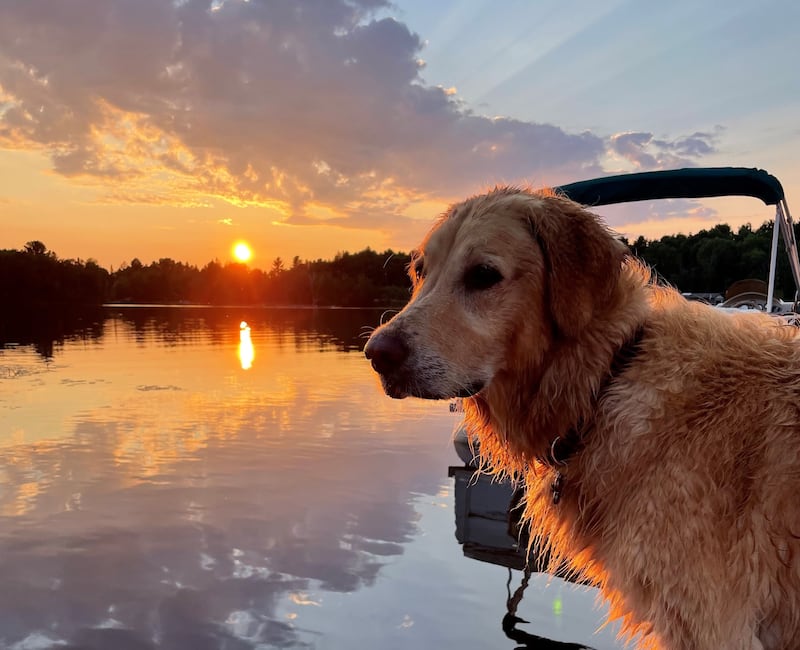
“I was in for one of her chemo appointments and happened to come across some information about a blood donor clinic and thought, ‘Wow, that’s really cool,’” she recalled.
After Kaya died, Colquhoun decided to turn her heartbreak into an opportunity to help other pets.
She eventually signed up Dash and Oakley and both have become familiar and enthusiastic visitors at the veterinary hospital.
“They actually come running in the door. Can’t wait to get in here, actually. They just love everyone in here,” Colquhoun said.
The program plays an important role in veterinary care at OVC, where approximately 500 blood transfusions are performed every year.
A single donation can help up to four dogs.
“A lot of people don’t realize that dogs and other veterinary species can be a blood donor,” said Shauna Blois, an internal medicine specialist at OVC.
Dogs may require transfusions following a traumatic injury, complicated surgery or illnesses that affect their blood.
Blois said some of the furry patients need blood or plasma to treat autoimmune disorders causing anemia, low platelet counts, and internal or external bleeding.
Having blood donations readily available can make a critical difference when those animals need emergency care.
Keeping canine donors comfortable
The OVC team takes steps to make sure the donation process is as comfortable as possible for its four-legged volunteers.
Dogs receive plenty of treats, encouragement and attention throughout their appointments.
“For the actual blood donation, we do use a numbing cream. The sample is taken from their jugular vein for the blood donation,” said Pamela Longworth, a registered veterinary technician who oversees the program.
The process begins with an initial blood sample before the dog sits for a full donation.
However, not every dog can become a donor.
According to Longworth, dogs must be between one and five years old, weigh more than 25 kilograms, be healthy and not require medication. Dogs that eat a raw food diet or have certain surgical implants are also ineligible.
Temperament is another important consideration, as donors need to be comfortable with the process and the veterinary team.
The OVC has approximately 70 dogs actively donating blood. Donors typically give every two to three months, then retire from the program when they turn seven.
The college is currently accepting applications, although interested owners may be placed on a waitlist.
Turning heartbreak into hope
For Colquhoun, watching Dash and Oakley help other dogs was healing following the loss of Kaya.
“It’s really a good feeling being able to pay it forward. It helped myself and my family to heal,” she said.
And, while the two golden retrievers may not understand the full impact of their visits, their donations could help give another family more time with a beloved pet.
A small act of canine kindness, with the potential to make a life-saving difference.

