SUMMERSIDE, P.E.I. – Getting through the door of a restaurant or grocery store can still be a struggle for Canadians who rely on service dogs, but several provinces are taking steps to change that, and P.E.I. is the latest.
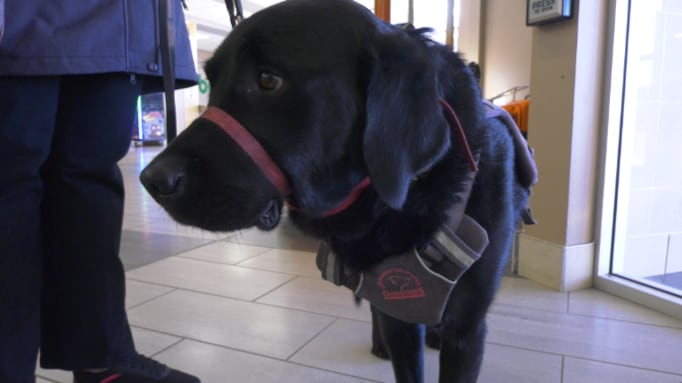
Jennifer Sanderson lives with retinitis pigmentosa, a condition that affects her peripheral vision. Her guide dog, Braden, has been by her side for a little over three years helping her navigate public places safely. But sometimes, she has to explain why he’s allowed to come along.
“You just kind of like to blend into the background and be a normal person,” Sanderson said. “Go about finding what you’re trying to find, or doing what you’re trying to do, without having to stop and explain why it’s your right to be there.”
Sanderson says she’s had business owners tell her dogs aren’t allowed. She explains that Braden is a service animal protected under P.E.I.’s Human Rights Act and can accompany her into public spaces, with some exceptions, such as commercial kitchens and operating rooms.
According to research by the CNIB Foundation, which supports Canadians who are blind or partially sighted, more than half of guide dog handlers surveyed had experienced difficulties accessing public spaces.
“It’s a shame,” said Taylor Howatt, a program lead for awareness and community outreach with the non-profit, and a guide dog handler herself.
“Having that interaction … it causes anxiety. I feel different than everybody else.”
The Service Dog Act
In hopes of reducing misunderstandings and delays, P.E.I. is joining Nova Scotia and B.C. in offering voluntary provincial certification. The Island’s program is free.
The Service Dog Act, which comes into effect Sunday, provides the issuance of identification cards to certified teams, including those with dogs that are retired or still in training.
Howatt says certification gives handlers another tool to advocate for themselves, but it shouldn’t become a “key to access.”
“Having to show proof of my disability to access an establishment is not fair treatment.”
Businesses can ask to see handlers’ IDs. But the province says that shouldn’t be necessary for dogs like Braden, clearly identified by their harnesses and well-behaved.
In Ontario, police can now issue $500 tickets on the spot for illegally turning away people with guide dogs, following a regulatory change earlier this year.
Sanderson has advocated for the program and hopes it will also help educate business owners about their legal obligations.
“P.E.I. is relatively small and we don’t have a huge service dog community, so that’s great for that extra awareness,” she said.

