CALGARY — More than five weeks after a fire at Canadian Forces Base Wainwright in Alberta killed five soldiers and injured dozens more, health officials say 19 remain in hospital in the province, seven of them in critical condition as of Tuesday.
“The immediate emergency response is over now. But for many of those affected, the journey is far from over,” Michael Suddes, interim chief operating officer for Alberta Health Services’ Edmonton corridor, said Thursday.=
Health officials revealed the extent of the demands placed on Alberta’s health-care system following the Oct. 17 fire, which prompted a provincewide emergency response and brought in specialized medical personnel from across the country.
Among the hardest hit was the University of Alberta Hospital in Edmonton, where most of the critically injured soldiers are being treated.
“Within a very short time, we admitted 20 critically ill patients to the intensive care unit, which meant that we were at five times our specialized burn critical care capacity,” said Dr. Josh Wong, interim medical director of the Edmonton Firefighters’ Burn Treatment Unit.
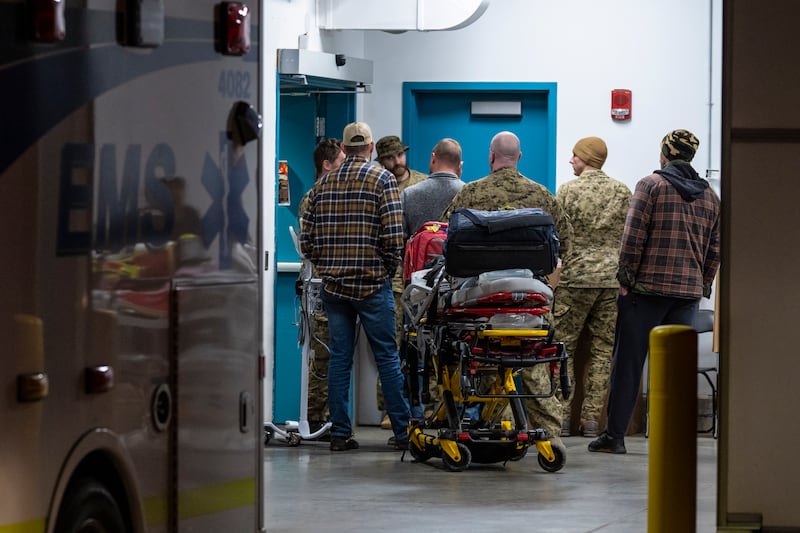
The unit, which typically has four intensive care beds and four high-intensity beds for patients transitioning out of intensive care, was already treating 15 other burn patients.
Medical teams converted the high-intensity beds into intensive care beds and expanded capacity in an adjacent intensive care unit to accommodate the influx of patients.
Specialized medical personnel from Ontario, Manitoba and the Canadian Armed Forces were also brought in to assist.
Just 2 ½ weeks before the fire, burn specialists from across Canada had gathered for a tabletop exercise to discuss how the country would respond to a mass casualty event.
The exercise was held in early October through the Canadian Burn Association.
“That helped us to mobilize our teams so that the support that we needed for sending patients after they were stabilized to go back closer to home for the remainder of their care was so smooth,” Wong said.
That collaboration extended beyond providing additional medical personnel.
“We even had one of the surgeons come from Toronto to help us with repatriating the ones that would go back to the Ontario burn centres,” Wong said.
“That support was tremendous.”
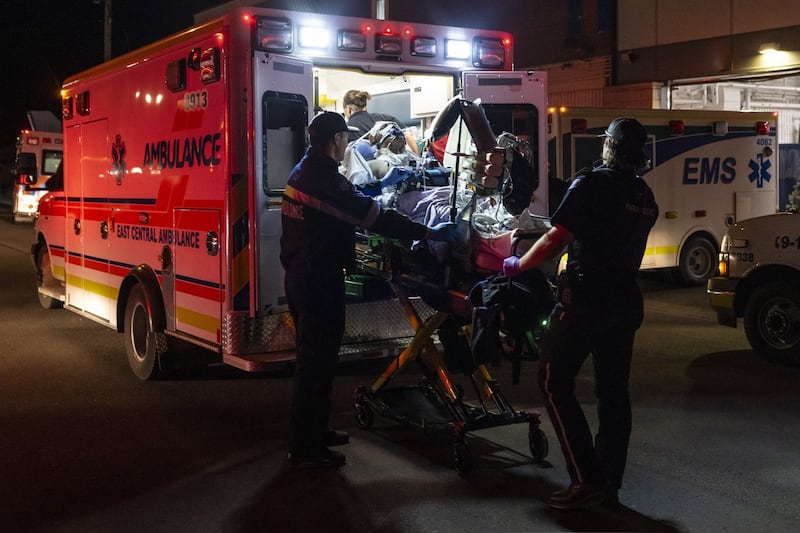
Within Alberta, an emergency co-ordination centre was established to oversee the response, with health officials monitoring hospital capacity and mobilizing resources.
Thirty emergency transport units, including 22 ground units, six fixed-wing aircraft and two helicopters, were mobilized to transfer patients from Wainwright.
The injured were taken to the University of Alberta Hospital and Royal Alexandra Hospital in Edmonton, the Foothills Medical Centre in Calgary and the Red Deer Regional Hospital Centre.
“These teams literally came together in the space of minutes and hours to create that pathway that those patients and families needed,” Suddes said.
While some soldiers have been discharged and others transferred closer to home, Wong said patients with severe burns can require multiple surgeries, extensive rehabilitation and ongoing medical support for months or even years.
Families have also been warned that the emotional challenges of surviving such traumatic injuries may become more pronounced over time.
“The psychological impact actually comes on stronger as they recover and become more aware later on as well,” Wong said.
Health officials are also mindful of the toll the tragedy could take on those working on the front lines.
For the first three weeks following the fire, full-time psychological support was available on site for staff at the University of Alberta Hospital.
Wong said the effects of treating so many severely injured patients could emerge in the weeks and months ahead, as the initial adrenaline subsides.
Health officials have begun reviewing their response, with individual medical teams and hospital programs conducting debriefings before their findings are brought together.
Suddes said it is too early to identify specific areas for improvement.
Wong hopes the lessons learned in Alberta could eventually benefit other medical teams faced with similar emergencies.
For now, Dr. Sayeh Zielke, interim CEO of Acute Care Alberta, said the focus remains on the patients who continue to require treatment.
“For us, it very much feels like a marathon, and we are right in the middle of it,” she said.

