Peter Linseman estimates he has written hundreds of songs on the old, road-worn, hand-me-down acoustic guitar in his Toronto studio. What makes the instrument truly remarkable, however, are the songs he believes were strummed on it long before it ever came into his possession.
According to Linseman family lore, the 1954 Martin D-18 once belonged to Johnny Cash and was used to record early hits such as “Hey Porter,” “Folsom Prison Blues,” and “I Walk the Line.”
“I can’t help but conclude that Johnny wrote a lot of the big songs from the first couple of years on it,” Linseman says. “Nothing predates this guitar in existence.”
Proving that claim has been a decades-long pursuit, one that has taken Linseman from North York to Nashville and back again.
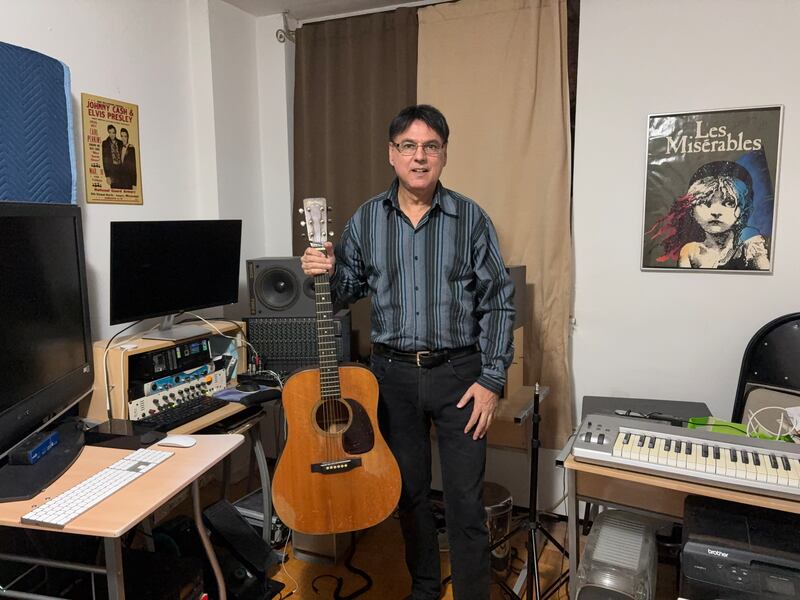
In a sworn affidavit witnessed by an Ontario notary, his mother, 90-year-old Rosalie Linseman, attests that she purchased the guitar from Fred Roden’s Record Corral in Toronto in late 1956 as a birthday present for her husband, Peter’s father.
Her husband, she writes in the document, “had his heart set” on a different guitar—a “beautiful Martin D-28 with elaborate pearl inlay.” But after putting a deposit down on it, she returned to the store only to discover the instrument was gone.
“We were told that Johnny Cash needed the Martin D-28 and left his Martin D-18 guitar in its place,” she writes. “My husband was very upset about the beat-up Martin D-18 that Johnny Cash had played the crap out of it and then left as a consolation.”
Despite the initially cool reception, Peter’s father grew to cherish the instrument and appreciate its heritage, once offering to return it to Cash years later after meeting him following a performance in Toronto.
“I will never forget that evening as long as I live,” Rosalie writes of their encounter with the rockstar, recalling how Cash “graciously” refused to take the guitar back.
When his father died in 2007, the guitar was passed on to Linseman, who by then was forging his own career as a songwriter and music producer. He began spending his downtime trying to verify what he could of the family heirloom’s backstory.
The search led him to Tennessee, where some of the earliest known photographs of Cash allegedly playing the guitar were taken, and where Linseman would share his theory with guitar collectors, auction houses and even the Johnny Cash Museum.
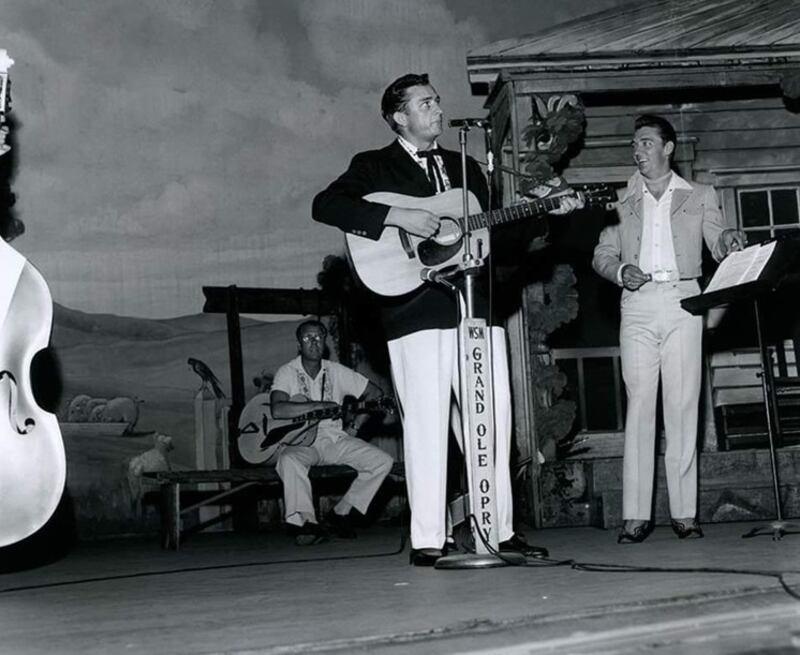
Those early photographs—captured during Cash’s first-ever appearance on the Grand Ole Opry radio broadcast on July 7, 1956—have convinced at least one expert that the Linseman family legend is the literal truth.
“At first I didn’t have high hopes for it being legitimately Johnny Cash’s guitar,” says William Long, a B.C.-based investigator who is known for tracking down long-lost instruments for rock ‘n’ roll royalty. “Maybe it’s a family story that got passed down, you know? But I thought I’d give it a look.”
Linseman says he contacted Long after reading a pair of CTV News stories that detailed how the Metro Vancouver man had developed some tech-savvy methods to recover guitars for artists such as Neil Young and Randy Bachman.
So Linseman emailed some high-resolution photos of his guitar to Long, who set to work studying photos, videos and written accounts of Cash and his bandmates from some of their earliest appearances.
What he saw of the two instruments “looked consistent” enough, he says, but he found no telltale fingerprint in either guitar’s woodgrain to guarantee a match.
“But then I found that one picture of Johnny Cash playing at the Grand Ole Opry,” Long recalls. “And I blew up the picture, and I looked at the pattern on the pickguard and I thought, bingo.”
The pattern in the plastic, tortoiseshell-style pickguard was “a perfect match, 100 per cent,” according to Long. “There’s no way that pickguard can match another guitar. It has to be that guitar.”
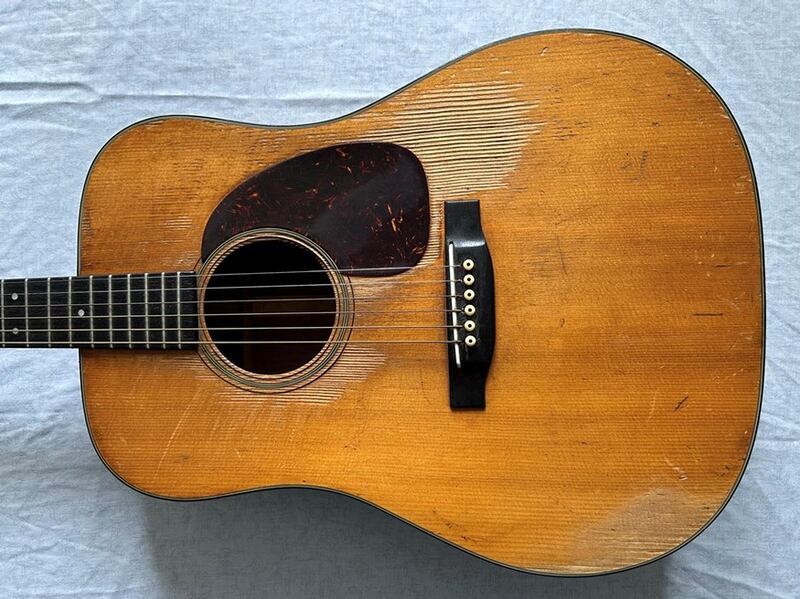
Such confirmation would make Linseman’s D-18 the earliest Johnny Cash D-18 on record. And it’s a pedigree the Toronto music producer is hoping to take to the bank.
Linseman is now awaiting an official appraisal from a Memphis-based music memorabilia expert, but the prices paid for similar rock icon-owned instruments have risen sharply in recent years, with guitars owned by Kurt Cobain, David Gilmour and Jimi Hendrix fetching millions at auction.
In 2022, a Martin acoustic owned by Cash sold for US$437,500. In its pitch to would-be buyers before the bidding opened, Julien’s Auctions described the 1956 guitar—which features a strikingly similar abrasion pattern to Linseman’s—as “the only known 1950s era Johnny Cash guitar to be offered for sale.”
The Linseman guitar could make that claim history.
RELATED STORIES:

