If you ask Vito Luprano what it takes to get a big radio hit, the response is straightforward.
“For me, the most important thing to listen to was always the melody. You listen to the melody. If the melody is right and the lyrics are so-so, you can still have a hit,” explains the former vice-president of Sony Music Canada.
“But if the melody is right and the lyrics are great, you have a bigger hit.”
And by that standard, the man hired in the mid-1980s to find hits for Celine Dion and others quickly found his footing.
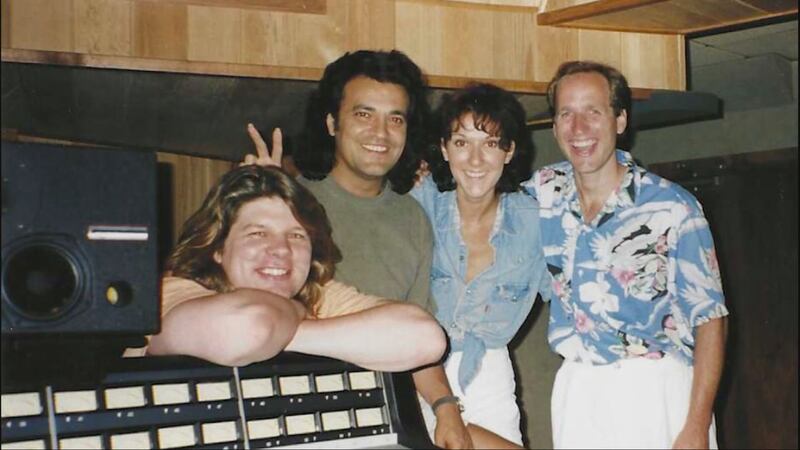
Luprano met Celine’s manager, René Angélil, when Sony Music, then called CBS record, put the Charlemagne, Que. native under contract. The record label and Angélil immediately planned to break into the anglophone market.
‘She needed to learn English’
Back then, Dion barely spoke English. And her market was mostly limited to Quebec.
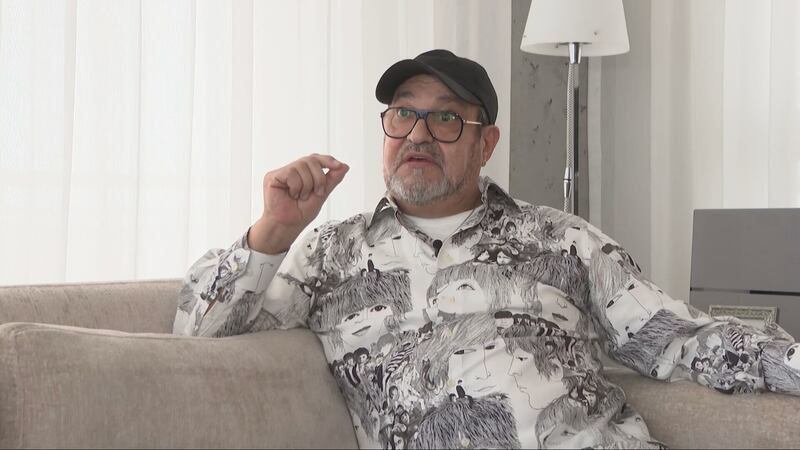
“We needed to change everything. Her look, her sound, the songs, and she needed to learn English,” Luprano told CTV News.
Luprano, who moved to Canada at age 10 from a small town in Italy, learned English and French in high-school in Ville St-Michel. In his mind, if he could learn it quickly, so would Celine.
Just a few days before the 1987 Juno Awards, Luprano and Angélil agreed she should sing in English, even if she was up for an award for her French-language album “Incognito.” But they needed a song. Celine’s manager figured she should do a Barbra Streisand song. Luprano didn’t think it was a good idea.
“Are you kidding?” Luprano recalls telling Angélil.
“I said, Streisand is Streisand. You know, The Beatles are The Beatles. You don’t try to be them. You love them. But if you do a cover, they’re going to think you did a great job, but that’s it. It has to be an original song.”
From the Junos to the world stage
Luprano turned to Montreal’s own Aldo Nova, a respected solo artist who was making a name for himself as a songwriter, producer and arranger at the time. They picked a song from her French-language album “Incognito” and adapted it.
“I called Aldo. Within a day-and-a-half the track was ready,” he said.
Following the performance at the Junos, Celine became an overnight household name across the country.
Dion, Angélil and Luprano made an immediate move on the American market. Sony/CBS in the United States liked the album Celine recorded, called “Unison.” But felt it could use a couple more radio-friendly songs.
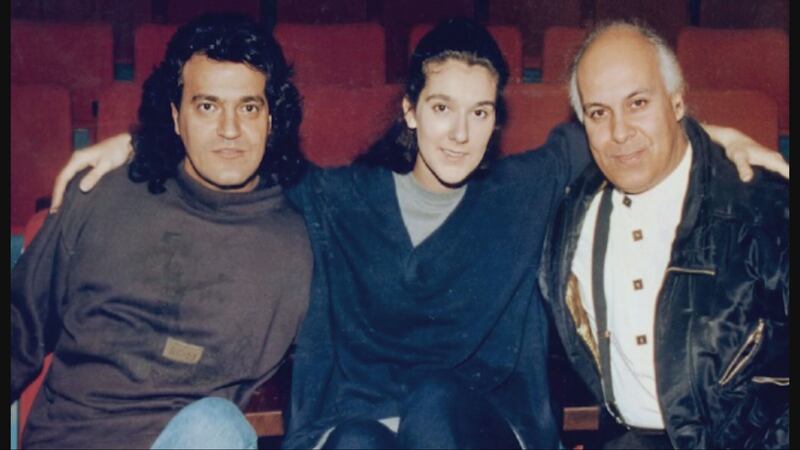
Luprano once again looked into his Rolodex.
“I made some calls through friends and we got to [composer] Chris Neil, who sent us “Where Does My Heart Beat Now?” It reached the top 5 in the American music charts and opened the door to two decades of chart-topping hits, including “The Power of Love,” “Because You Loved Me,” “It’s All Coming Back to Me Now,” and her era-defining “My Heart Will Go On” from the “Titanic” soundtrack.
The businessman behind the operation
The creative team became a hit-making powerhouse -- Luprano picked the songs and Celine’s voice made them hits.
And Angélil was the businessman behind the operation.
Luprano says he continued to find hit after hit, often from little-known songwriters. Like Ric Wake and Kristin Nordstoga, who worked in the relative obscurity for producer Jim Steinman of Meatloaf fame.
“Sometimes they have the jewel, but they don’t know. They don’t have a vehicle for their songs,” he said.
Luprano says many composers approached him and with good reason.
“One hit with Celine, and you essentially became a millionaire,” he said.
At a time when the music business was losing steam, Celine could still sell 25 million copies per album, making her one of the world’s top-selling artist.
‘All of a sudden, he takes out a gun’
Luprano says he had some conflicts with Angélil, who he describes as impulsive and controlling. Though he adds that nothing prepared the team for their aborted collaboration with famed 1960s producer, Phil Spector, known for his eccentricity, before he was eventually arrested for murdering his girlfriend at home.
“My God. This guy. We were so happy when his manager called Sony and they got in contact with us that he wanted to produce Celine. I was happy. René was happy. And Celine, when we told her, she was happy.”
Their first meeting with Spector started off on a strange footing, when he had the team waiting in his living room for three hours. “He was a funny guy,” Luprano says. “We were always laughing, and we said, ‘Well, he’s not so bad.’”
Spector then invited friends to watch the recording session, much to the displeasure of Celine and her husband. He also started drinking at the mixing console. Not the type of behaviour the singer generally accepted around her.
“She’s recording in there, he’s drinking vodka from a bottle of water, you know, drinking and drinking. Then all of a sudden, he takes out a gun,” Lurpano recalled.
Luprano says everyone was frightened.
“The first thing I say. OK, OK. Come on, calm down,’” Luprano recalled. “So I asked, ‘Is it loaded?’”
“Of course it’s loaded. OK, put it aside.’ So Celine is singing the song, which I thought it could be a huge hit, but we never got it because we were ran.”
During the exchange, Luprano says Spector told anyone who’d listen that he planned to separate Celine and René the same way he split Ike and Tina Turner in the 1960s
For Angélil, the legendary producer had crossed the line.
“Once we left, I called Spector’s manager and I said, ‘It’s over.’”
Four months later, Spector was arrested after shooting actress Lana Clarkson inside the house, claiming she had committed suicide. A jury found him guilty of second-degree murder and he died in prison while serving his sentence.
Luprano also says there were frequent tensions with Angélil and uncomfortable moments as he witnessed first-hand the evolution of the romance between Celine and her much older manager.
The two, he recalls, had a coffee in Angélil’s absence. And Celine laid it all out.
“She says, ‘I want to marry him.’ So how do I read that? The crush,” recalled Luprano. He didn’t want to say anything, and figured it was best to let the public make their own decision.
Their partnership started falling apart in the late 2000s. Celine had gone on a hiatus.
Angelil’s health was declining and there were creative disagreements. Angélil, he says, started ghosting him.
The split coincided with the collapse of the recording industry due to digital downloads and streaming.
Luprano went through a depression and a divorce, and figured an autobiography was his way to recovery.
“And that’s when I realized this book is going to save my life,” he said.
Luprano abandoned the glitz of Los Angeles to settle for a quiet life in Laval.
He now hopes the book will bring another insight into one of contemporary music’s biggest phenomena.

