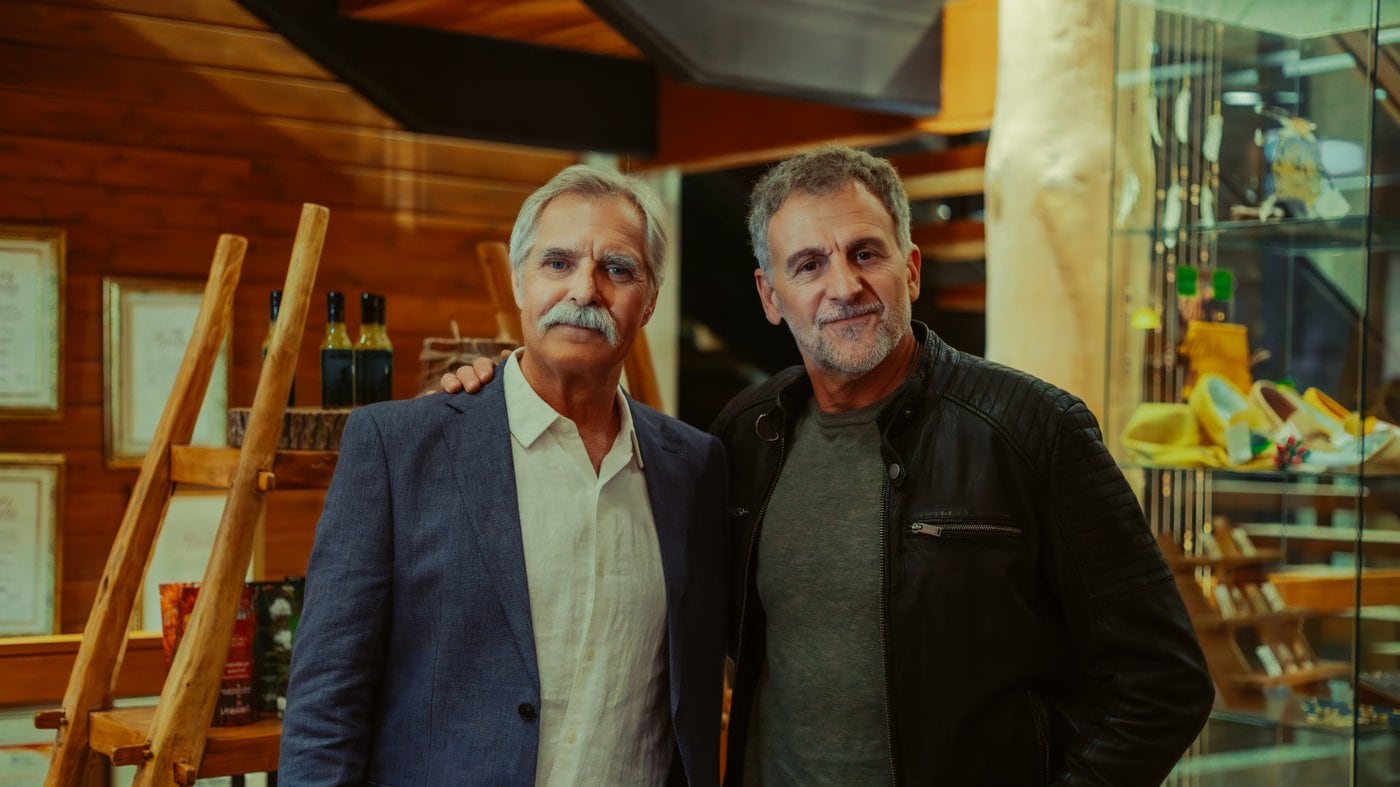
“Bon Cop Bad Cop” creator Patrick Huard knows fans of the film have had a passion for the franchise ever since it came out in 2006. So he can understand the skepticism around the recasting of one half of the dynamic duo.
Colm Feore is not returning for the Crave TV series launching this week due to his commitment to Taylor Sheridan’s “Landman,” which made him unavailable, said his manager.
But Huard says the show has maintained the fun, volatile relationship of the main characters with Henry Czerny stepping into the role of Detective Martin Ward.
“A lot of people who saw the first episode told me, you know what, after 60 seconds I was with this guy. Like, they knew him forever and discovering a new one at the same time,” Huard said during a video interview from Montreal.
Twenty years ago the bilingual film became a Canadian cultural phenomenon. The action-comedy became Canada’s highest grossing domestic box-office movie and led to a sequel in 2017.
The film follows the two detectives who team up after a murder takes place on the border of Ontario and Quebec. They find out they’re chasing after a serial killer who is murdering hockey executives that are selling Canadian teams to American owners.
And while Huard was used to having Feore by his side, he said he was delighted to have Toronto-born Czerny on board.
“That was my job — just come in, be Martin, bring the best Martin you can and let the chips fall where they do,” said Czerny, whose previous work includes the TV series “Revenge” and the “Mission Impossible” film franchise.
Recasting is not uncommon in the television and film industry, Czerny noted, adding the script addresses the switch in the first episode with a wink and a nod to Czerny having a bit more hair than Feore.
“I’m not going to do a Colm Feore impersonation, that’s just never going to happen, but what I will bring is my gravitas.”
Joining Czerny in the six-part series launching Thursday is Joshua Odjick, who plays the young police chief Joe Broom.
The “Bon Cop, Bad Cop” series drama unfolds when Odjick’s character teams up with Bouchard and Ward on the Gesgapegiag reserve as they investigate a disappearance in the Indigenous community.
The series was filmed in part on Quebec’s Gaspésie peninsula with the help of the Mi’gmaq First Nation community. It has dialogue in English, French, and Mi’gmaq.
Huard said the production organized a screening of the first two episodes for the community and there was one moment that stood out for the Montreal-born creator.
“We’ve seen hundreds of movies and TV series in Canada starting with big letters, Montreal, Toronto. But when they saw Gesgapegiag there was this big roar, like a rock show, because they don’t see themselves on the screen that often.”
Huard hired his friend Quentin Condo to bridge the gap between production and the First Nation community. The two have known each other for over a decade and Condo had helped Huard come up with the idea to introduce an Indigenous cop into the storyline. Condo said the reaction to the show at that first screening was “electric.”
“Some people were crying... obviously everyone was laughing, there’s so many funny moments. But the tears of pride is something so special,” Condo said during a phone interview this week.
Condo, who is from Gesgapegiag, was originally a script consultant, but as production continued he said he wrote portions on multiple episodes to make sure the Indigenous aspects were represented correctly.
“This art project was absolute medicine for our people. You could see that it was very promising. It gives these children in the community an opportunity to dream way beyond what they’ve ever been told they were allowed to dream. And it’s beautiful, it’s just been such a good project for our community.”
Condo said “there’s about 100 people in the community that are non-actors” who took part in the series, giving them a taste of “Hollywood.”
“It’s opened up the door for many of them to want to be actors,” Condo said.
As for the future of “Bon Cop, Bad Cop,” Huard said there are ideas for more episodes, but he’s taken a page out of “Breaking Bad” creator Vince Gilligan’s playbook.
Gilligan ended each season as if it was the end of the story, and Huard is following that same plan.
“At a certain point networks said, ‘Why are you doing this? We signed for next year.’ And he goes, ‘Because we never know. I might be in a plane crash and I want the audience to have a feeling of closure,’” Huard said.
Czerny believes that it actually helps build the tension.
“Ending the series with closure does not mean closure. It means now anything can happen now.”
This report by The Canadian Press was first published May 6, 2026.
Craig Macrae, The Canadian Press

