Large in scale, but personal in nature, “The Odyssey” is an epic tale of what it means to be human. A study of survival, homecoming and family, it breathes the same air as old-school Hollywood epics like “Ben-Hur” and “Spartacus” but feels undeniably modern, blending bravado filmmaking with dynamic, psychologically dense storytelling.
Director Christopher Nolan alters story elements from the original epic poem but keeps the core narrative and spirit of Homer’s 2,775-year-old original alive. That includes the ancient text’s nonlinear “in medias res” (starting in the middle of the action), style, flashbacks and parallel storylines. It’s familiar ground for Nolan, whose films “Memento,” “Inception,” “Dunkirk” and “Tenet” tinkered with time, and works effectively here, helping to build suspense that pays off in the film’s final act.
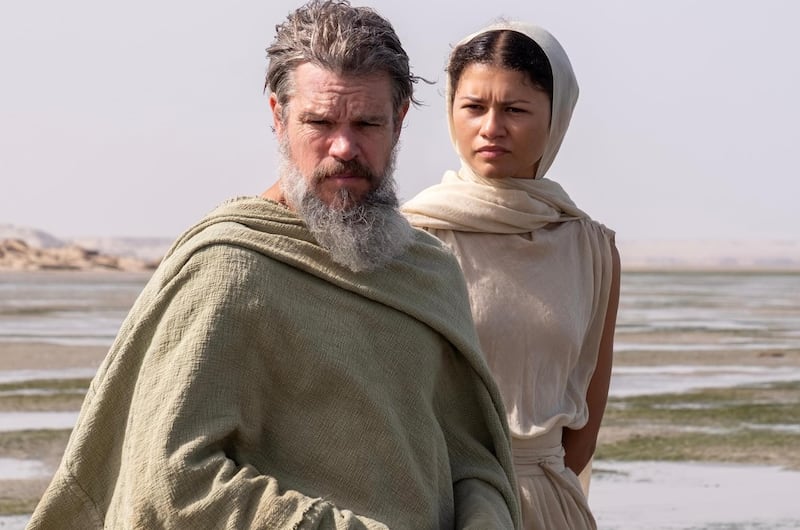
The story begins after the fall of Troy. On his 10-year maritime journey home, Greek hero King Odysseus (Matt Damon) encounters mythical monsters like the one-eyed Cyclops, the alluring-but-deadly Sirens, and Circe, a sorceress who turns his men into swine.
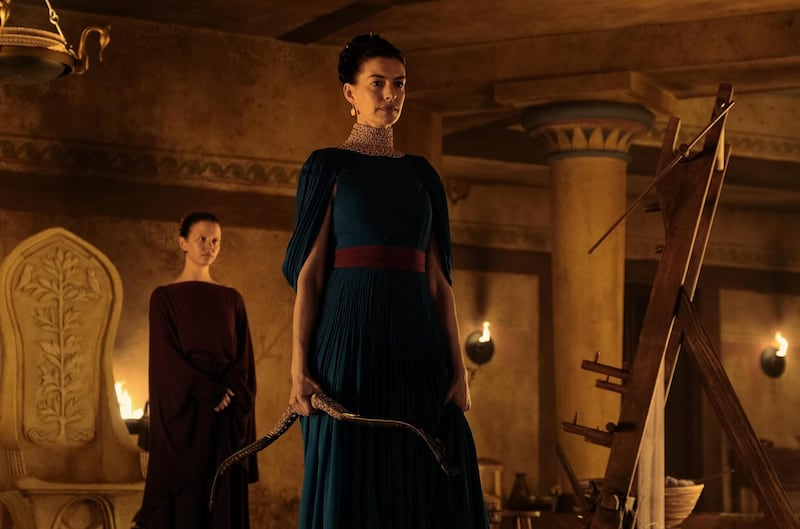
He returns to find his kingdom in shambles, his palace overrun with mobs of suitors pressuring his wife Penelope (Anne Hathaway) into marriage while son Telemachus (Tom Holland) searches for his lost father.
“You’re pining for a daddy you didn’t even know,” taunts Antinous (Robert Pattinson). “Like some snivelling bastard.”
Reclaiming his throne and family will test Odysseus’s cunning and courage in ways not even the gods could.
Among the first things you’ll notice about “The Odyssey” is a lack of antiquated language. Purists may rankle as Telemachus calls Odysseus “dad,” familiar, modern curse words are placed in the soldier’s mouths and Odysseus yells, “Let’s go,” instead of the Homeric “draw back” or “give way,” but the vernacular, in the style of Emily Wilson’s lauded modern translation, is accessible, without the theatrics of vintage sword-and-sandal epics.
It takes some getting used to, and for some will break the immersive historical effect of the larger-than-life IMAX images -- this is the first feature film shot entirely on IMAX 70mm film cameras -- but once the anachronistic language settles, it lends a naturalism to a story that features fantastical creatures like a Cyclops and witches. Although, it must be said that the second time Odysseus hollers, “Let’s go,” as a call to retreat, it borders on parody, as if the king and his men are racing away from a Scooby-Doo villain and not giant, man-eating Laestrygonians.
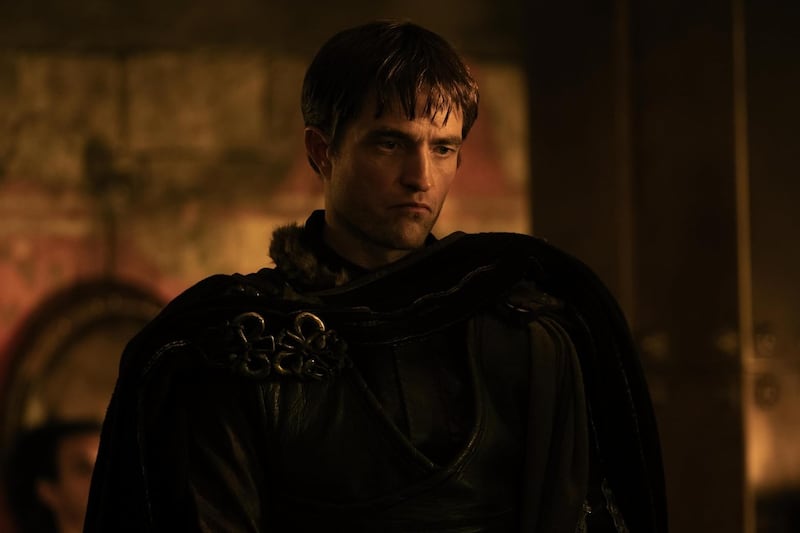
The topline cast, Matt Damon, Anne Hathaway, Robert Pattinson, and Tom Holland, deliver topflight work, but Nolan is the film’s star.
He crams a lot into the film’s episodic, three-hour run time. After a slow start, the action picks up with a heart-pounding scene, the first of two that can comfortably be described as horror.
In search for food, Odysseus and his crew land on an island presided over by a 60-foot (18.3-metre) one-eyed giant shepherd (Bill Irwin). What begins as a hunt turns into a desperate attempt to survive as the Cyclops defends his flock after an ambush in a claustrophobic cave. Nolan stages the scene largely without the use of CGI, instead opting for a massive puppet with voice and movements provided by Irwin. Nolan is notoriously allergic to CGI, but here using practical effects is absolutely the right decision. It feels organic, and not like Damon and the other actors are staring at a tennis ball to get the right eyeline. It’s the Ray Harryhausen effect: the Cyclops’s tangible nature brings a sense of scale that adds to the terror of the scene.
The film’s most memorable moments reveal themselves in a tour-de-force body horror sequence. On another island, and still in search of food, Odysseus and his men encounter Circe (Samantha Morton), a witch and goddess who turns unwanted visitors to her home into animals. Once again, using practical effects, alongside clever camera placement by cinematographer Hoyte van Hoytema, the horror is vividly brought to life as Circe transforms them. Beautifully choreographed, it is as impressive as any of Nolan’s large-scale battle sequences.
A bonus is Morton’s detailed, humanizing work as Circe, a character generally played as a villain or seductress. Here she’s more emotionally complex, almost sympathetic.
And then there’s the claustrophobic dread of the Trojan Horse sequence that sees Odysseus and soldiers inside the wooden horse, placed on top of one another like Tetris pieces. The Trojan Horse is the most famous example of Odysseus’s cunning, but Nolan visualizes it in a way that shows the cramped reality of his plan.
Ultimately, “The Odyssey” is a bit of a Trojan Horse itself. It’s a big, flashy package stuffed with surprises. Nolan delivers on the spectacle you expect, but he is more concerned with what’s inside, the unexpected attack of thematic discussions on intergenerational trauma, obsession, grief and the psychological toll of war.
Nolan fans know what to expect. His trademark murky audio is in place, occasionally making the dialogue difficult to understand and, at two hours and 50 minutes, it’s a bladder-bursting effort, but despite the knocks, when “The Odyssey” is great, which is often, it’s exhilarating filmmaking.

