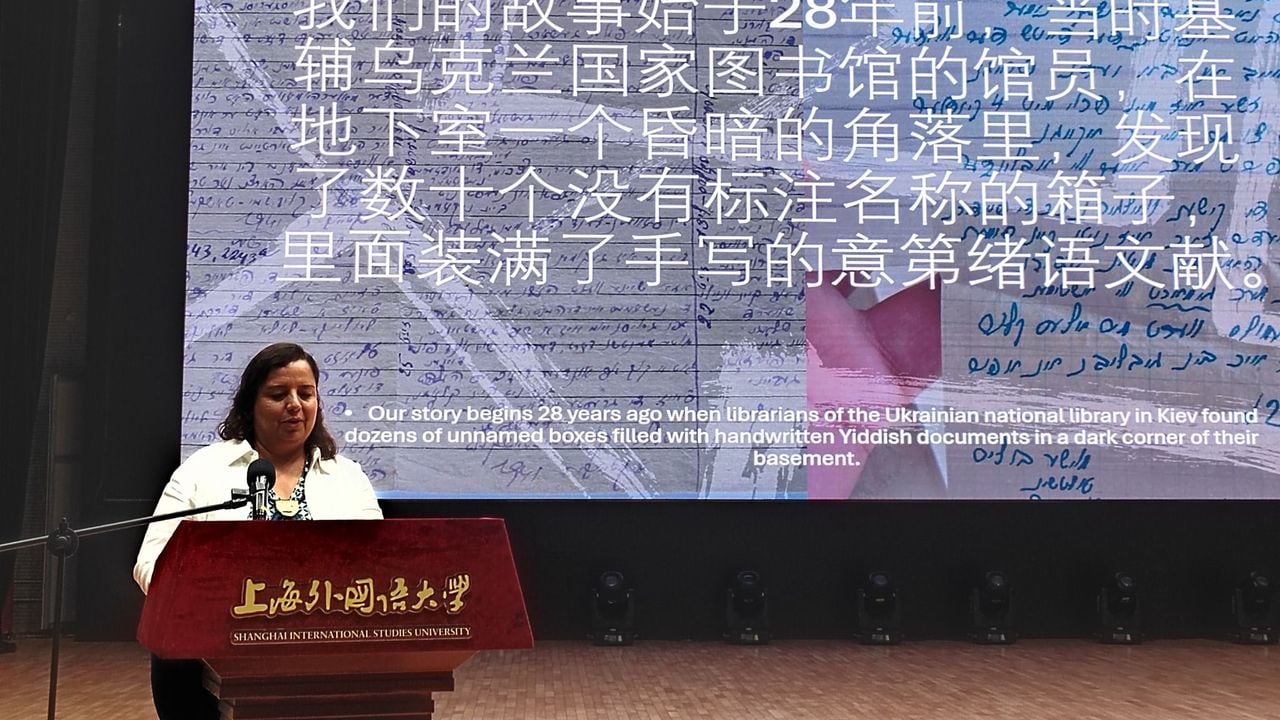
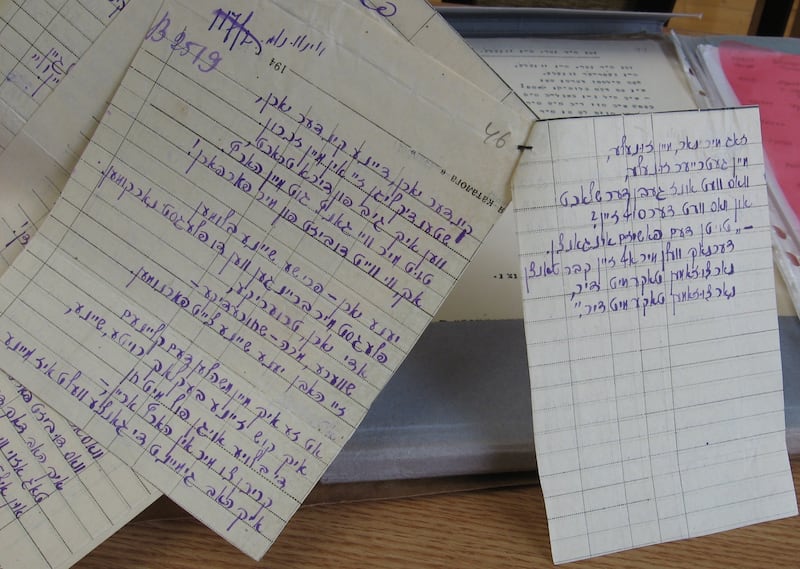
In 2010, University of Toronto professor Anna Shternshis was researching the history of Yiddish culture in Ukraine during the Holocaust, when she came across a large collection of handwritten documents in the historic language spoken by Ashkenazi Jews.
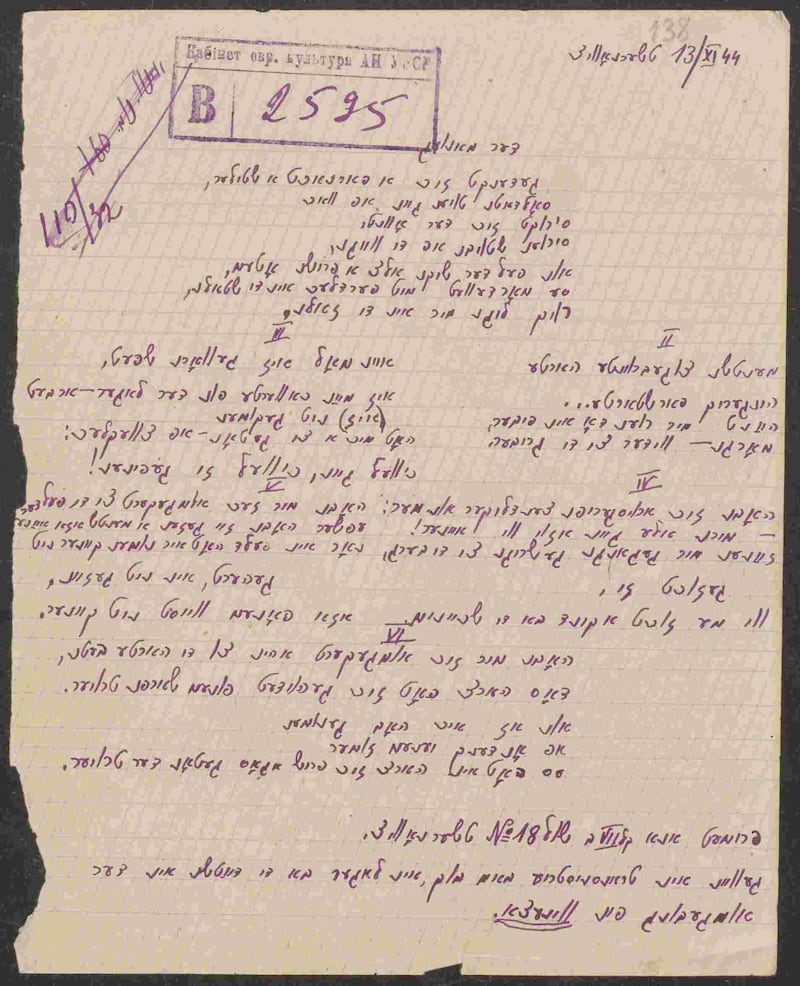
Many of them were poems, some with music notes next to them, dated between 1941 and 1947, which described life in Ukraine during, and after the Holocaust.
“These were the times when their days were numbered,” Shternshis told CTVNews.ca in a video interview, about the poems written during the war. “So, everyone who created the song or a poem knew that they probably have a day or two to live. These materials either gave them comfort in those times or messages to the future.”
Sixteen years later, those poems have been transformed into an album, titled “The Silenced Songs of World War II,” which recently won the German Record Critics’ Prize.
But it took decades longer for them to be uncovered in the first place.
Historic silencing
The title references the silencing of the original documents, which were initially collected by scholar Moisei Beregovsky when he worked at the Ukrainian Academy of Science in the 1940s.
He was arrested by former Soviet Union premier Joseph Stalin in the 1950s for the work that he did. At the time, Shternshis explained, Jews were not supposed to talk about being targeted in the Soviet Union during the Second World War. Shternshis said that since Beregovsky interviewed people who spoke of their suffering as a result of being Jewish, rather than Soviet citizens, he was arrested and sent to jail.
“So, talking about (the) Holocaust seems like an anti-Soviet activity because so many people suffered, why single out Jews?” she said.
Beregovsky’s research materials were confiscated and stored in KGB archives, until the collapse of the Soviet Union.
Bringing ‘silenced’ music to life
The project took more than a decade to come together since Shternshis had to do a lot of research to have the works translated, and then composed. She worked with 17 musicians, most of whom were Canadian, to bring the poems to life. In some cases, composers created music for the pieces, though most of the songs on the album have both original lyrics and tunes, which Shternshis described as “very simple folk songs.”
However, the lyrics detailed a dark period, with many songs about pogroms, or riots, against Jews in Ukraine.
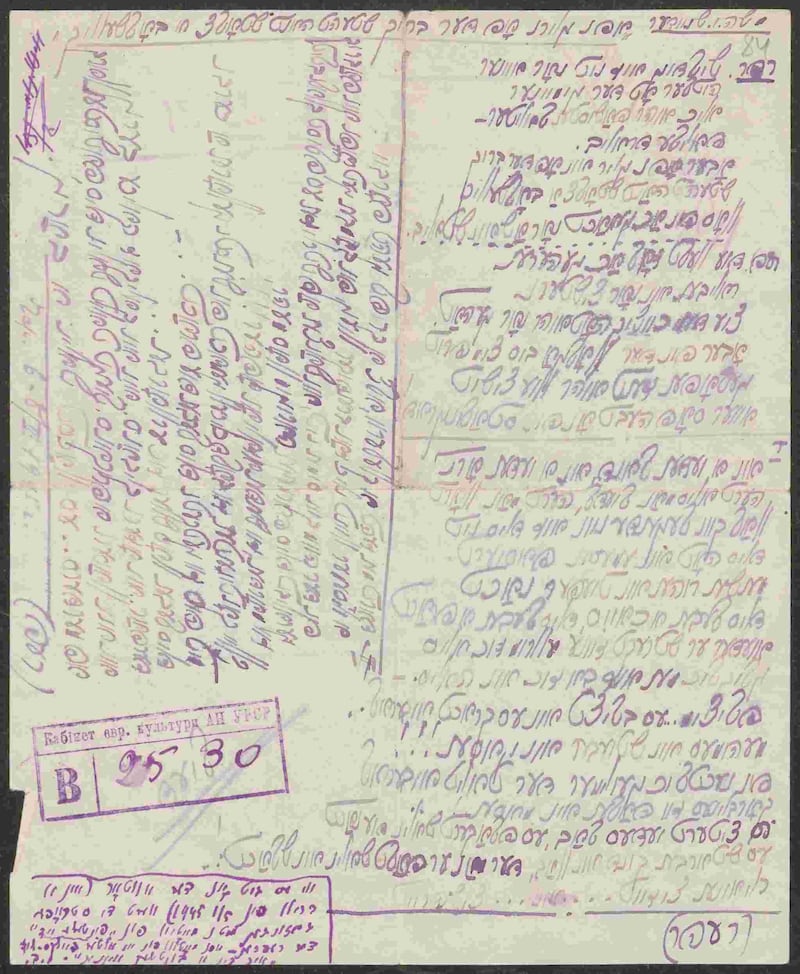
“These materials are often the only Jewish eyewitness accounts of violence against them,” Shternshis said. “There are so many accounts of violence that come from perpetrators, and we very rarely hear victims themselves.”
”So these songs really document: ‘this is what happened. This is who came, these are the perpetrators. This is how they harassed us. This is how violence was committed. This is where it happened,’” she added.
Common themes moving international audiences
Shternshis has been able to stage concerts around the world, where the music’s lyrics are translated through subtitles of the local language. She said that the themes in the music bring up questions that relate to the regions, themselves.
At a recent concert in Poland, many in the audience were Ukrainian refugees. Shternshis recalled one Ukrainian woman coming up to her after the concert to tell her she couldn’t believe how much the lyrics spoke to her.
In South Korea, many audience goers had questions about themes of separation, the impossibility of return and how you keep the memory of life from disappearing. In China, there were questions about the idea of someone going to jail for a folk song.
“The material that started as 100 per cent historical, became a lot more contemporary in some of its aspects,” she said. “There’s something about this material that is very local, it’s very focused on the time and a place where it happened, but also relates to people living through all sorts of different historical moments, including today.”
However, the one place where Shternshis dreams of taking the music is back to where it was originally created.
“Because of all the places in the world where we perform this, we have not done it in Ukraine,” she said. “It’s their history, the local history. Even though the Jewish community in Ukraine is very small, it doesn’t matter because it’s history of that place.”

