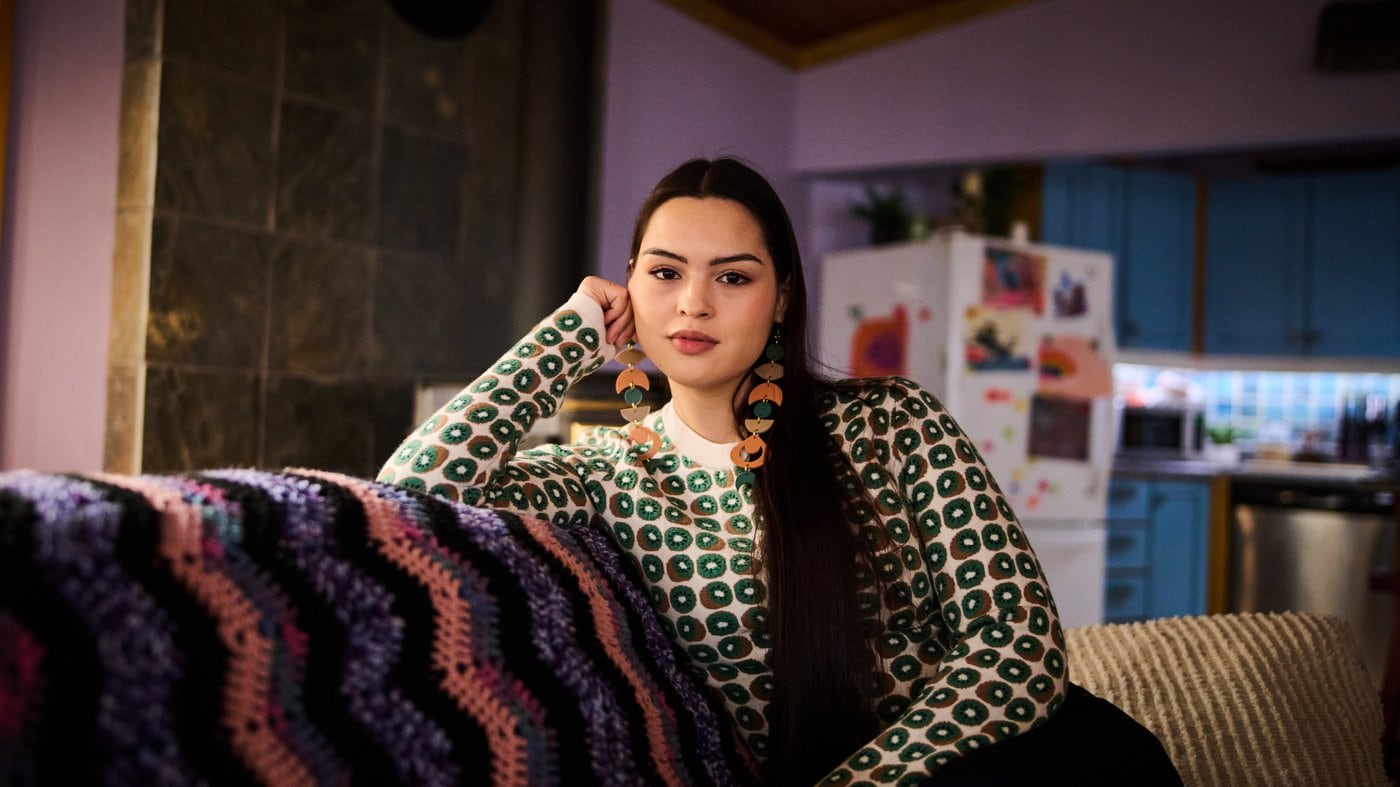
TORONTO — It was supposed to be a table read for the Season 2 finale of “North of North.”
But it turned into one big group cry.
Inuk actress Zorga Qaunaq, who plays Millie on the hit Iqaluit-shot sitcom, began tearing up at the end of the script.
“She just started crying and being like, ‘It’s so nice to have something nice. We deserve nice things,’” recalled co-creator Alethea Arnaquq-Baril.
Soon, the waterworks were flowing around the room.
For Arnaquq-Baril and co-creator Stacey Aglok MacDonald, the moment crystallized what they’d been hearing from their community since the dramedy debuted last year: that “North of North” was giving audiences something they didn’t often see on television — stories that let Inuit characters be messy, fall in love, struggle, and most importantly, experience joy.
“We just all ended up sobbing around the table because there were moments of fun and beauty and romance and hilarity, and that made her emotional,” Arnaquq-Baril said earlier this year while on set in Toronto, where some of the show is filmed.
“And I think that, in a nutshell, is what our community has been telling us it’s doing for them.”
That sense of tenderness and chaos is at the heart of the second season, which wraps up Tuesday with its final two episodes on CBC and APTN.
The creators say the first season was about blowing up the life of young Inuk mother Siaja, played by Anna Lambe, after she leaves her marriage and begins figuring out who she is on her own terms.
Season 2 is about rebuilding.
“And it’s not easy, as it turns out,” Aglok MacDonald laughed.
So far, Siaja has been juggling her push to expand her role at the Ice Cove community centre with her search for her long-lost sister, all while planning the fictional Nunavut hamlet’s first winter ball, an ambitious event that hits some unexpected snags in the finale.
“North of North,” a co-production between Netflix, CBC and APTN, became a global hit after premiering on the U.S. streamer last year.
Lambe said she was surprised to see the show crack Netflix’s top-10 lists in countries including Spain, Australia, and New Zealand, given how specifically rooted it is in Iqaluit and Inuit life.
“The show still feels so deeply personal to me and to the team,” said the Iqaluit-raised actress. “I always think of it as, like, our little experience.”
Lambe said she’s proud that “North of North” proves a distinctly Canadian story can travel well beyond the Arctic.
“It’s really great to see Canadian television get recognized for how truly great it is and can be, because so often it feels like we need the validation of America, of Hollywood, to go, ‘We watched it. Yeah, it’s good, for Canada,’” she said.
“That’s not the standard that we’re setting. We are good. We are stand-alone good.”
That confidence feels well placed with “Heated Rivalry” becoming another Canadian-made global hit over the last year.
Both shows share the same cinematographer in Jackson Parrell. Still, the success of Crave’s queer hockey romance has inspired some playful soul-searching in the “North of North” writers’ room.
“Now we want to write more sex scenes,” Arnaquq-Baril giggled.
“We need to step up our game,” Aglok MacDonald added.
“We try. I think we land more cute, but we try.”
Saija has at least one casual hookup this season, while still low-key pining for Inuk and Cree city boy Kuuk, played by Braeden Clarke.
Lambe believes audiences are responding to “Heated Rivalry” and “North of North” partly because they showcase gay and racialized people enjoying sex and romance without it becoming a cautionary tale.
“I think with queer and Indigenous stories and any stories of the BIPOC community, there’s often this expectation that there’s going to be some sort of violent trauma that’s going to happen,” she said.
“So to have shows that are just tender and loving and emotional and that other shoe doesn’t drop, I think we need that so badly, because that is reflective of real life.”
Aglok MacDonald and Arnaquq-Baril knew there was a lot riding on the show when they first brought production to Iqaluit. The city has only about 8,000 residents, while filming brought roughly 120 people into the community. The creators live in the North, so there was no escaping the reaction if they got it wrong.
Instead, they said the community embraced the show, with viewers telling them how meaningful it was to see their lives reflected on screen.
“It’s been so cool to see Inuit being like, ‘I feel like I understand my mom better, it’s healing my relationship with my parents.’ It’s such a relief to not have to be embarrassed walking to the grocery store. We were worried people would hate the show,” said Arnaquq-Baril.
“We’re allowed to have joy and experience it together and celebrate it together.”
This report by The Canadian Press was first published Sept. 29, 2026.
Alex Nino Gheciu, The Canadian Press

