Price growth on meat reached 7.2 per cent in August, up from 4.7 per cent the previous month, Statistics Canada says.
And StatsCan says this is as the cost of fresh and frozen beef has climbed 12.7 per cent.
“It’s extremely expensive,” said Calgary shopper Nancy Agecoutay.
“Swanson pies. We used to pay about $1.50 for them at Walmart. They went up to $2.78,” said shopper Denis Pharand.
Some stubbornness at the gas pumps pushed the headline inflation rate a couple ticks higher to 1.9 per cent in August.
Gasoline prices rose 1.4 per cent month-over-month in August as higher refining margins offset lower crude costs.
“The Canadian economy is also teetering on a recession. We had a really negative reading for growth in the second quarter of the year, and it looks like the third quarter is going to be, at best, flat,” said Richard Forbes, economist with the Conference Board of Canada.
The price of gas was still down 12.7 per cent annually in August—the end of the consumer carbon price has deflated costs for motorists since the spring—but the decline fell short of July’s 16.1 per cent drop, pushing the headline inflation rate higher.
Heading into the release, economists had broadly expected inflation would rise to two per cent, from 1.7 per cent in July.
Inflation data show it was a mixed bag at the grocery store last month.
The cost of groceries rose 3.5 per cent annually in August, up a tenth of a point from July.
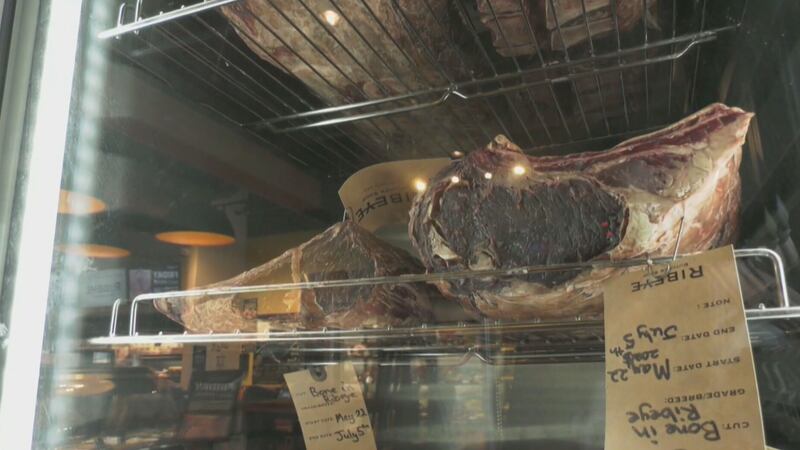
But the biggest sticker surprise was the price of meat.
“What we’re getting is a bit of a hangover from dry weather a few years ago,” said food economist Michael von Massow with the University of Guelph.
“We’re not talking that by Christmas these prices will be coming down. We’re talking a period of a few years before we see some softening of the beef price.”
And the prices are hitting Sam Gundy, co-owner of Ribeye Butcher Shop, hard as well.
He has seven locations in Alberta, and the more tender cuts of beef saw increases of 20 to 30 per cent to start the summer season.
“Now, it’s the ends of the animal that are getting more expensive, which, I haven’t seen this before. I’ve been doing this for 23 years,” he said.
“Think flat iron, think flank, think hanger, think skirts. These are the cuts that we take home. They’re one-third to half the price of the traditional loin cuts.”
Meanwhile, the cost of fresh fruit fell 1.1 per cent, reversing course on a 3.9 per cent gain in July, thanks largely to lower prices for grapes and cherries.
Alberta Premier Danielle Smith says she is worried about the state of the economy and rising inflation.
“We are the least impacted compared to the other provinces, but we’re still seeing it with the first quarter update; it looks even worse, unfortunately, than what we had projected when the first budget came out,” she said.
Rising rents and mortgage interest costs remain the biggest factors pushing the annual inflation rate higher.
The Bank of Canada will have a day to digest the new price readings before it makes its interest rate decision on Wednesday.
The bank held its benchmark interest rate steady at 2.75 per cent in three consecutive decisions as it waited for more information on how the United States’ tariff dispute would affect the economy and inflation.
With files from The Canadian Press

