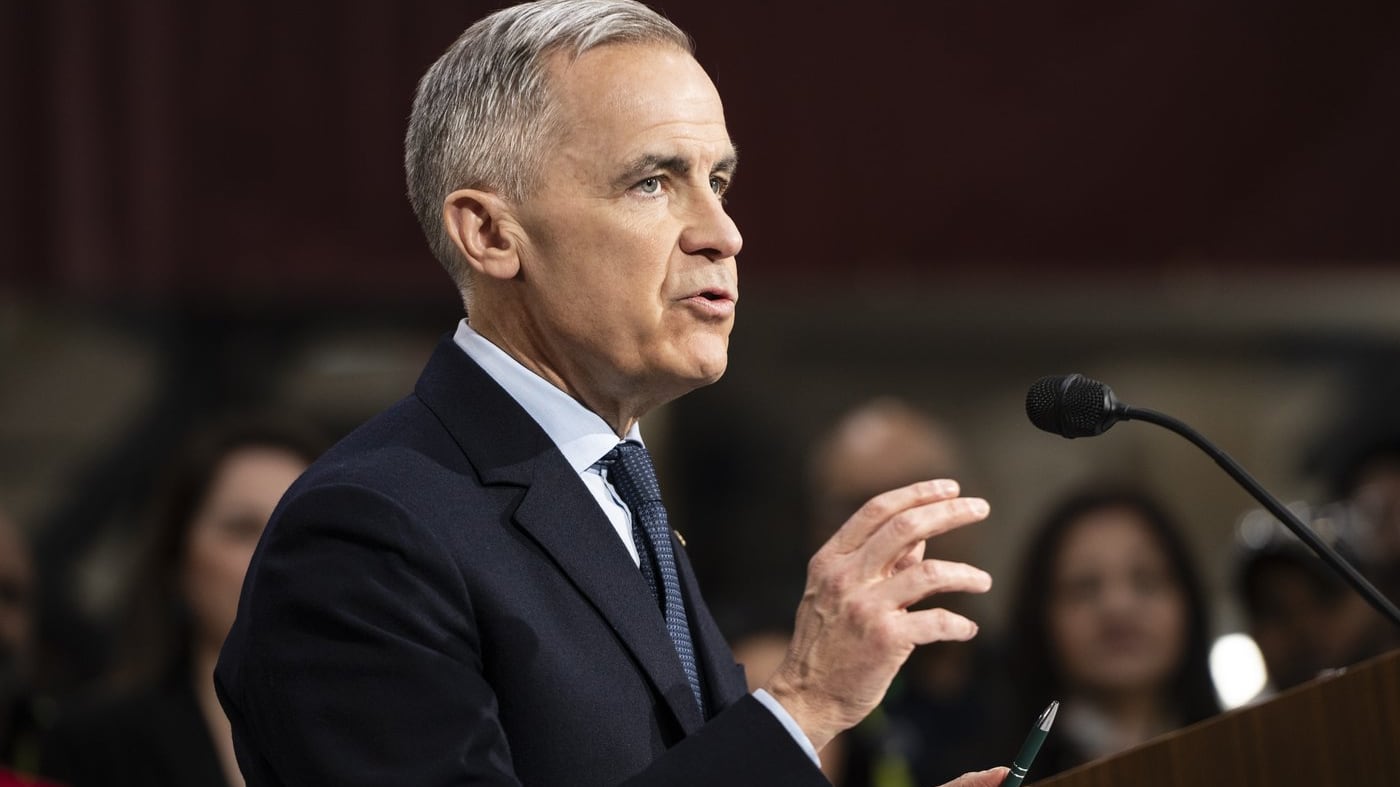
OTTAWA — Prime Minister Mark Carney intends to deepen defence ties and attract new business investment when he travels to Germany this week, according to government officials.
Carney will depart for the Munich Security Conference on Wednesday, becoming the first Canadian prime minister to attend the conference since Justin Trudeau in 2020. More than 60 heads of state and government leaders are also expected to attend.
Speaking at a technical briefing for reporters on Tuesday ahead of the trip, a government official who cannot be named said the conference is important because it’s the global gathering point for the international defence community, similar to the World Economic Forum in Davos, Switzerland, which is a focal point for the finance community.
“It’s more important than ever that we lean into and strengthen our relationship, especially within NATO,” one official told reporters on the technical briefing.
National Defence Minister David McGuinty, Foreign Affairs Minister Anita Anand, Artificial Intelligence and Digital Transformation Minister Evan Solomon and the Secretary of State for Defence Procurement Stephen Fuhr will be joining the prime minister on the trip.
While in Munich, Carney will meet with world and business leaders to advance security priorities and trade diversification. He will also hold bilateral meetings with the Chancellor of Germany Friedrich Merz, Ukrainian President Volodymyr Zelenskyy, Danish Prime Minister Mette Frederiksen, Spanish Prime Minister Pedro Sánchez, Finnish President Alexander Stubb and Prime Minister of Greenland Jens-Frederik Nielsen.
Carney is also scheduled to hold a trilateral meeting with the leaders of Norway and Germany. Asked whether that meeting has anything to do with submarines, a government official said Canada has a maritime agreement with those two countries and the meeting will largely be held in that context.
Government officials would not, however, provide any details on what business meetings Carney intends to have while in Germany. The officials would only say that the talks will include leaders from the investment, critical mineral, defence, manufacturing, energy and advanced technology sectors.
Carney will later meet with European Union (EU) Commission President Ursula von der Leyen on Feb. 14 for a discussion about the state and future of the international order in which the prime minister is set to underscore Canada’s priorities in the current global context. After that meeting, McGuinty is expected to sign onto the EU’s SAFE agreement. The $150-million EU initiative is aimed at enhancing defence capabilities and supporting large scale defence projects, including the acquisition of critical capabilities like ammunition.
Canada will become the first and only non-EU country to reach a SAFE agreement with the EU.
“Joining SAFE, Canada is not only contributing to European and Ukrainian security but also creating new opportunities for Canadian defence companies,” a government official said on background.
Asked how much it costs to join, a government official described it as an upfront fee of $16.6 million, later adding that they expect the fee will benefit Ukraine and that there will a “very substantial return on this modest upfront investment.”
Canada also intends to witness the signing of a defence co-operation agreement with Denmark which will outline opportunities for joint procurement and military exercises.
Prior to Carney’s departure for Germany, sources tell CTV News that he is expected to unveil the federal government’s long-anticipated industrial defence strategy on Wednesday.

