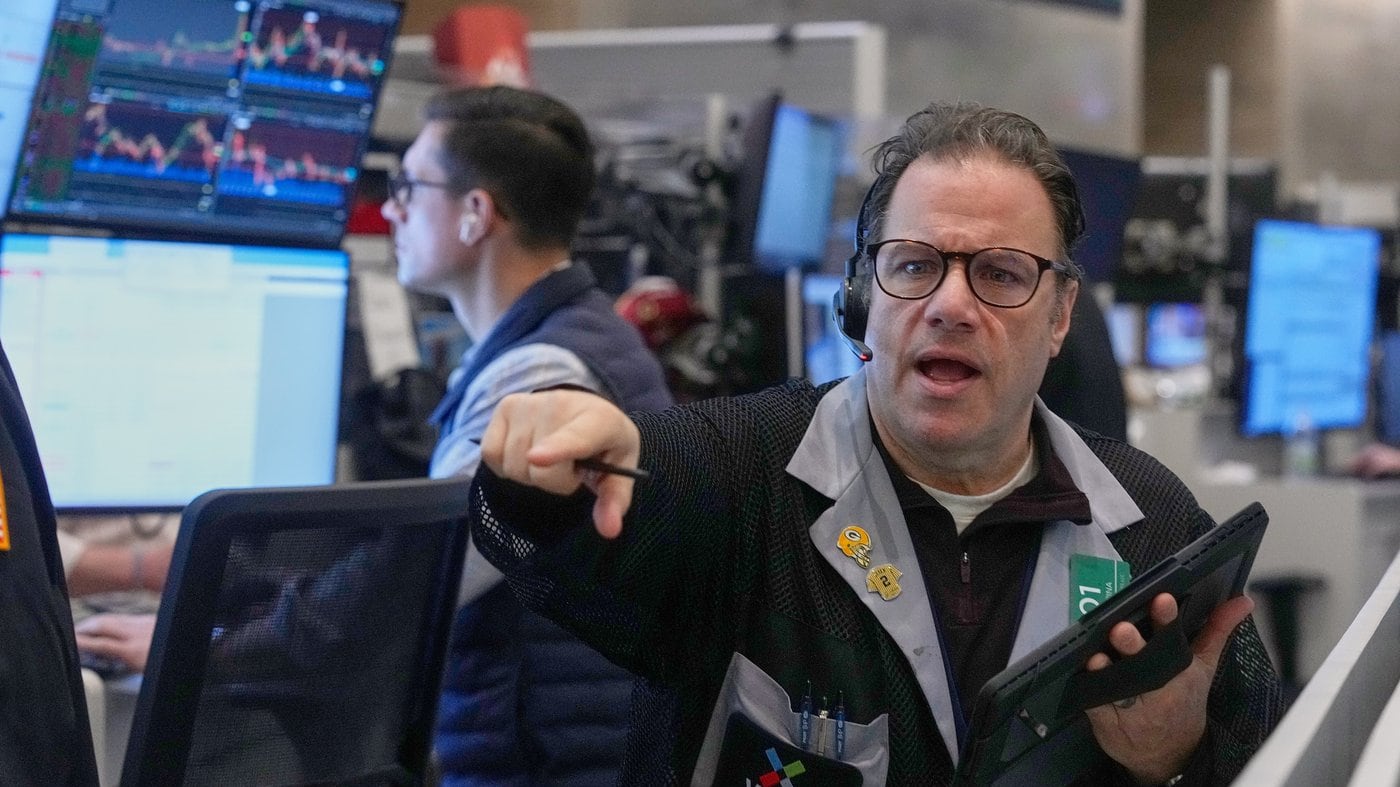
Wall Street kept calm Friday after the Supreme Court struck down President Donald Trump’s sweeping tariffs, which had triggered panic in financial markets when announced last year, and stocks ticked higher.
The S&P 500 rose 0.7 per cent. It had been flipping between small gains and losses before the court’s ruling, following discouraging reports showing slowing growth for the U.S. economy and faster inflation.
The Dow Jones Industrial Average added 230 points, or 0.5 per cent, and the Nasdaq composite rose 0.9 per cent.
Many on Wall Street were likely expecting such a ruling from the Supreme Court, according to Brian Jacobsen, chief economic strategist at Annex Wealth Management. That likely led to the relatively muted reactions across financial markets, and trading remained tentative as investors tried to suss out the long-term effects.
Tariffs also aren’t going away, even with the Supreme Court’s ruling. Trump in the afternoon said he would use other avenues to put taxes on imports from other countries after calling the court’s decision terrible.
“Just so you understand, we have tariffs, we just have them in a different way,” Trump told reporters in an afternoon briefing. He said he would sign an executive order to impose a 10 per cent global tariff under a law that could limit it to 150 days. The president also said he’s exploring other tariffs through other avenues, ones that would require an investigation through the Commerce Department.
“During that period of about five months, we are doing the various investigations necessary to put fair tariffs – or tariffs, period – on other countries,” Trump said.
Earlier in his comments, Trump said that the Supreme Court’s ruling had other countries “dancing in the streets, but they won’t be dancing for long.”
Among the tentative moves across markets, Treasury yields edged a bit higher in the bond market.
If investors thought the tariff ruling would improve inflation significantly, it could have sent yields lower. On the other hand, if investors were worried about the U.S. government’s debt rising faster in the future because of the loss of revenue from tariffs, long-term yields could have jumped. For now, at least, yields broadly held relatively steady.
The stock price of Ralph Lauren, meanwhile, rushed from an early loss to a gain of 3.3 per cent after investors learned of the Supreme Court’s ruling. But it quickly flipped back to a loss before finishing with a rise of 2.2 per cent. During April last year, the stock had dropped nearly 23 per cent in four days after Trump announced his tariffs because of worries about how they would hurt its profits.
In other markets, gold’s price slumped briefly after the ruling and then erased the loss. Stock indexes in Europe added some to their gains from earlier in the day, while the U.S. dollar’s value edged down against other currencies.
Heading into the day, the main event for markets had seemed to be discouraging reports showing slowing U.S. economic growth and accelerating inflation. They found a relatively muted response from investors.
While the reports underscore the tricky situation the Federal Reserve faces as it sets interest rates, they did not change traders’ expectations much for what the Fed will ultimately do. Traders are still betting that the Fed will lower rates at least twice this year, according to data from CME Group. Some shifted bets for the timing of when the cuts could begin to slightly later in the summer.
Lower interest rates would give the economy and investment prices a boost, but they also risk worsening inflation. Fed officials said at their last meeting that they want to see inflation fall further before they would support cutting rates further.
The yield on the 10-year Treasury remained at 4.08 per cent, where it was late Thursday. The two-year yield, which more closely tracks expectations for Fed action, inched up to 3.48 per cent from 3.47 per cent.
On Wall Street, Akamai Technologies dropped 14.1 per cent for one of the market’s sharpest losses. The cybersecurity and cloud computing company reported stronger results for the end of 2025 than analysts expected, but it gave a profit forecast for the upcoming year that fell short of estimates.
Akamai plans to spend a bigger percentage of its revenue this upcoming year on equipment and other investments. It’s the latest potential indicator of how shortages of computer memory created by the AI boom are affecting customers throughout the economy.
On the winning side of the market was Comfort Systems, which rose 6.5 per cent after the provider of heating, ventilation, air conditioning and electrical services reported a stronger profit for the latest quarter than analysts expected. CEO Brian Lane said his company is seeing “unprecedented demand.”
Al told, the S&P 500 rose 47.62 points to 6,909.51. The Dow Jones Industrial Average added 230.81 to 49,625.97, and the Nasdaq composite rose 203.34 to 22,886.07.
In stock markets abroad, indexes rose in Europe following a more mixed finish in Asia.
The Hang Seng fell 1.1 per cent, but South Korea’s Kospi jumped 2.3 per cent to a record, led by major defense contractors like Hanwha Aerospace. The company is one of many benefiting from a ramp up in military spending in many countries.
___
Stan Choe, The Associated Press. AP Business Writers Matt Ott and Elaine Kurtenbach contributed.

