One of the most common mistakes people can make when it comes to filing their annual tax return is relying on search engines, like Google, for advice.
That’s according to Michael E. Jakubo, a chartered professional accountant in Greater Sudbury, who says that oftentimes the information you call up on the Internet is based instead on American tax law.
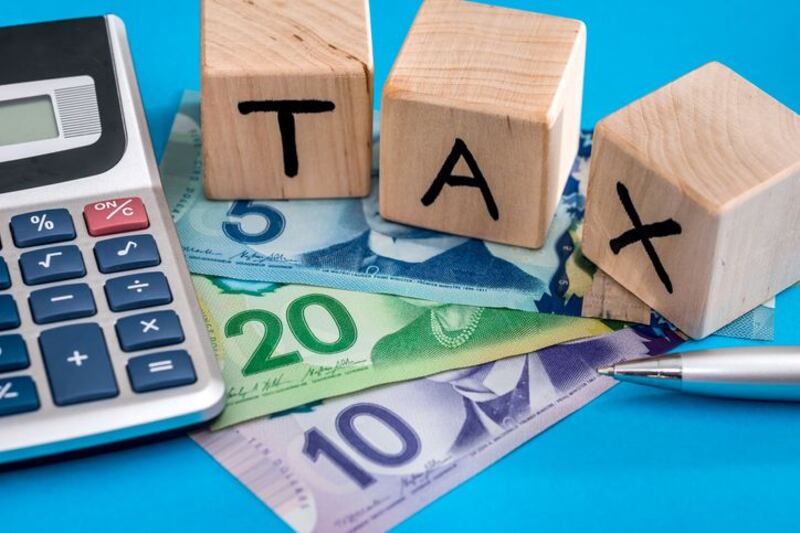
Canadians have until April 30 to file their return and self-employed Canadians have until June 15.
Jakubo, however, is one of many experts who believe you may not want to leave it until June.
“The truth is, if you do have a personal, small business that’s included in your T1 general return, you do have until June 15th to file your general tax return but any taxes, or any HST that you’re owning to the government, all has to be paid by April 30th,” he said.
“So for any of our clients, whether they have a business, and they may be able to delay their filing until June 15th, we always want to get on top of that before the end of April so any balances can be paid on time; otherwise the CRA (Canada Revenue Agency) is going to go ahead and charge late payment fees.”
Tax returns could also look a little different this year, as the lowest federal tax rate dropped a percentage point.
“Partway through the year, the government dropped the lowest tax bracket, the tax rate from 15 per cent to 14 per cent, as part of their trying to make things more affordable for the everyday Canadian,” said Jakubo.
“What that means for 2025 is that the blended tax rate for the lowest tax bracket is 14.5 per cent and for 2026 it’ll drop the full amount to 14 per cent for the entire year so what Canadians would have seen partway through 2025 is their paychecks would have gotten a little bit higher because less tax had to be withheld.”
Prime Minister Mark Carney also announced there would be a new Grocery and Essentials benefit for the coming year.
“Any of these kind of plans that the government has come up with is very targeted, so it’s definitely not something that every Canadian will benefit from,” said Jakubo.
“It’s based on an income test and I believe the most recent information I saw is that 12-million Canadians will benefit from that and of course our population is close to 40-million, our tax-paying population is probably closer to 25 or 30 million. So, it’s probably a third of Canadians who will see a benefit from that.”
Authorities and tax professionals also said tax scams are in full swing as scammers look to present themselves as the CRA or government officials.
- Read more: Authorities warn of digital fraud surge
Jakubo gave CTV News some red flags to watch out for.
“Probably everybody, if you have a cell phone, has had an instance where you received a text message from the CRA,” said Jakubo.
“The CRA will never contact you by text message, the CRA’s first contact to you, if there are any issues, will not be by email. It will be by phone call or letter mail. That is the way the CRA operates.”
The chartered account said that people have to be very careful.
“If you don’t recognize the number, it’s generally not going to be the CRA and don’t click on that link. Don’t even respond to that text message because sometimes even a response can allow hackers into your phone so people do have to be very careful,” said Jakubo.
“Everybody has to file a tax return every year, it’s the law.”
— Michael E. Jakubo, a chartered professional accountant
“It is important for everybody … especially if you have very little income, there are credits that are available to you that will only come to you if you do file your tax return,” said Jakubo.
“So, for young adults, late teens that are working and maybe starting to live on their own. They’re maybe paying rent and if their income is low enough then they’re able to claim that rent on their tax return and take advantage of something called the Ontario Trillium Benefit that can pay them up to (about) $100 a month and so credits like that are only available if you file your tax return.”
RELATED STORIES:
- Here are 5 tax credits and deductions Canadians are missing out on
- Canada tax brackets 2026: What’s changed and how to pay less
- Changed jobs last year? Here’s what you need to know before filing your taxes
- CRA to close drop box filing system once tax season ends
- Police report rise in tax-related scams as Canadians file returns

