


TORONTO – “Surveillance pricing” has been a hot topic this week following calls from the federal NDP and their provincial counterparts to ban the practice.
But when CTV News spoke with consumers in downtown Toronto Thursday, none had heard of it.
“Definitely shocking,” one woman said. “But not surprising. There’s a lot of ways people sneakily make you pay more for things than you would.”
Another person said he understood why businesses would do it.
“I actually have no problem with it,” he said. “I think it makes sense.”

Surveillance pricing occurs when a company uses personal data scoured from across the web to create a custom price for an individual. When buying a pair of shoes online, for instance, one person might see a different price than someone else looking at the exact same shoes on the same site at the same time.
An algorithm determines the highest price a specific consumer might be willing to pay.
“AI and machine learning have supercharged the ability to analyze these data signals, where previously, stuff like this wouldn’t have even been possible,” said Emily Osborne, a policy research associate at the Canadian Shield Institute, a think-tank that has worked on issues such as dynamic pricing.
Data points, such as a person’s neighbourhood, browsing history, spending habits and device type can be used to generate the custom price. Osborne said even the way a person interacts with a webpage is tracked.
“For example, how your cursor is moving on a screen can tell them a lot about what your attitude is,” she said. “It can even be used to infer more sensitive details like what your emotional state is.”
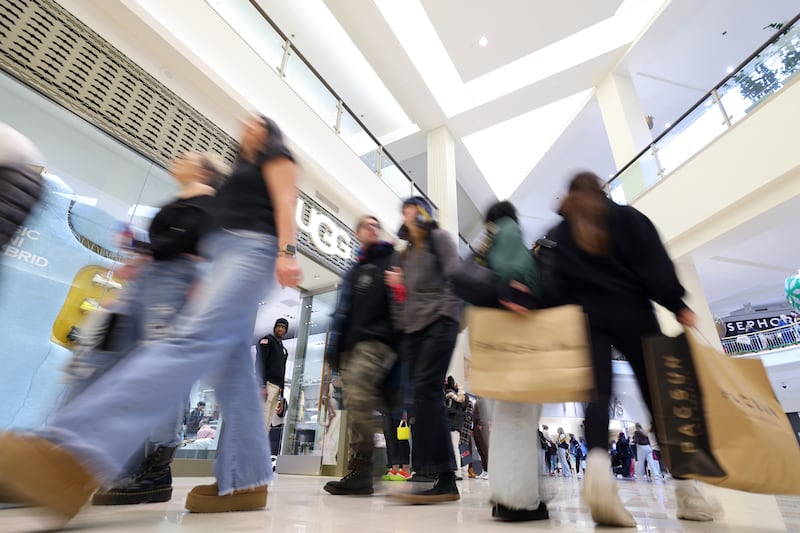
Some experts believe data regarding when a person receives their paycheque could also be used.
“Ultimately, this could be used by firms to increase prices when they know that it’s your payday,” Osborne said.
How widespread the practice is in Canada remains unclear. Osborne noted that some reports are anecdotal and the push for bans is partly based on what could happen in the future.
Surveillance pricing is distinct from dynamic pricing, where rideshare companies, airlines and hotels fluctuate prices based on timing, location, and demand.
Surveillance pricing — or algorithmic personalized pricing — has generated significant consumer concern, especially as some retailers switch to digital shelf labels.
Some fear consumers will eventually see individualized prices while shopping in brick-and-mortar stores. Small cameras embedded in shelving could estimate age, gender and mood.
If a shopper has the store’s app open, the retailer could identify them and display a custom price as they walk by, while a different price is shown to another shopper.

Though CTV News technology expert Carmi Levy says retailers have, so far, been too worried about blowback to do that.
“It wouldn’t surprise me if over time, this goes from being something that is the source of outrage to the new normal,” says Levy.
In December, Consumer Reports found Instacart was using AI-driven price experiments. When several shoppers tried to buy the same items from the same grocery store at the same time, they were shown different online prices. Instacart later stated it was ending those price tests.
“There is more evidence in the U.S. that it is spreading to retail settings, even in physical stores, and we should anticipate that this is where Canada will move,” Osborne said.
The Competition Bureau looked at surveillance pricing as part of a broader consultation on algorithmic pricing.
Brad Callaghan, the associate deputy commissioner for policy planning and advocacy, said the main concern from consumers is a lack of transparency.
“It’s raising questions for consumers about what was the basis of that? What data does the company have that has led to my price? Have I lost my chance at getting the deal I normally would have?” Callaghan said.
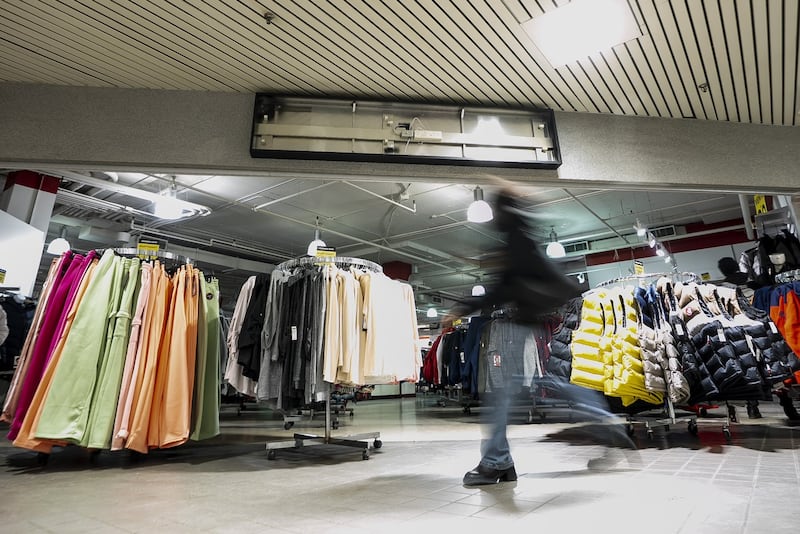
He noted that personalized pricing has existed for a long time, citing senior or student discounts. However, he said those were intended to offer certain groups a better price.
“What we’re hearing concerns about now is higher prices, because companies are testing the willingness to pay of their consumers, and they have a lot more data to do it with.”
Callaghan said the Competition Bureau will continue to monitor the issue to ensure harms are addressed while allowing businesses to innovate.
Lawmakers in several U.S. states are considering regulating or banning the use of personal data for individualized pricing. In Canada, Manitoba’s NDP government introduced a bill last month that would make it the first province to ban the practice.
Asked on Thursday if Ontario would follow suit, Premier Doug Ford said no.
“I believe in a capitalist society. Free market. The market dictates,” said Ford.

