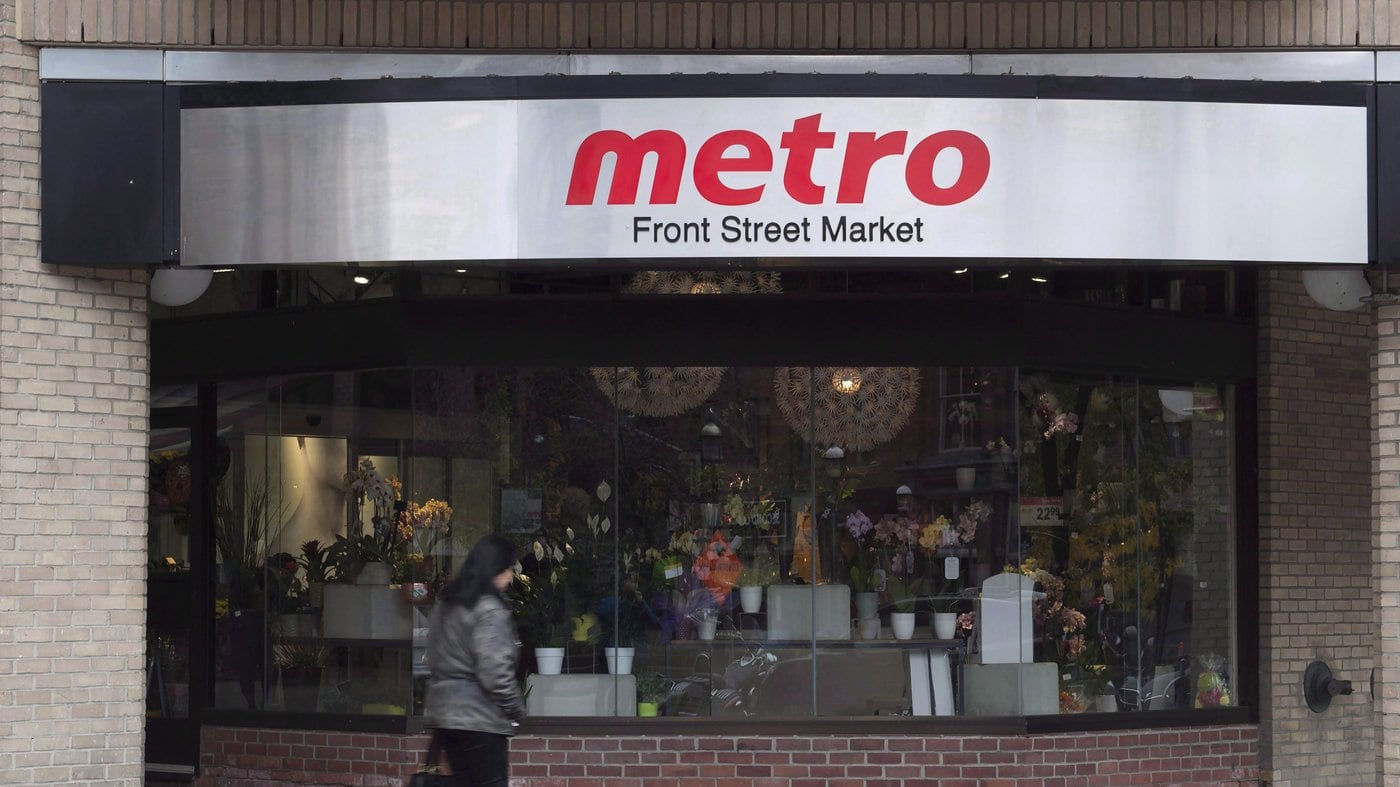
Metro Inc. shoppers have not seen the full effects of high fuel prices in their grocery bills yet, the grocery and drugstore retailer says.
On the supplier side, Metro chief financial officer Nicolas Amyot said the company hasn’t received that many price increase requests so far.
“Only a few, actually,” Amyot said in response to a question during a conference call Wednesday after the company delivered its second-quarter financial results.
Amyot said the grocer is “negotiating the conditions and trying to delay the impact that this might have on food pricing.”
However, Metro’s own distribution has already been affected by higher fuel prices.
“That’s pretty direct, so we’ve started feeling it,” Amyot said. “That’s obviously, everything else being equal, more pressure that we need to manage.”
Metro chief executive Eric La Flèche said over time the company expects higher costs like that will be reflected in prices, but it hasn’t started to happen yet.
Oil prices skyrocketed after Iran blocked tanker traffic through the narrow waterway of the Strait of Hormuz. The route has been virtually cut off after the U.S. and Israel began their attacks on Iran in late February. And with ongoing volatility in the Middle East, businesses and shoppers alike have started to feel cost pressures.
La Flèche said higher fuel prices at gas stations have driven the value-seeking behaviour up a notch.
“Fuel price pressures contribute to affordability crisis and contribute to customers searching for value in everything that they buy, including food,” he told analysts during the call.
La Flèche said the company is “well positioned” with its multiple store formats, noting Metro’s discount banners continued to perform well last quarter — outperforming same-store sales at Metro stores.
“Discount is growing faster. People are searching for value in all of our banners, not just discount,” he said. Sales of private-label products also outperformed sales of national brands, he added.
“The competitive environment, as I said, it’s intense,” he said, with rival grocers Loblaw and Empire having expanded their discount store footprint in recent years.
Metro reported a second-quarter profit of $246.6 million or $1.16 per diluted share for the 12-week period ended March 14, up from a profit of $220.0 million or 99 cents per diluted share a year earlier.
Sales for the quarter totalled $5.11 billion, up from $4.91 billion a year earlier.
The increase came as food same-store sales rose 1.8 per cent for the quarter. Meanwhile, pharmacy same-store sales were up 5.1 per cent, boosted by a 6.1 per cent increase in prescription drugs and a 2.8 per cent increase in front-store sales.
On an adjusted basis, Metro says it earned $1.11 per diluted share in its latest quarter, up from $1.02 per diluted share a year earlier.
In its outlook, Metro said a strike at its produce distribution centre in Laval, Que., that began on March 30 will have an impact on its third quarter.
La Flèche said the company’s contingency plan is in place and Quebec stores are now generally well stocked. However, there will be impacts.
“We lost some sales. When you lose sales, you lose the bottom line, so clearly it has had an impact,” he said. There are also direct costs of setting up a contingency plan, he added.
Workers at Metro’s head office and the Laval fruit and vegetable distribution centre have been on strike since the end of March. The work stoppage includes about 550 warehouse workers and drivers at the Mérite 1 warehouse in the Rivière-des-Prairies neighbourhood of Montreal.
The union is demanding a larger pay increase. The previous agreement provided for 11 per cent increases between 2019 and 2025.
This report by The Canadian Press was first published April 22, 2026.
Ritika Dubey, The Canadian Press

