VAUGHAN, Ont. — A family-owned business that makes personal protective equipment is warning retail consumers to brace for possible shortages of certain disposable gloves, as the closure of the Strait of Hormuz sends the cost of oil-derived raw materials surging.
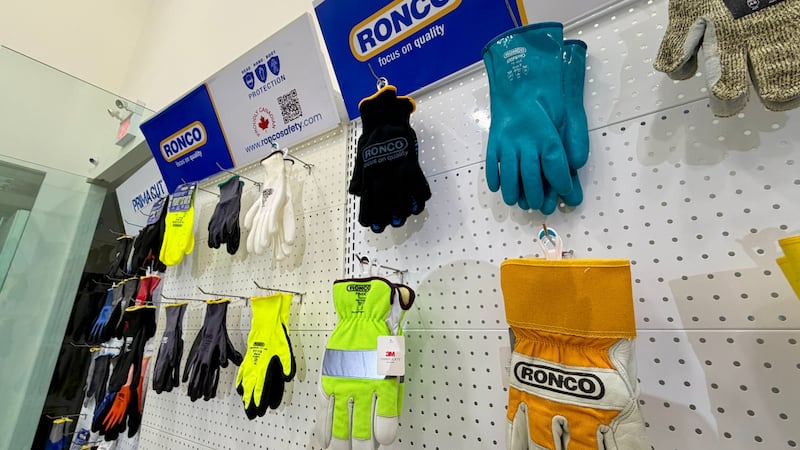
Ronco Safety, based in Vaughan, Ont., employs about 60 people and manufactures personal protective equipment (PPE), such as lab coats, head and foot coverings, eyewear, masks and disposable gloves for facilities in Canada and Asia.
The company says some items now cost between 20 to 80 per cent – or more – to produce, driven by soaring raw material prices because of the conflict in Iran.
“It really comes down to the raw material cost, which skyrocketed in the beginning of March,” says Daniel Pecchioli, vice-president of sales at Ronco Safety.
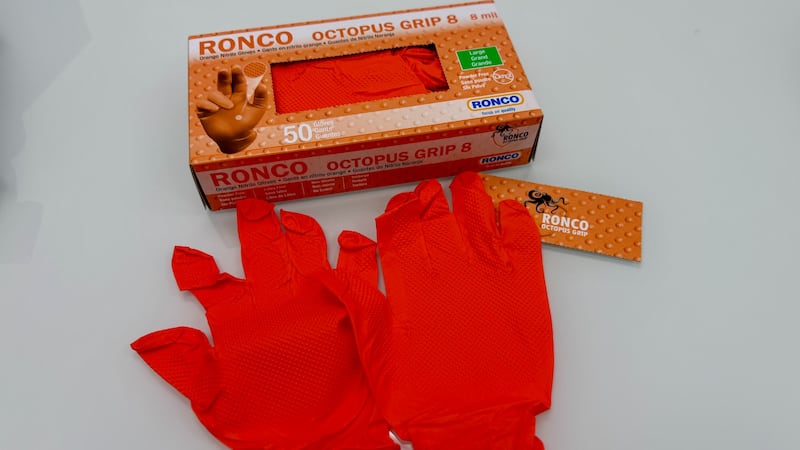
Nitrile disposable gloves — used in hospitals, food preparation, chemical handling and general household work — are among the hardest-hit products. They are made in countries such as China and Malaysia from a synthetic petroleum-based rubber known as NBR.
Starting in a few weeks, Pecchioli says retail buyers should expect to see both higher prices and shortages.
“It’s going to happen in May or June, and that’s when there’s going to be a shortage in the Canadian market for these,” said Pecchioli. “When people are shopping, they’re going to see a huge price increase.”
Oil byproducts at the heart of the problem
Petrochemicals derived from oil and natural gas are used to produce plastics and synthetic materials, such as polyester. Asia, which accounts for more than half of the world’s manufacturing, has been hit particularly hard by the “dual blockade” of the Strait of Hormuz, creating a cascade of supply issues.
Polypropylene — a plastic resin that is a byproduct of oil refining — is used in the lab coats Ronco produces. Pecchioli says the company has already run up against supply rationing in Asia.
“At first, we were only allowed a certain amount of allocation of this raw material each week, when in the past we were able to procure as much as we needed,” said Pecchioli.
The energy crunch is compounding the problem in two ways: driving up the cost of raw materials, and raising the cost of both manufacturing and transporting finished goods.
“The whole supply chain (is) being choked a little bit,” said Pecchioli, adding the company has passed some — but not all — of the increased costs on to customers.

A wave moving westward
Retail analyst Bruce Winder says the disruption extends well beyond the PPE sector. Plastics and petrochemicals are embedded in thousands of everyday products, from kitchen utensils to coffee makers to consumer electronics.
“Oil is a key input into making resin and plastics and other components that go into consumer and industrial goods,” said Winder.
“There’s a bit of a wave that started in Asia, and it’s starting to move its way westward,” added Winder. “The longer the conflict continues, the greater the chance that we’re going to start to see shortages and or inflation on some of these items.”
While much of the public attention has focused on rising gasoline prices and higher airfares driven by jet fuel costs, Winder says the upstream pressure on petrochemicals has received less notice — even though its effects will be felt broadly.
Because there is typically a three-to-six-month lag between manufacturing cost increases and their appearance on store shelves, Winder says consumers may notice higher prices on back-to-school products, with a second wave hitting holiday merchandise later in the year.
Manufacturers are trying to absorb costs for now, he says, but that won’t last.
“They’ll try to avoid raising costs. But at some point, they have to.”

