Throwing a steak on the grill is something Anastasia Ginou considers a “treat” these days. As she’s looking through the selection of options at her local butcher shop, she’s now looking more at the price than the type of cut, eventually choosing one that’s much cheaper than the rest.
“The price of beef has gone so high that I can still get the nutrition with a lower cut piece of meat and not break the bank,” Ginou, who grabbed a bavette steak, known to be a more budget-friendly cut, told CTV News Saturday.
“I would say I’ve reduced my beef intake by about half, if not a little bit more,” Ginou added. “I’ve been adding, into my diet, more lentils and beans to get the protein. It’s almost like a treat nowadays to have a really nice piece of meat.”
Beef costs continue to soar across Canada, with March’s prices showing a 12.7 percent increase year-over-year compared to the same month last year, according to Statistics Canada. In comparison, the price of chicken went up 7.5 per cent and pork’s prices had increased 6.2 per cent compared to March of 2025.
“All proteins have gone up, mostly because beef prices have gone up so much,” Michael von Massow, a food economist with the University of Guelph told CTV News Saturday. He added that the price of chicken and pork going up is directly tied to the price of beef rising, since chicken and pork is now more in demand from those Canadians who find beef too expensive.
“Barbecuing this year is going to be more expensive than barbecuing was last year.”
The price of beef in the last five years has soared nearly 65 per cent, when comparing Statistics Canada data from March 2021 to March of this year.
Food experts say severe droughts have affected the pastures cows feed on, resulting in farmers being forced to buy more expensive grain and fewer cattle to offset the rising costs of feeding them.
The good news, according to von Massow, is that 2026 saw an increase in the number of cows being added to Canadian herds for the first time in years, with Statistics Canada showing the number of cattle and calves increasing 2.5 per cent compared to a year earlier.
The bad news is that the cattle and calves supply chain is not like other products and takes years to rebuild.
“It almost makes the situation worse, because instead of that animal going into the supply chain and becoming beef… it has been withheld, and raised, fed for a couple of years and bred,” said von Massow. “Then it’ll have a calf. That takes some time.”
“We’re seeing farmers get some optimism and say ‘well, we’ve recovered a bit of the equity we lost when prices were low, so we can maybe afford to keep that animal, reduce our revenue a little bit and start increasing the herd so that we have a larger breeding stock that that improves the supply in the future,’” added Massow. “What we’re seeing is female calves are being retained instead of sold.”
What does that mean for consumers who are looking to see beef prices go down? Von Massow’s best guess is that we won’t see a downward trend in prices until at least late 2027.
“As the cow herd grows, there will be more calves born, and as more calves are born, then sometime in the next year to 18 months, those calves will come to the market… So, we will have a slight increase in supply over the next year or year-and-a-half,” added von Massow. But Saskatchewan Cattle Association chair, Chad Ross predicts it could take even longer than that until prices go back down to what they were about five years ago.
“Over history, our industry has been on a seven-year cycle from the top of the cycle to the bottom, it’s been about seven years,” Ross told CTV News. “As we go into 2033, it will start that downward trend as far as the prices that we receive as cow-calf producers.”
Ross added that Canadian ranchers are steadily leaving the industry, adding to the national cattle herd to shrink and contributing to the increase in beef prices.
“There’s been a huge exodus of those producers in our industry that bring us back to cow-calf numbers that are equivalent to the 1950s,” said Ross. “We combine that with the huge world demand for protein. That has been the perfect storm to have the high prices that the consumers are seeing in the grocery store.”
Butchers, restaurants bracing for a tough BBQ season
Although there may be light at the end of the tunnel, butchers and restaurant owners who depend on selling beef to keep their businesses afloat say it will be a tough summer ahead.
“Today I ordered meat and it’s already twenty cents more per pound,” said Muhammad Adil, owner of the restaurant, Karachi Nihari & BBQ in Toronto. “It’s difficult because we can’t change the prices on the menu every day, so the restaurant businesses are more affected than others. I don’t think they are making any profit; they are just trying to survive right now.”
For Adil, it’s not just the price of meat that’s rising but the high cost of propane is also now starting to eat away at his bottom line, since the Iran-U.S. war resulted in the closure of the key oil-shipping corridor, the Strait of Hormuz, and led to global energy markets increasing prices on everything from crude oil to natural gas.
“The price of propane was $21.99 earlier this month, and now I checked this morning and it’s $29.99,” added Adil, who bought a tank of propane on Saturday for his restaurant’s patio grill.
Despite the price of beef and propane increasing, von Massow says beef consumption has not gone down in Canada.
“We’re not giving up beef despite these high prices,” said von Massow. “In some cases, people are eating not less beef, but different beef. Maybe we’re not putting a steak on the barbecue as much as we used to, but we’re doing burgers or trying an alternate cut that we have to marinate.”
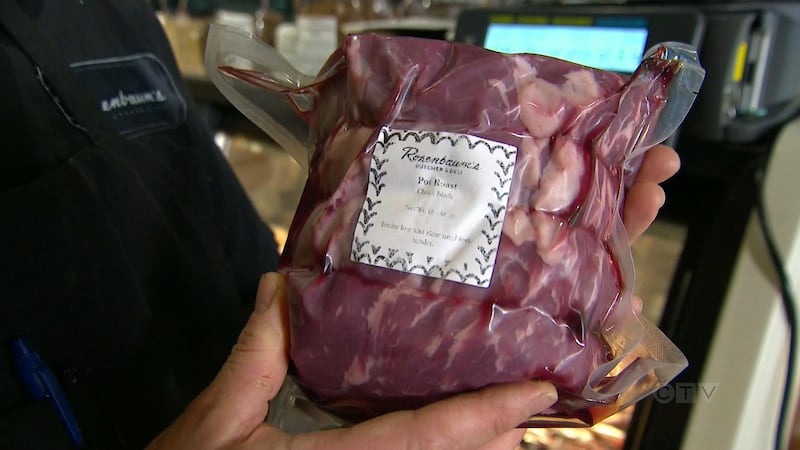
Marlon Rosenbaum, owner of Rosenbaum’s Butcher & Deli in Toronto, said he’s tried to put off increasing the price of his meat products again this year after seeing a surge in beef costs.
“We try our best to absorb some of those costs, we don’t want to send the customers away, scared to buy a nice steak for dinner,” Rosenbaum told CTV News Saturday.
“One of the techniques we use is that we try to (direct) them to cuts of meat that may not be as expensive as some of the more premium cuts that you’re used to seeing, like a striploin or a ribeye or a fillet. There are strategic ways to buy meat that are not going to totally take you to the bank.”
For customers like Anastasia, that’s exactly the strategy she plans on implementing: buying cheaper cuts of meat. But if it gets any more expensive, she plans to continue limiting the amount of beef she eats.
“Maybe I’ll have beef once a week instead of twice, where I would have previously,” she added.

