OTTAWA — Canada’s federal banking regulator says it’s lowering its domestic stability buffer to three per cent from 3.5 per cent, a move it says will give the country’s six largest banks greater flexibility to deploy capital.
The Office of the Superintendent of Financial Institutions said it’s the first change to the domestic stability buffer since June 2023 and takes effect Friday.
The regulator also narrowed the potential range of the buffer to between zero and three per cent compared with an earlier range of zero to four per cent.
“By lowering both the level and top end of the range of the domestic stability buffer, OSFI will enable the banking sector to deploy its excess capital in support of Canada’s economic adaptation to new opportunities,” Peter Routledge, superintendent of financial institutions, said in a news release.
The buffer is part of the amount of money Canada’s big banks must keep on hand in case of economic shock. It applies to Canada’s six largest, or systemically important, banks. Lowering the buffer gives the banks more room to lend, potentially helping the economy.
Routledge said OSFI anticipates Canada’s largest lenders will use the money to invest in Canada’s economy through a period of “structural change.”
Sébastien Mc Mahon, chief economist at iA Financial Group, said he views the move as positive and that the regulator was “proactive in their deployment.”
“That gives Canada’s largest banks more room to put capital to work, which is pretty good and this does not look like a distress signal,” Mc Mahon said in an interview.
“It’s more OSFI saying that the banks are strong, we see the economy going through some structural changes, and it’s time to support lending and investment through regulation.”
The buffer is reviewed and set every June and December, but can be changed at other times if needed.
In December of 2025, the regulator kept the domestic stability buffer unchanged at 3.5 per cent. Routledge said at the time that the economy was faring “better than we had feared.”
The move by OSFI to lower the buffer comes as Prime Minister Mark Carney looks to provide a spark to Canada’s economy.
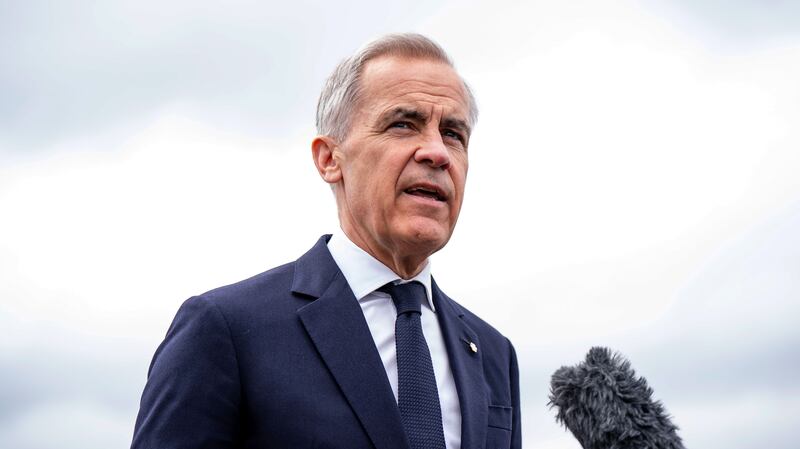
Carney’s economic agenda includes plans to invest in infrastructure in an effort to boost trade, while diversifying away from the U.S. The strategy has also involved setting up a major projects office to speed up reviews of nation-building projects.
“For the plan to work and for the big nation-building projects to go online, the federal government can start the wheels turning,” he said.
But Canada needs businesses to invest and be confident enough to borrow.
“You can’t raise confidence to borrow through regulation, but you can at least help through the side of the supply of credit here,” he said.
The question now becomes whether businesses want to borrow and whether the federal and provincial governments can “create enough bankable projects,” Mc Mahon said.
If OSFI’s release of capital ends up funding share buybacks at some of the major banks, he said it would be a signal that demand for credit remains weak, though share buybacks could be supportive of the stock market.
If the release of capital instead spurs stronger commercial loan growth, Mc Mahon said the policy will have accomplished “what OSFI appears to want.”
This report by The Canadian Press was first published June 19, 2026.
By Daniel Johnson

