MONTREAL – Inflation numbers held some good news for Canadians in June, but the price tag to feed families continues to rise.
June marked the 17th consecutive month that grocery price inflation outpaced the all-item consumer price index (CPI). While overall inflation slowed to 2.8 per cent, for groceries alone it was at 3.9 percent.
“It’s not exactly clear why this is the case, but over the last five years grocery prices have increased 30 per cent,” says DT Cochrane, a senior economist with the Canadian Labour Congress.
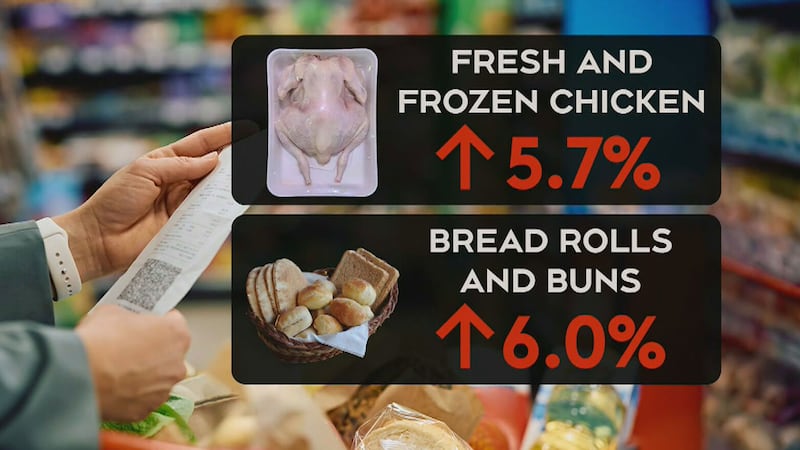
In June, the price tag for fresh or frozen chicken was up 5.7 per cent while bread rolls and the cost of buns rose by six per cent more compared to May.
The slowdown in food inflation from 4.3 per cent in May to 3.9 per cent in June is due in part by lower prices of fresh fruit, including grapes.
While tomato prices, for instance, have risen significantly in recent months and are now up 32 per cent compared to this time last year, the increase slowed from May to June.
“The problem was largely supply from Mexico,” say food economist Michael Von Massow. “At this time of the year, in May and June, the tomatoes are coming from the U.S. and so not coming from as far, and they don’t have the same production problem that Mexico had. We are trucking them shorter distances and so we are seeing some price relief there.”
But wildfires may be a wildcard. The smoke that has hovered over many regions of Canada could have an impact on crop production.
“Light can be blocked by smoke, and less light means less energy in those plants for instance,” says Von Massow. “There is also the potential of some plants to actually benefit because there is some diffusion of the light to lower leaves.”
That could mean smaller or fewer tomatoes for instance.
“It’s very difficult to measure,” says Van Massow. “But I expect in July and August we will see more price relief from products that are coming on the market from Canada.”
Statistics Canada data shows the deceleration in the all-item CPI was largely driven by gas prices, at a time of diplomatic talks and an interim ceasefire in the Iran-U.S. conflict.
The cost of a fill-up didn’t go down, but the price rose at a slower rate of 20.5 per cent, compared with the year-over-year increase at 33.2 per cent. Renewed tensions have already seen prices rise at the pump this month.
The higher cost of food has widespread repercussions for many families forced to cut in other expenses, for instance school supplies. It may be July, but many are already trying to add up the cost of the back-to-school season and having a hard time filling backpacks with everything from calculators to pens and notebooks.
“When you have to choose between paying your bills, paying your rent, or feeding your family, then things like school supplies come down the list,” says Anne-Marie Ethier of Regroupement Partage. The Montreal non-profit helps families by providing backpacks filled with supplies and lunchboxes adding up to approximately $185 each.
Ethier says the requests for help has surged even in families where both parents are employed.
Travel-related services also went up in price, particularly in Vancouver and Toronto where World Cup games were hosted recently. Prices of accommodations rose 10.1 per cent across the country, compared to 2.5 per cent in May.

