Slow economic growth, weak housing demand, declining home prices and lower housing starts.
That’s what the Canada Mortgage and Housing Corporation (CMHC) sees in the second half of 2026 for the Canadian real estate market.
In CMHC’s summer update to its 2026 Housing Market Outlook, the organization said a variety of factors continue to weigh on the economy as a whole and on markets across the country.
“Housing activity will likely remain weak in the near term, as very slow population growth, uncertainty, high borrowing costs and modest income growth continue to limit demand,” CMHC said.
“We expect sales to improve gradually over the forecast period but to remain below levels typically seen in the last decade.”
The organization predicts modest improvement to the housing market in 2027 and 2028, when economic growth is expected to pick up. Overall, CMHC says its outlook “has changed little” since it released its last major forecast in the winter.
“Baseline growth in 2026 is still expected to be a modest 0.7 per cent,” it said.
“Consumer spending, government investment and a rebound in exports should support growth. On the other hand, weaker residential construction and strong import growth should weigh on the economy.”
Regional variance
CMHC noted that when it comes to economic conditions, different regions within Canada are likely to experience varying levels of growth.
“Western Canada is expected to lead growth in 2026, helped by stronger commodity prices resulting from the U.S.-Iran war. Central Canada is more affected by trade risks and is likely to lag,” it said.
“Conditions in Atlantic Canada remain the weakest… as the economy strengthens more broadly, differences between regions should narrow, supported by more diversified trade and stronger business investment.”
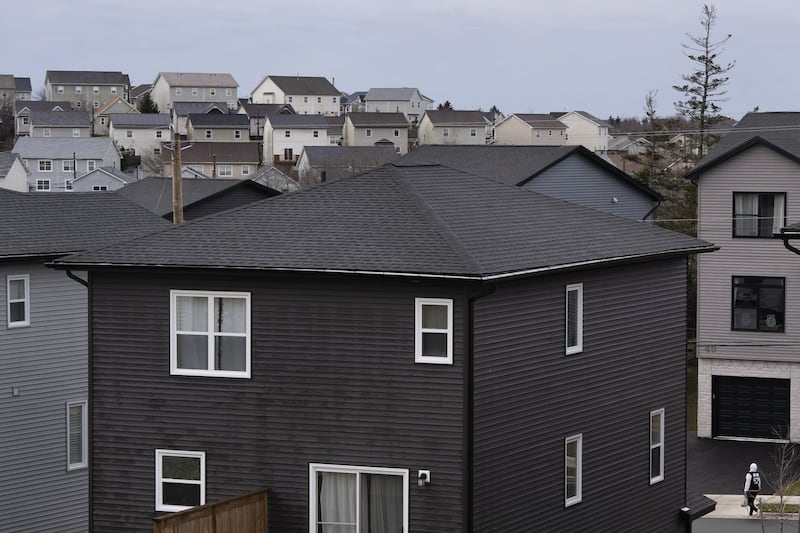
CMHC predicts that “market momentum” will keep sales high in the Prairies and in Quebec, while Canada’s two largest provincial markets, Ontario and British Columbia, are expected to continue to struggle, as affordability issues and slowed population growth eat into sales volumes.
“Home prices will continue to adjust to weak housing demand and muted sales. Prices are expected to decline through 2026 and then grow only modestly afterward,” CMHC said.
“Overall, very slow population growth and limited income gains should keep price increases moderate across the country.”
Uncertainty at home and abroad
The two largest drivers of economic volatility and uncertainty in Canada at the moment continue to cloud housing market forecasts, CMHC noted.
Canada and the U.S. remain embroiled in a bitter trade war, which took a new turn on Monday when U.S. President Donald Trump’s administration announced plans to impose 50 per cent tariffs on a range of Canadian goods in response to provincial bans on U.S. booze.

“Ongoing U.S.-Canada trade uncertainty will likely weigh on business investment and hiring decisions,” CMHC said.
Meanwhile, the U.S. and Iran have resumed hostilities in the Middle East after a previously negotiated ceasefire fell apart, which could lead to elevated inflation levels as energy prices rise, CMHC warned.
“Downside risks to the forecast remain. Inflation could remain high if the U.S.-Iran war drives oil prices higher and further disrupts supply chains, or if trade tensions intensify,” CMHC said.
“This would further weaken confidence and slow income growth. In this case, housing demand would remain soft for longer. Home sales, prices and construction would recover more slowly, and rental markets would continue to ease as supply outpaces demand.”

