MILAN -- Curling in Milan is, for most people, a once-a-week affair. Late on Sunday or Monday nights, 16, sometimes even 24, curlers gather to practice and play in the only timeslot they have available to them.
The action starts at around 10:10 p.m., after the Zamboni resurfaces the skating rink. The stones are taken out of a freezer, and a pebbler does his best to prepare an otherwise unsuitable ice surface ready for curling.
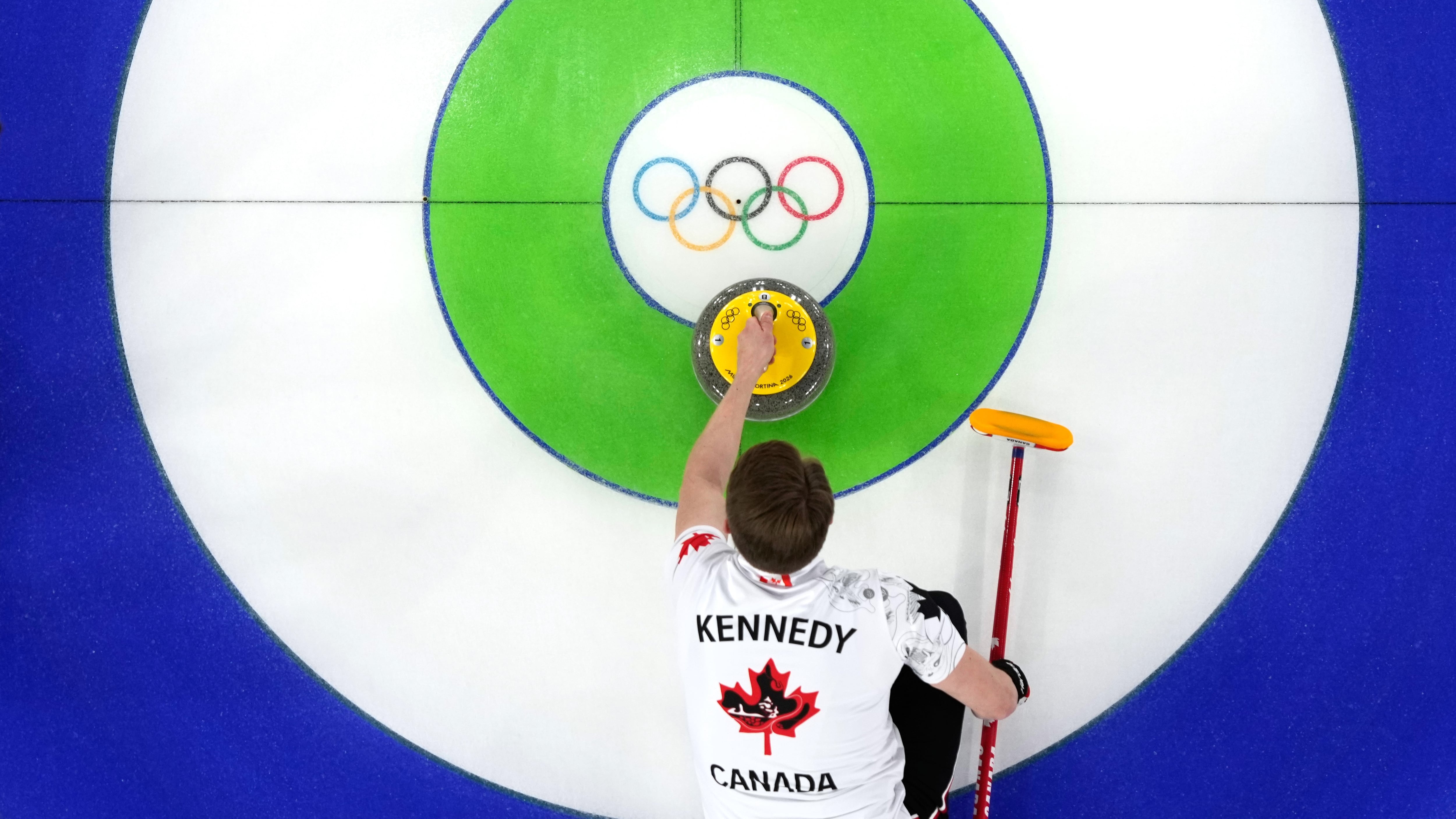
As final preparations are made before play, dedicated Italian curlers discuss the controversy that has seized the sport at the 2026 Olympic Games in Cortina: the did-he-or-didn’t-he, cursing-on-the-ice, camera-in-the-stands,stone-touching scandal centred around Canadian curler Marc Kennedy.
“It’s the argument of the moment. Even in Italy, nobody knows the rules, but everybody watched the touch, the finger,” said Martina Erba, a 9-year curler and founder of the Milano Curling Club.
“Usually you think, OK, play curling, nobody will come watch me. Nobody will come to my matches. But you can see at the Olympics, it’s not like this.”
Kennedy’s profane, colourful self-defence on the ice in Cortina made international headlines. Even before the men’s tournament began, interest in Italy was rising, fuelled in part by the strong performance of Italian duo Stefania Constantini and Amos Mosaner.
“It’s very [much] a curling mania,” said Erba. “I have all my family, colleagues and, everybody that they know that are watching curling on TV. It’s incredible. Never happened before.”
Growing pains for growing game
Curling reliably receives an Olympic-year bump, driving new interest and sometimes new players to clubs around the world.
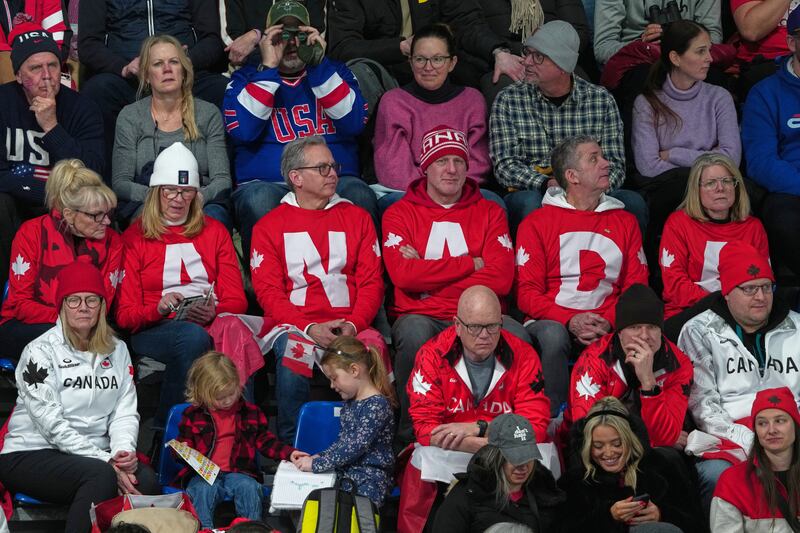
But this year’s tournament in Cortina stands out. Even before the stone-touching scandal, crowds were loud and celebratory. Players on the ice, like American Korey Dropkin, egged them on.
“It’s a lot different, it’s loud, it’s enthusiastic,” said Canadian curler Brett Gallant, who has competed in both mixed doubles and the men’s tournament in Cortina.
“We’ve played in front of larger crowds in Canada, quite frequently, but this is maybe one of the most passionate crowds that we’ve actually ever played in front of. It’s a lot of fun for the curlers out there.”
The atmosphere marks a shift from traditional bonspiels, where it has long been taboo for spectators to jeer or celebrate a miss before the game is over.
There have also been rule changes.
In response to the stone-touching controversy, the World Curling Federation briefly gave umpires more discretion to call fouls and penalize teams. The move was instituted Saturday and undone Sunday after consultation with players.
Even Monday, as many tried to turn the page, a throw by Canadian skip Rachel Homan in the women’s competition was flagged by a Chinese team, who asked officials to intervene.
“The whole spirit of curling is dead, unfortunately,” Kennedy said on Monday, on Day 3 of the lingering curling controversy.
“This whole trying to catch people in the act of an infraction and anything to win a medal, it sucks.”
Canadian curlers and coaches have vigorously defended themselves against accusations of cheating, describing any rule violations as minor and incidental.
“We don’t look for that kind of stuff on tour,” Kennedy said. “We just trust that the people around us aren’t trying to cheat.
“There might be small infractions here and there, but most of the time you shrug it off because you got so much respect for the players you’re playing against.”
‘Spirit of Curling’ under scrutiny
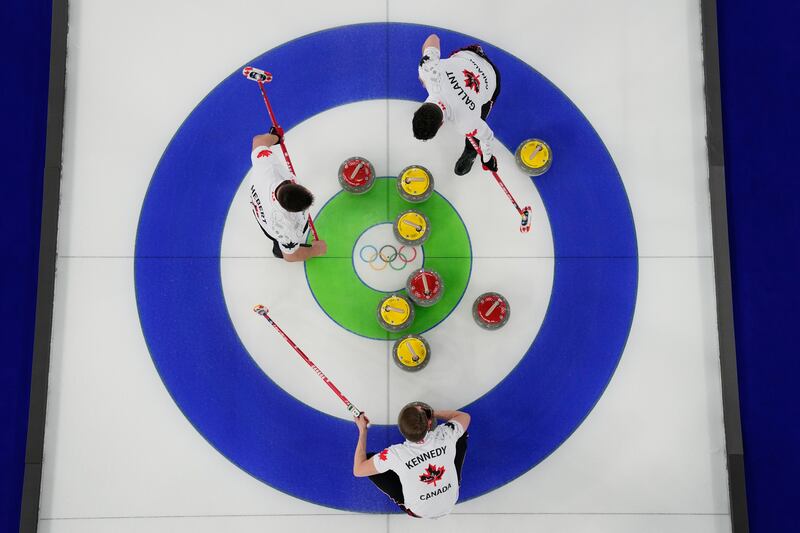
Former competitive curler and commentator John Cullen said the international to Kennedy’s outburst, directed at Swedish counterpart Oscar Eriksson, reflects how competitive modern curling has become.
“I think what this has shown is that for curlers, it’s life and death,” he said.
“Winning an Olympic gold medal is more important than anything else. And so that, I think in some ways, is painting sort of how real of a sport we are.”
The controversy has also cast a spotlight on the sport’s growing professionalization, which is running up against traditions rooted in sportsmanship and good will between opponents.
“The first page of the World Curling rule book is titled The Spirit of Curling. And it’s a lot of fluffy, poetic words about how, you know, yes, we have a rule book, but realistically, as long as everybody’s just nice to each other, then the rule book almost doesn’t even matter,” Cullen explained.
It is not the first time curling has been shocked by scandal. About a decade ago, advances in broom and sweeping technology sparked heated debate and new rules about what could be used on the ice.
“All curling press is probably good press,” Cullen said, echoing Canadian skip Brad Jacobs, who spoke to reporters in Cortina amid concerns about the sport’s shrinking relevance in Canada.
“There’s less people curling in Canada then there were 30 years ago,” Cullen said. “The Brier, in particular, used to be in NHL arenas… now the Brier is in five to 7,000-seat arenas across Canada.”
Compared with a 45-second short-track speed skating race, there’s far more Olympic curling to watch.
“I think the barrier has been broken,” said Italian curler Giovanni Maria, who was first introduced to playing the sport during time spent in Canada.
“At the beginning it was like, what is this, this is not according to my culture, it’s a bit different, I’m used to other sports. Now it’s become a bit more known.”
Barriers in Milan
Despite renewed interest in Italy, obstacles remain.
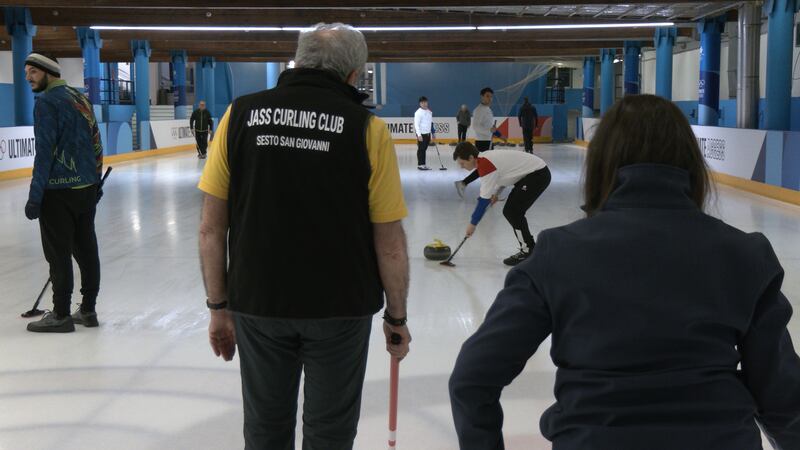
Pickup games at the Palasesto sports complex run until midnight. Ice time, even for hockey, is a rare commodity in Milan, with few ice surfaces in the city.
Curlers have made do at Palasesto for about 25 years. Erba helped start the Milano Curling Club in part to increase online visibility, but members share practice time and space with the older Jass Curling Club in the city.
Because of the late start time, it’s difficult to attract younger participants.
“We received a lot of people that wanted to try curling,” Erba said. “Sometimes we make fun, but if like ten people want to continue to play, we don’t know where to put them, because we have like four hours per week and we are already full.”
Erba and her dream of a dedicated ice surface in Milan, similar to those in northern Italy.
Her Milanese counterparts can compete in Italian tournaments, but they’re at a disadvantage. Curling on skating ice is markedly different: the stones react differently, and must be thrown harder to stay in play.
“One rink, also, can be just enough,” she said. “And it’s not so hard to maintain.”

