TORONTO - Toronto is a frequent contender for worst traffic in North America and next month’s World Cup will test the city’s transit system in ways it has never seen, with preparations well underway to deal with an expected surge in ridership. The first test will come early: on June 12, Canada’s men’s national team opens its tournament against Bosnia and Herzegovina at Toronto Stadium, while the Blue Jays will host the Yankees at Rogers Centre. Hundreds of thousands of people are expected downtown.
“The city will be busy,” said Sharon Bollenbach, the executive director for the FIFA World Cup in Toronto. “But I think Toronto is busy. That’s what comes with a big city.”
Bollenbach says the goal of the transit plans are to ensure the city continues to work for both fans and the people who live here.
“We are putting plans in place to make sure that people can move about the city and not just the people coming here, but the residents as well,” she said. “Our mobility plan recognizes that people still need to get to work, they still need to get to school.”
How the World Series helped inform expected FIFA ridership
Today the CEOs of both Metrolinx, the regional transit authority and the Toronto Transit Commission (TTC), outlined some of the preparations being made ahead of the World Cup, which is being hosted by Canada, the United States and Mexico.
Officials estimate a surge of 44,000 additional riders on match days and to help accommodate the increase, have scheduled more frequent trains and bus services. Toronto has struggled with transit surges during major events, notably during last year’s World Series. Officials are adamant there will be no repeat of game seven, when inadequately extended transit services, left thousands of baseball fans stranded in the downtown core.
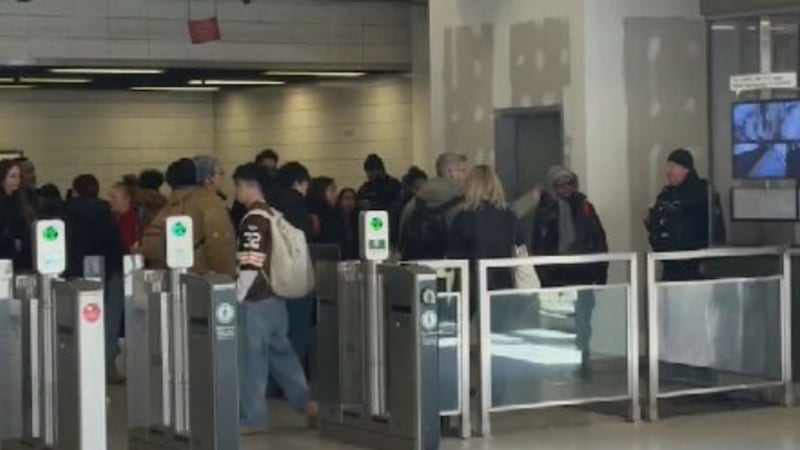
“Having had that experience, Taylor Swift, the solar eclipse, all of that, I think helps inform our ridership projections,” said Michael Lindsay, the CEO of Metrolinx. “(It’s) really useful because it means we’re probably more accurate in understanding how people want to move through the region in a big event like this.”
Canada is co-hosting this year’s tournament alongside the U.S. and Mexico. Six matches will be played in Toronto, and seven in Vancouver. Much of the Toronto action will centre on the area around BMO Field and Exhibition Place- areas that see major events regularly. However, experts say the World Cup is on an entirely different scale.
Making a good first impression
Matti Siemiatycki, the director of the Infrastructure Institute at the University of Toronto, says the stakes extend beyond logistics. For many visitors, this will be their first impression of both Toronto and Canada.
“There are going to be people coming to this city who perhaps have never been here before,” he said. “They are coming for soccer, but they will learn about Toronto and Canada and we want to show our best face.”
Siemiatycki says extensive work has gone into transit planning for this tournament, noting that the more effective a transit plan is, the less people will notice.
“You want transit to be an afterthought,” he said. “(If) it works… it’s seamless, you don’t have to think about it, and it shows up and functions."
For officials, Saturday’s Toronto FC vs. Inter Miami match will be a crucial dress rehearsal for the tournament. It’s the last major event at the stadium before FIFA assumes control and will serve as an early stress test for transit and crowd management plans ahead of the biggest sporting event the city has ever hosted.
Officials have stressed they intend to change and update plans as the tournament unfolds, watching closely what works and what does not and making changes accordingly.

