Warning: Graphic content
Police in Palm Beach County, Fla., say that four-time Stanley Cup winner Claude Lemieux died by suicide on Thursday.
Former teammates, who saw him just days ago in Montreal, say it’s difficult to reconcile.
“It’s really hard to understand, you know, after seeing him on Monday night and spending a good amount of time with him before he went out with the torch and his two sons,” said former Montreal Canadien Chris Nilan in an interview.
“He looked great. He sounded great. We had great conversation. We were laughing. We’re talking about ’86.”
Nilan skated alongside Lemieux and won the Stanley Cup for Montreal in 1986.
“We don’t know what people are going through, and it’s really hard sometimes when someone who’s struggling like that is protective and quiet about it and they don’t let people in,” said Nilan.
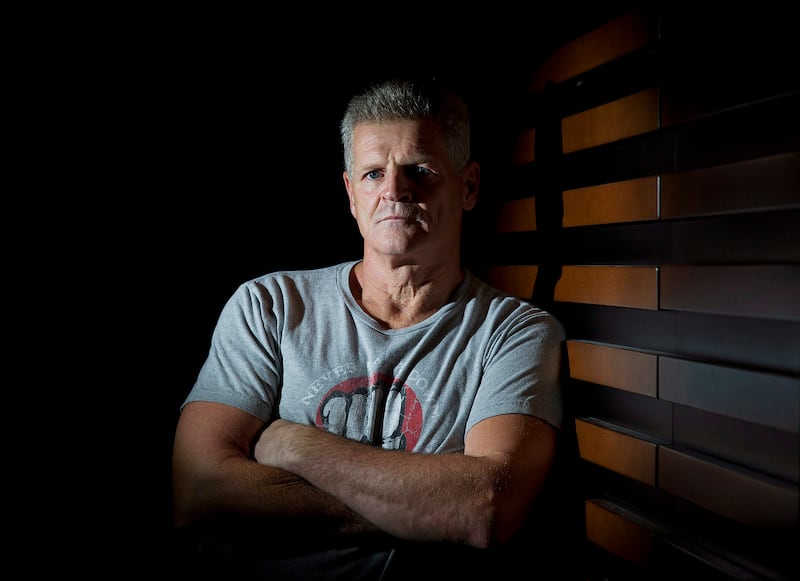
Lemieux won four Stanley Cups and the Conn Smyth Trophy for playoff MVP in 1995.
He had four children and grandchildren and had just experienced the adoration of 21,000 people at the Bell Centre on Monday.
For mental health advocates, his death is a reminder that many suffer in silence.
“First of all, it can happen to anybody, but I think that what is probably important to recognize that money, fame, success, all that is not a guarantee for less pain,” said Ella Amir of Ami Quebec, a non-profit organization that helps families struggling with mental health issues.
She is hoping to send the message that it’s important to check in on friends and loved ones.
“The onus is on us, the people on the other side, to be sensitive and to see if there are some signs that suggest that this person requires some help and support and not be afraid of that,” said Amir.
Nilan, who has been open about his own struggles with mental health, said that even the toughest people sometimes need help, but feel ashamed to ask.
“They’re worried about the stigma. Stigma of mental health,” he said. “They worry about being judged. They’re worried about looking weak. Claude Lemieux is a big, strong man ... I was sick to my stomach yesterday.”
Nilan hopes that shining a light on his friend’s death by suicide will prevent others from suffering alone.
“Check on your teammates, check on your family members, check on your friends, check on your coworkers,” he said. “You know, it won’t be more apparent than when you see something like this happen.”
Here is a list of mental health resources in Quebec
If ever you need help, don’t hesitate to reach out to:
- Your family doctor (if you have one)
- Call Info-Social 811 to get help or information regarding your mental health or the mental health of a family member or friend.
- Call the 911 emergency service if you fear for your safety or the safety of a family member or friend or to obtain immediate assistance.
- Call or text the 988 suicide crisis helpline when in crisis, or when they know someone is in a crisis, 24 hours a day and seven days a week, free of charge.
- Canada Suicide Crisis Helpline (Call or text 988)
- Crisis Services Canada (1-833-456-4566 or text 45645)
- Kids Help Phone (1-800-668-6868)
Find a crisis centre (in French only) near you to obtain free specialized crisis intervention services for you or a loved one.
- AMI-Quebec: 514-486-1448
- Canadian Mental Health Association (CMHA): 1-866-277-3553 in Quebec (24/7)
- Dunham House: 450-263-3434
- Centre Interligne Inc.: (for issues related to sexual orientation): 514-866-0103 call or text
- Depressives Anonymous
- Groupe d’entraide pour un mieux-être: (GEME): 450-332-4463
- Quebec Obsessive Compulsive Disorder Foundation: 514-727-0012
- Société québécoise de la schizophrénie: 514 251-4125 | 1-866 888-2323
- Suicide Prevention Centre of Montreal: 1-866 277-3553 or text 535353
- Veterans Affairs Canada: 1 800 268-7708
If you need immediate assistance, call 911 or go to the nearest hospital.

