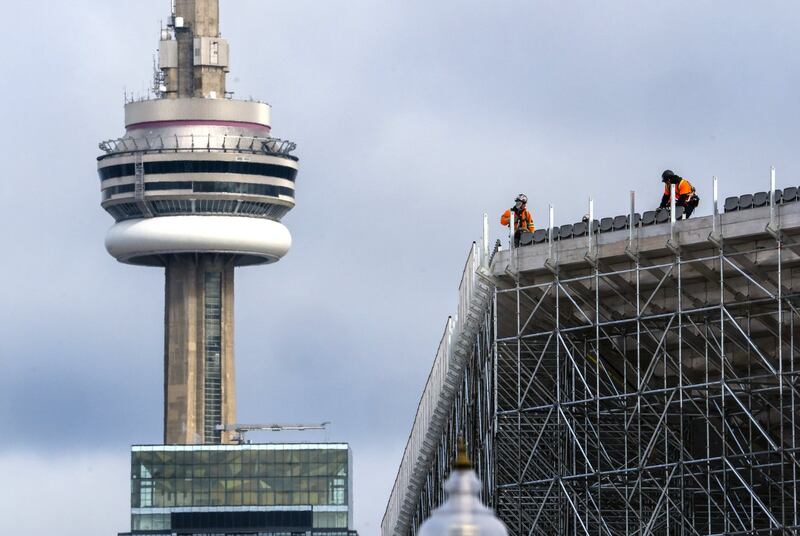
Just a short walk away from the Toronto stadium that will host the world’s biggest soccer tournament in less than two weeks, a group of a dozen or so men in their 20s have decided to use the beautiful Sunday afternoon weather to start an impromptu soccer game at the field neighbouring their homes.
All of them are some of the biggest soccer fans you can find in the city — but none of them will be attending the FIFA World Cup matches in their own backyard.
“The prices, I think it really pushes the game out of reach for people who want to be there and want to show up — and it’s really disheartening,” said 22-year-old Joshua Kautto, who calls himself a “huge” soccer fan, to CTV News Sunday.
“It kind of turns the games themselves into a status affair that pushes people away from it altogether, which is not in the spirit of what the game’s about,” he said.
“It’s really upsetting to see ticket prices where they are,” added Kautto, who said he’s willing to pay for tickets that would cost somewhere in the low hundreds of dollars.
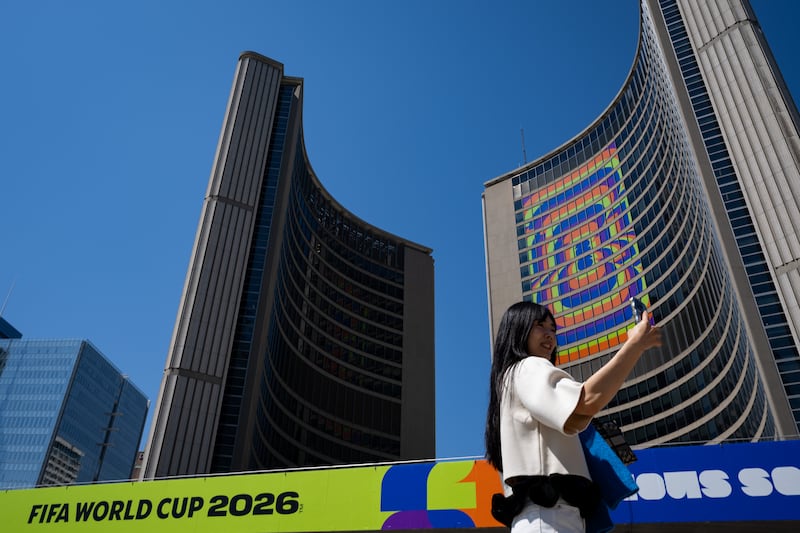
Dozens of tickets for Canada’s opening match versus Bosnia and Herzegovina on June 12 were still available Sunday, with none of them below $3,000 — while other non-Canada matches later in the month had full rows of seats up for grabs, ranging from just over $600 to more than $1,600.
Michael Naraine, associate professor of sport management at Brock University, says that it’s not just the price of the tickets that has fans shying away from attending the matches.
“Hotels are very expensive in Vancouver and Toronto, airline flights are very expensive right now, given the conflict in the war in the Middle East and the bottleneck in the Strait of Hormuz when it comes to oil exports,” said Naraine in an interview with CTV News Sunday.
“And so when you take those pieces and you add them up in totality, the value proposition for the average FIFA men’s sports fan is not there right now.”
READ MORE:
- Here’s how much it costs to stay in a Toronto hotel during the 2026 FIFA World Cup
- ‘The prices are crazy’: Fans disappointed over World Cup ticket costs in Vancouver
Naraine also believes the political climate is playing a role — and resulting in a hesitancy by international visitors to attend the games.
“I think that that’s part of the general malaise that we’re seeing in the North American sport landscape when it comes to international hosting,” said Naraine.
“There is a significant cloud over the FIFA World Cup stemming from the United States domestic policies... with respect to ICE and immigration and detention — and so for international visitors... it’s a situation of do I risk going (and) travelling from places like Eastern Europe, Africa, South Asia, East Asia to the United States, to Canada, even to Mexico.”
Toronto games not ‘the most sexy’
Vijay Setlur, a marketing instructor with Schulich School of Business at York University and an avid soccer fan, says another factor as to why the games aren’t sold out yet is that the countries playing in Canada aren’t the most enticing for big soccer fans.
“The games in Toronto aren’t necessarily the most sexy or appealing,” said Setlur to CTV News in a Zoom interview Monday.
“For example, if you look at Panama, they play twice in Toronto. We see enough of Panama during World Cup qualifying in the CONCACAF Gold Cup and CONCACAF Nations League,” he said.
“People were probably hoping for matchups that were a bit more appealing, a bit more attractive — and when you have a country that we always regularly see, it’s not appealing and it’s not going to drive ticket sales,” he added.
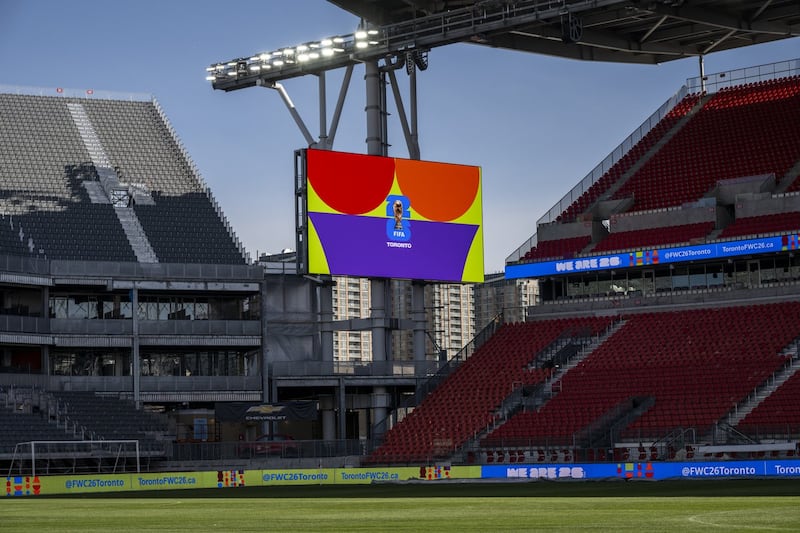
In New York, Mayor Zohran Mamdani responded by successfully negotiating with FIFA and providing 1,000 World Cup tickets to residents for $50 each and free round-trip bus transportation to the venue.
Ontario’s Minister of Sport tells CTV News that ticket availability and pricing are managed directly by FIFA, adding, “these matches will bring significant economic and tourism opportunities to Toronto, and to Ontario.”
In a statement to CTV News, FIFA said their ticket pricing approach “aligns with industry trends” across a range of sports and entertainment sectors.
“Tickets have been released across sales phases, such as Category 4 at the most accessible price point and a minimum of 1,000 tickets priced at $60 USD for every match, amounting to approximately 104,000 tickets in total for the tournament, via participating teams, including the final,” said FIFA in an email received by CTV News Monday.
“These entry tier tickets ($60 tickets) for all 104 matches are allocated specifically to supporters of qualified teams, with the selection and distribution process managed individually by the Participating Member Associations (PMAs).”
Setlur, meanwhile, says it’s hard to predict whether FIFA will drop prices or not, if there are still tickets left closer to kick-off.
“It almost seems like there is this brewing standoff between the fan who does not want to pay the ticket prices, especially for Canada’s first game, and FIFA, which is hoping to have a sellout and not have empty seats on being shown during matches,” said Setlur.
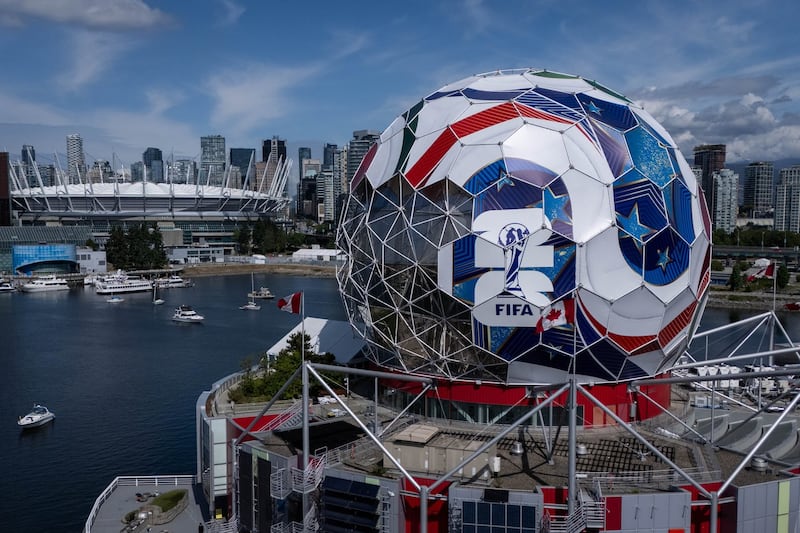
While tickets for matches remain available — so do plenty of tickets to Vancouver’s FIFA Fan Fest, the city’s official watch party.
Last week, a scroll through their ticket purchasing website showed dozens and dozens of seats available at the newly built amphitheater at the PNE Grounds at Hastings Park.
“As people are starting to make and lock in their summer plans, we have quite a bit of confidence that people will secure seats in the amphitheater itself,” said Jessie Adcock, the FIFA World Cup 2026 Vancouver Host Committee lead, to CTV News on Thursday.
Bars contending with FIFA trademark rules
For those who can’t afford to go to the game and instead will be spending the tournament watching matches at bars and restaurants, there’s a fine line for local businesses on what they can and can’t do in marketing and broadcasting the games.
“You don’t want to be necessarily using FIFA’s big I.P. assets, you know, using features trophy, you don’t want to be using the mascots, you don’t want to be using the tournament logo — nothing that sort of suggests, or even comes close to suggesting that this is an official venue, that this is associated or linked to the event,” said Aarij Wasti sports and entertainment lawyer with lawfirm Growling WLG, who published guidelines for businesses on how to abide by FIFA’s licensing and trademark rules.
A manual provided by the City of Toronto advises businesses not to use words like ‘FIFA,’ ‘World Cup,’ or even use the trophy in their marketing of their broadcasting matches at their bars and restaurants.
There’s also a two-kilometre radius around Toronto Stadium, called a ‘controlled area’ where the City says advertising and promotions will be strictly regulated to ensure there isn’t overt competition against brands tied to FIFA.
“Any sort of advertising in and around the venue has to be removed —and that is then replaced by FIFA’s right to put in branding of itself and its commercial partners for this tournament,” said Wasti.
“Michelob Ultra, for example — it’s an official sponsor. Now, if Heineken comes in and starts putting up billboards that weren’t there before, that’s going to attract attention and cease and desist letters.”
The City of Toronto document highlights that by-law officers’ approach to those businesses that may be taking part in copyright infringment would “prioritze education and cooperation,” but enforcement measures could also include “issuing fines, laying charges or initiating other legal proceedings.”
“The City is focusing on education and cooperation,” said Alexandra Dinsmore with the City of Toronto’s communications team.
“We are helping local businesses understand the rules and encouraging them to follow them. If needed, existing city bylaws will be enforced. Only approved partners can use FIFA trademarks for commercial purposes.”