
LONDON — Alexander Zverev has more than just defending champion Jannik Sinner to deal with on Sunday in the Wimbledon final.
The 29-year-old German also has Type 1 diabetes, which requires him to monitor his glucose levels and, if needed, inject insulin during matches.
Zverev, who won the French Open and is seeking back-to-back Grand Slam titles, uses an insulin pen when needed to jab the top of his thigh during changeovers on court.
Here’s some more information about Zverev and the disease.

Zverev was diagnosed with Type 1 diabetes as a boy
Zverev disclosed in 2022 that he has Type 1 diabetes, having been diagnosed at age 4, according to his diabetes foundation. He had previously kept it quiet. If he needed an insulin jab during a match, he’d do it privately during bathroom breaks.
The announcement coincided with him launching his foundation, to help children in particular.
“If we as a foundation, and me just as a tennis player and somebody who has diabetes, can help even just a single kid or a single parent, I’ll be the happiest person in the world,” Zverev said after an early-round victory at Wimbledon. “There’s a lot of great athletes, there’s a lot of actors, musicians, who have diabetes. It shows that with diabetes there shouldn’t be any limits.”
Glucose sensor problem at tournament
At a Wimbledon warmup event in Halle, Germany, Zverev said his glucose sensor gave him an incorrect reading at his semifinal match against Taylor Fritz. Because it showed falsely high levels, he accidentally injected too much insulin.
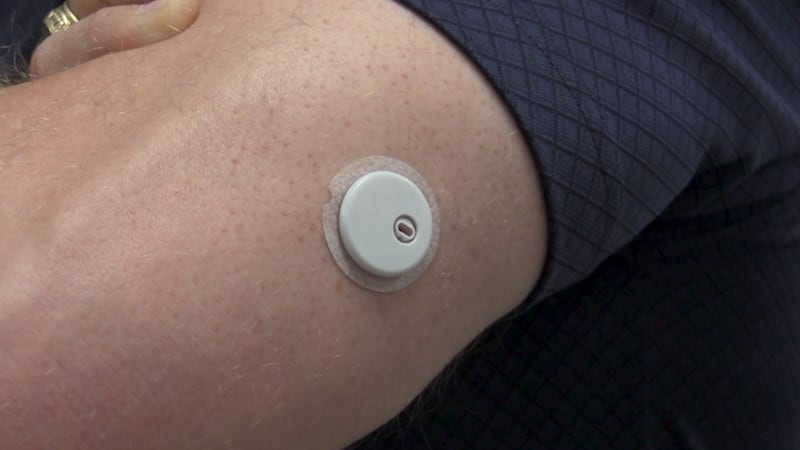
When he figured out the problem, Zverev consumed 350 grams of sugar through glucose gels in the first hour of the match to normalize his blood sugar levels. He reported feeling “awful” and lost the match in three sets.
“The company’s investigating it, looking into it,” he said at a pre-Wimbledon press conference, referring to the firm that makes the sensor. “I’ve been using it for 10-plus years. This is the first time ever it happened.”
The sensors are life changing, he noted.
“Those things are still very, very useful for a diabetic, make the life of a diabetic much easier than without them,” he added. “It was very unfortunate for me that it happened, but I think as a product, it still is very helpful for millions of diabetes patients.”
Zverev has permission from Grand Slam tournaments, the All England Club confirmed, to use his phone during matches to check his glucose levels. His sensor relays readings to the phone so that Zverev doesn’t need to do finger-prick blood tests. Otherwise, phones are not allowed on court.
Other high-profile athletes with Type 1 diabetes
NHL Hall of Famer Bobby Clarke played his whole career with Type 1 diabetes, and current NHL player Max Domi also has the chronic disease.

Baltimore Ravens tight end Mark Andrews, diagnosed in childhood, frequently checks his blood sugar levels during games.
Former NFL quarterback Jay Cutler was diagnosed with Type 1 diabetes in his mid-20s, as was Olympic champion swimmer Gary Hall Jr.

Advocates say visibility is important, and not just in sports.
A year ago, Mattel introduced its first Barbie representing a person with Type 1 diabetes. She wears a continuous glucose monitor — to track blood sugar levels — on her arm while holding a phone displaying an accompanying app.
Facts about Type 1 diabetes
It was once called “juvenile diabetes” because it most often occurs in children and teenagers. An estimated 9.2 million people have Type 1 diabetes, according to the International Diabetes Federation.
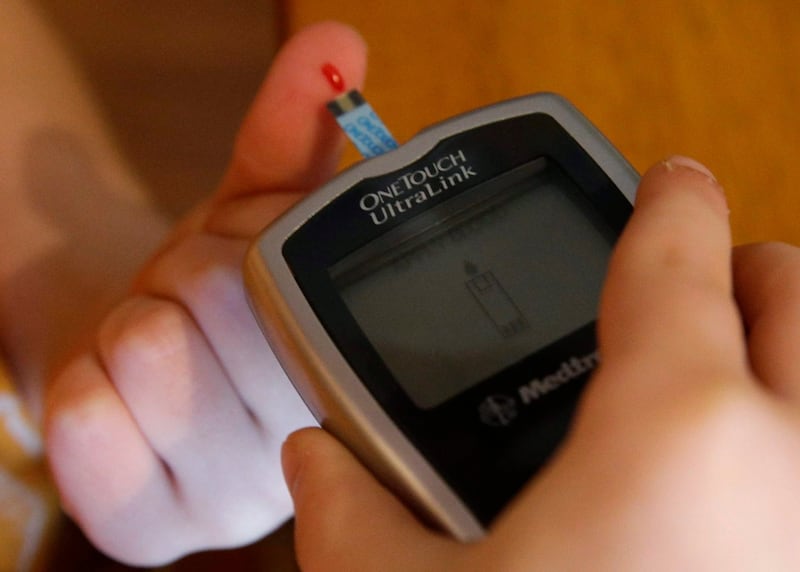
The U.S. Centers for Disease Control and Prevention notes that with the disease, “your pancreas doesn’t make insulin or makes very little insulin. Insulin helps blood sugar enter the cells in your body for use as energy. Without insulin, blood sugar can’t get into cells and builds up in the bloodstream.” Insulin shots are required to manage the blood sugar levels.
Ken Maguire, The Associated Press

