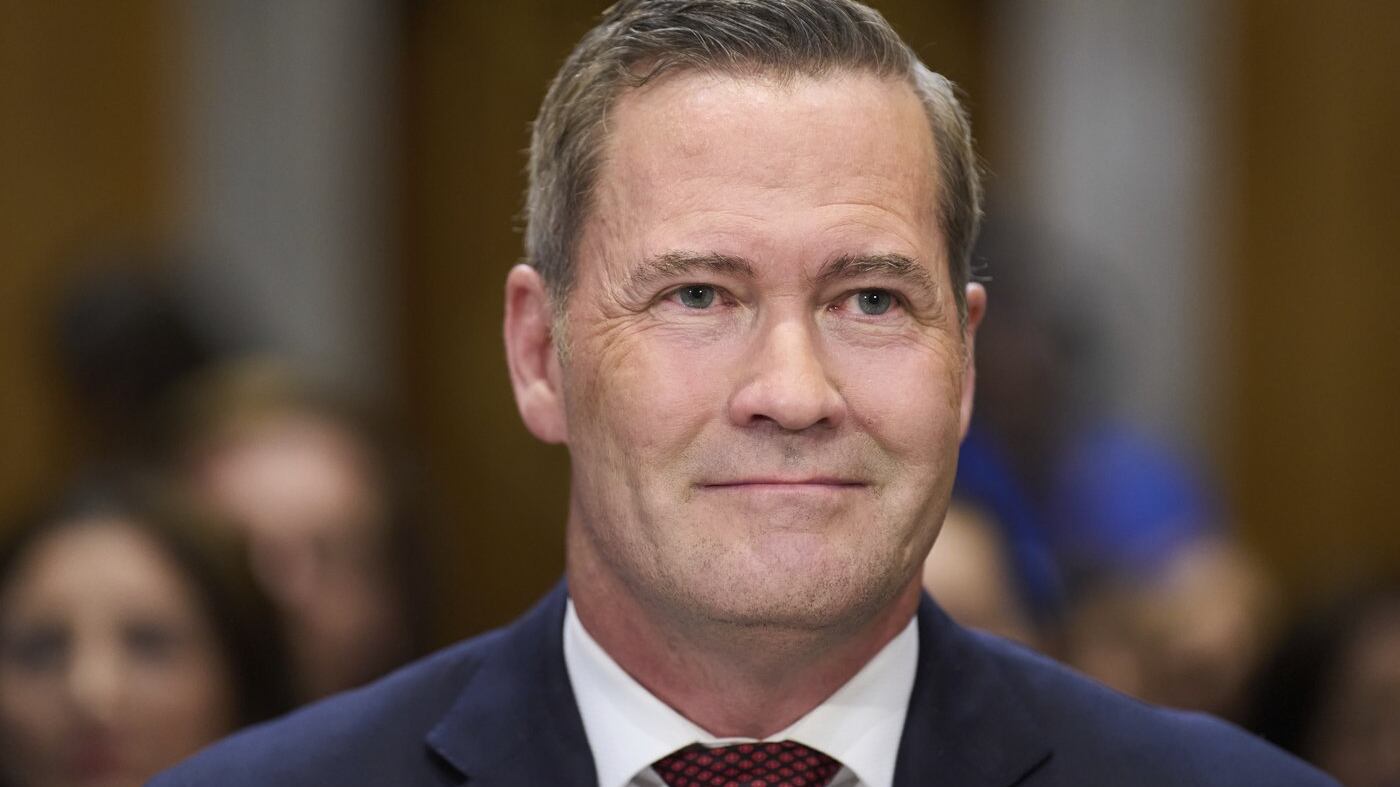
WASHINGTON — Mike Waltz painted an image for lawmakers Tuesday of what the United Nations would look like as the U.S. — its largest donor — reviews its support, opting to go “back to basics” under a Trump administration push to “make the UN great again.”
During his Senate confirmation hearing to be U.S. ambassador to the United Nations, Waltz echoed the priorities of his bosses — President Donald Trump and Secretary of State Marco Rubio — of pursuing major reforms to the 80-year-old world body.
It was the first time senators could grill Waltz since he was ousted as Trump’s national security adviser in May after he mistakenly added a journalist to a private Signal chat used to discuss sensitive military plans. He denied Tuesday that he was removed from the post, while laying out his plans to bring “America First” to the UN.
“We should have one place in the world where everyone can talk — where China, Russia, Europe and the developing world can come together and resolve conflicts,” Waltz told the Senate Foreign Relations Committee about the UN “But after 80 years, it’s drifted from its core mission of peacemaking.”
The UN is pursuing its own reforms while the Republican administration has spent the last six months reshaping American diplomacy and working aggressively to shrink the size of the federal government, including recent mass dismissals at the State Department.
On the agenda for Waltz would be combating China’s influence, reviewing U.S. funding to UN agencies with “often duplicative and wasteful mandates,” as well as rooting out what Waltz called deep antisemitism within the UN system.
The UN post is the last one to be filled in Trump’s Cabinet following months of delay, including the withdrawal of the previous nominee.
Democrats criticize Waltz over the Signal chat
The Signal episode — in which Waltz, Defense Secretary Pete Hegseth and other high-level officials faced intense criticism — didn’t come up at the hearing for more than an hour.
It was revealed in March that Waltz added The Atlantic editor-in-chief Jeffrey Goldberg to a private text chain on an unclassified messaging app that was used to discuss planning for strikes on Houthi militants in Yemen.
“We both know Signal is not an appropriate and secure means of communicating highly sensitive information,” said Democratic Sen. Chris Coons of Delaware, who was first to raise the issue.
He added that Waltz shared “demonstrably sensitive information” in an improper manner. Fellow Democratic Sen. Tim Kaine of Virginia called it “an amateurish move.”
Waltz, a former Florida congressman, said the chat met the administration’s cybersecurity standards, “no classified information was shared” and the military was still conducting an ongoing investigation.
Democratic Sen. Cory Booker of New Jersey blasted what he called a “lack of accountability” from Waltz and other administration officials.
“I’ve watched this hearing, and I’ve been really disappointed,” Booker said. “What’s been troubling to me about your nomination from the beginning is your failure to just stand up and take accountability for mistakes that you made.”
United Nations is facing major changes
If confirmed, Waltz would arrive at the UN at a moment of great change. The world body is reeling from Trump’s decision to slash foreign assistance — affecting its humanitarian aid agencies — and it anticipates U.S. funding cuts to the UN annual budget.
Facing financial instability, the UN has spent months shedding jobs and consolidating projects while beginning to tackle long-delayed reforms. The UN is also facing growing frustration over what critics describe as a lack of efficiency and power in delivering on its mandate to end conflict.
“With Waltz at the helm, the UN will have what I regard as what should be its last chance to demonstrate its actual value to the United States,” said Republican Sen. Mike Lee of Utah. “Instead of progressive political virtue signaling, the Security Council has the chance to prove its value, and settling disputes and brokering deals.”
Waltz said UN revenue “has quadrupled in the last 20 years” but that it hasn’t been commensurate with increased peace.
“The U.S. must ensure that every foreign aid dollar and every contribution to an international organization, particularly the UN, draws a straight and direct line to a compelling U.S. national interest,” Waltz said.
He said the administration’s diplomatic strategy would be focused on cutting costs to what he called “waste, fraud, and abuse that are endemic to the UN system.”
Waltz also accused the UN of “pervasive antisemitism.” He testified that the UN agency for Palestinian refugees, UNRWA, has been promoting “antisemitic hate” in its schools in Gaza.
UN Secretary-General Antonio Guterres appointed a British human rights activist on Tuesday to carry out a strategic review of UNRWA.
Israel has alleged that 19 out of UNRWA’s roughly 13,000 staffers in Gaza participated in the Oct. 7, 2023, attacks that launched the war. UNRWA said it fired nine workers after an internal UN investigation. Israel later alleged that about 100 other Palestinians in Gaza were Hamas members but didn’t provide evidence to the United Nations.
Waltz is still on the White House payroll
Waltz has spent the last few months on the White House payroll despite departing as national security adviser. The latest list of White House salaries, current as of July 1, includes Waltz as an adviser earning an annual salary of $195,200.
A White House official, granted anonymity to discuss personnel matters, said Waltz stayed on to “ensure a smooth and successful transition given the extreme importance of the role of NSA.”
Sen. Jacky Rosen, a Democrat from Nevada, questioned why Waltz was still being paid by the administration.
“Throughout this year, you’ve made (assertions) that, if confirmed, you would root out waste and unnecessary overhead at the UN So can you confirm for us whether you’ve been receiving a salary from the White House since being let go as the NSA?”
Waltz denied the fact that he had been fired, saying he was being paid as an adviser “transitioning a number of important activities.”
___
Amiri reported from the United Nations. Associated Press writers Edith M. Lederer at the UN and Seung Min Kim in Washington contributed to this report.
Farnoush Amiri and Matt Brown, The Associated Press

